By Sangeen Bacha and Imran Kamyana
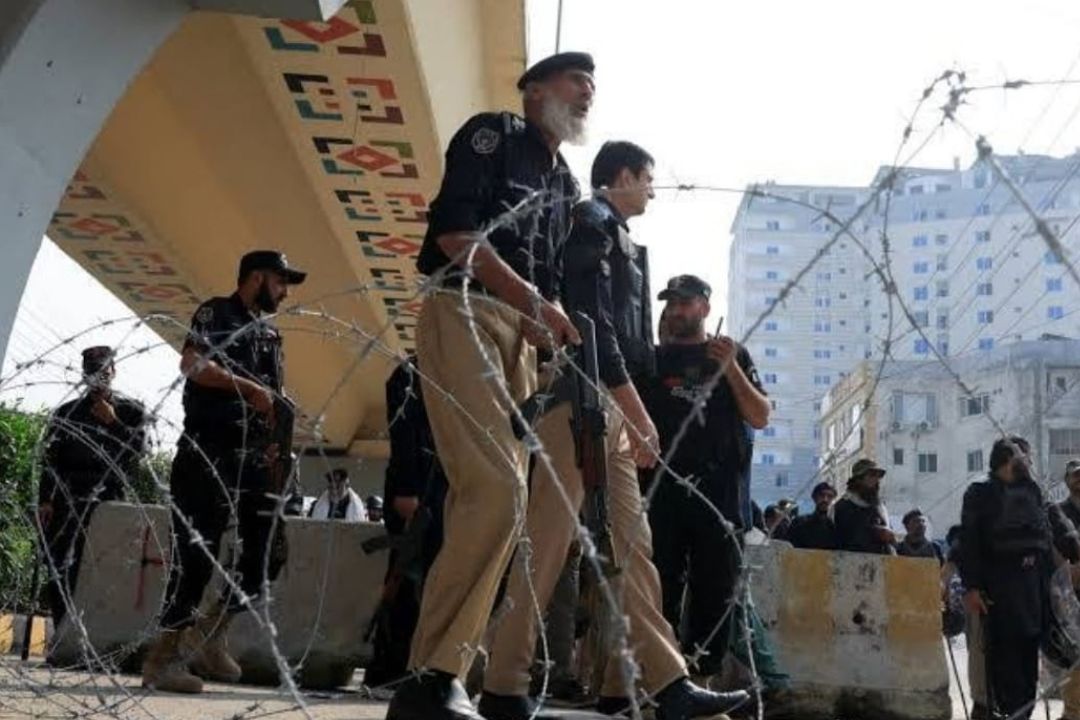
The proclamation of an emergency and the imposition of Governor’s Rule in Khyber Pakhtunkhwa on 11 October 2026 not only continue the ongoing political, social, and economic crisis in the province but also represent its explosive manifestation at the national level.
For several days, Pakistan Tehreek-e-Insaf (PTI) had been announcing a long march. However, the date kept changing, reports of negotiations would emerge from time to time, and contradictory statements were issued by the party’s leadership. The PTI leadership remained indecisive about the date of the long march and its future course of action. An important factor behind this indecision has been the party’s internal factionalism, disagreements, and fragmentation—which have continued to intensify over time—after it fell out of the state’s “good books” in recent years and came under its wrath.
On the other hand, the federal government and state institutions feared that the protest could escalate into a major confrontation and bloodshed. This was also evident from the body language and statements of the leaders of the faction currently leading the protest. After several days, or perhaps even weeks, of behind-the-scenes negotiations and mediation efforts—which a significant section of the PTI leadership also hoped would help avoid direct confrontation or extreme measures—failed to resolve the matter, the federal government ultimately decided to impose emergency rule and dismissed the PTI-led provincial government.
The federal government officially justified this move on the grounds of the provincial government’s alleged failure to combat terrorism, while the PTI described it as an attack on its electoral mandate.
However, to view this entire episode merely as a confrontation between the PTI and the federal government would be to reduce a much broader reality to a narrow political context. The fundamental questions are: Which class interests are at stake in this struggle? What are the underlying forces driving it? And, above all, where do the working people of Khyber Pakhtunkhwa stand in this confrontation? Who has their employment, education, healthcare, and security on their agenda?
Yet the tragedy is that the PTI is not alone in portraying the current situation as a struggle for democratic rights and respect for the popular mandate against state repression. Many sections of the so-called progressives and nationalists are also attempting to frame it in the same terms, whether out of ideological weakness, opportunism, or simply their hostility towards the state.
The fact is that, like virtually all the established or dominant political parties in the country—with the possible exception of the Pakistan Peoples Party (PPP), at least in its early years—the PTI is neither a democratic party in terms of its internal functioning nor a party that emerged and developed through democratic means. Nor does its so-called struggle have anything to do with democracy or democratic rights. Like virtually all the major political leaderships and currents in mainstream politics, the PTI is a product of the Pakistani state. It is a party whose foundations were shaped by hostility to democracy, authoritarianism, and fascistic ideas. The state’s massive investment in the party, its patronage, and its repression of rival political parties played a decisive role in the PTI’s rise.
The fact that this project, like many other state-sponsored political projects, eventually backfired is another matter altogether. Once deprived of state patronage, the PTI sought refuge in the stale rhetoric of democracy, following a pattern previously established by the PML-N and the PPP.
During its 13 years in power in Khyber Pakhtunkhwa and its nearly four years in federal government, the PTI left no stone unturned in suppressing popular movements and curtailing the democratic rights of broad sections of the population. These included the People’s Rights Movement Kashmir, the Pashtun Tahafuz Movement (PTM) in Pakhtunkhwa, and workers’ protests, both large and small, across the country.
Against this backdrop, to describe the current situation as a coup against democracy or to present it as a struggle between democracy and dictatorship amounts to a political crime.
The PTI’s rise after 2011 took place in a society already plagued by widespread poverty, unemployment, corruption, and social inequality, alongside growing resentment and disillusionment with the traditional political parties. Moreover, decades of neoliberal policies had given rise to a relatively large urban middle class. Under these specific conditions, particularly following the abysmal failure of the PPP government that came to power in 2008, the political vacuum that emerged provided the PTI with ample opportunities to grow.
However, this rise was not merely the outcome of popular support. The patronage of the dominant faction within the state establishment (basically the military) at the time played a pivotal role in cultivating Imran Khan’s image as a messiah—a process that involved the extensive and indiscriminate use of the corporate media. This backing was instrumental in enabling his party to advance in the political arena, carve out space for itself at the expense of its rivals, and ultimately come to power through what was, at the time, the worst electoral rigging in the country’s history.
Yet this was hardly a new phenomenon in Pakistani politics. The state had previously promoted various political forces to serve its interests. Indeed, this deeply entrenched—and at times brazen—practice of political engineering has now become a routine feature of the country’s so-called democracy.
In the case of the PTI, too, the stagnation or retreat of the labour movement created the conditions for the emergence of a party that could fashionably weave together religious fundamentalist tendencies, Pakistani chauvinism, anti-corruption slogans, exaggerated allegations, and promises of development into a political narrative tailored to the aspirations of the newly emerging middle class.
Imran Khan would sometimes hold up the Western lifestyle as an example, at other times appeal to religious sentiments, then invoke the State of Medina to project the vision of a welfare state, and on other occasions present China as a model. Sometimes, he would combine all these themes in a single speech. This contradictory political narrative attracted not only sections of the working class beyond the middle class, but also lumpen and nouveau riche elements of the upper middle class and the bourgeoisie.
Yet, unsurprisingly, the PTI’s politics never developed any coherent, “common” programme capable of addressing the country’s deep-rooted economic problems, mismanagement, and corruption. Political support, generated by the national crisis, popular deprivation, and the absence of a credible alternative, increasingly coalesced around a single personality. Once the PTI came to power, the failure of its claims, promises, and slogans was inevitable.
Under these circumstances, contradictions and tensions in Imran Khan’s relationship with the state continued to intensify, as he became increasingly consumed by the delusion of his own eternal and invincible popularity and his own infallibility. At a certain point, this state-sponsored political figure moved towards a confrontation with his former patrons, as he sought not only to consolidate his grip on power but also, alongside his coterie, to gain dominance over the very state that had nurtured him and establish his own boundless personal dictatorship.
This was not a struggle for popular welfare, development, or the liberation and emancipation of the working class. On the contrary, during the PTI’s tenure in federal government, the living conditions of ordinary people deteriorated further under the impact of IMF structural reforms, inflation, unemployment, privatisation, and state repression.
This internecine conflict among different factions of the state revolved around questions of power, control over the state apparatus, and political dominance. Over time, Imran Khan himself came to exercise ever greater control over the party’s political programme, whatever its substance, its organisational structures, and its internal decision-making. The space for PTI workers and supporters to question the leadership’s decisions steadily narrowed.
Meanwhile, both within and beyond the PTI, political debate increasingly became confined to supporting or opposing Imran Khan, rather than addressing the fundamental problems confronting the people. Thus, the very popular grievances and social contradictions that had paved the way for the PTI’s rise remained unresolved under its politics and, instead, grew more complex, entrenched, and acute.
The PTI returned to power in Khyber Pakhtunkhwa for a third consecutive term following the elections of 2013, 2018, and 2024. Yet, despite this prolonged period in office, the situation in the province has continued to deteriorate. Having come to power on the promise of eradicating corruption, the party has presided over levels of mismanagement, plunder, and corruption in Pakhtunkhwa that are difficult to match in the country’s history. In recent times, the PTI-led provincial government has even appeared increasingly open about the fact that public security and the welfare and prosperity of the people are not its priorities; rather, its overriding objective is the worship of Imran Khan.
According to data from the Pakistan Institute for Peace Studies (PIPS), the number of major terrorist attacks in the province stood at 111 in 2021, rising to 169 in 2022, 174 in 2023, 295 in 2024, and 413 in 2025. This represents an increase of approximately 272 per cent between 2021 and 2025.
In examining this situation, the PTI’s policy of negotiations and reconciliation with the Taliban cannot be overlooked. Although neither the Pakistani state nor the federal government can in any way be absolved of responsibility for these circumstances, it is equally impossible to deny that the PTI has been the political party within Pakistan’s political establishment most sympathetic to the Taliban and most accommodating towards them. On 1 October 2021, Imran Khan confirmed that his government was holding talks with certain factions of the proscribed Tehreek-e-Taliban Pakistan (TTP) and considering the possibility of bringing back and resettling those willing to lay down their arms. The negotiations progressed further in June and July 2022. Even before this, Khan had openly advocated allowing the Taliban to open offices in Pakistan.
In August and September of that year, reports of the renewed presence of armed men in Swat and other areas, and of their possible return, sparked widespread alarm among local communities. The people of Swat, who had already paid a heavy price for the Taliban’s occupation, terrorism, and military operations, made it clear through protests that they would not accept the renewed domination of their areas by armed groups. Similar expressions of popular resistance have also emerged in several other parts of the province.
Following the 1978 Saur Revolution in Afghanistan, Zia-ul-Haq’s dictatorship, under US patronage, nurtured and cultivated religiously fanatical militants. In the subsequent decades, state institutions continued to pursue policies of engagement and accommodation with various armed groups in accordance with their strategic interests. This historical trajectory laid the groundwork for the spread of extremism across the region, the devastating consequences of which are still being felt today. Indeed, the situation has deteriorated considerably further since the Taliban returned to power in Afghanistan.
Meanwhile, decades of state policies have fostered an economy and political system rooted in black money, inextricably intertwined with fundamentalist armed groups. The PTI, too, is a product of this same political order.
The state of education and healthcare in Khyber Pakhtunkhwa is also crucial to assessing the PTI’s prolonged rule in the province. According to the Pakistan Institute of Education’s report, Pakistan Education Statistics 2023–24, approximately 4.5 million children between the ages of five and sixteen are out of school in the province.
According to the Pakistan Bureau of Statistics’ Labour Force Survey 2024–25, the unemployment rate in the province has continued to rise and is the highest among Pakistan’s four provinces. The Auditor General of Pakistan’s report, Performance Audit of Health Initiatives in Khyber Pakhtunkhwa (2017–18 to 2021–22), reveals that of the Rs 2.071 billion allocated for improving District Headquarters Hospitals, approximately Rs 1.603 billion remained unspent.
Similarly, corruption scandals involving billions of rupees and financial irregularities have become routine in the province and a recurring feature of news coverage. In the race to privatise hospitals and schools, the PTI-led government in Pakhtunkhwa has also repeatedly sought to outpace other provincial governments. Meanwhile, protests by workers against these anti-people policies have been crushed with extreme brutality.
According to the Khyber Pakhtunkhwa government’s Budget Strategy 2026–27, there are 4,468 people per doctor in the province, compared with the national average of 723 people per doctor. Hospital facilities are grossly inadequate, and even emergency medical services lack sufficient resources to respond to critical situations.
At the same time, dependence on private hospitals for treatment through the Sehat Card scheme has increased. Irregularities in Sehat Card expenditure and payments have also remained a subject of controversy. But the fundamental question is this: Why are such a large share of public resources being spent on paying private hospitals for treatment instead of being invested in public hospitals—their buildings, modern equipment, ventilators, medicines, and medical staff?
When public hospitals lack adequate treatment facilities and patients are forced to turn to private institutions, the private sector stands to benefit. The financial burden, along with the suffering caused by inadequate access to treatment, ultimately falls on the people.
Corruption and the utilisation of development funds in Khyber Pakhtunkhwa are also matters of grave concern. According to a report published by The News on 18 September 2026, the Auditor General of Pakistan identified irregularities and audit objections amounting to a total of Rs 551 billion in the provincial government’s accounts for the 2023–24 financial year. These included unauthorised expenditure, excess payments, and issues relating to the misuse and mismanagement of funds.
Owing to corruption and substandard construction, numerous development projects, roads, and public buildings in Khyber Pakhtunkhwa begin to deteriorate or fall apart shortly after their completion. Despite all these problems, the PTI government has failed to place the concerns of ordinary people on its political agenda.
The demands put forward for the recent long march were likewise unrelated to the problems facing the people. This is why the protest failed to attract any significant popular support or enthusiasm among the people of Pakhtunkhwa. Meanwhile, at the time of writing, mobilisation in support of the PTI in the other provinces has also been virtually non-existent.
PTI leaders themselves have repeatedly maintained that they were given the vote to secure Imran Khan’s release, not to resolve the problems facing the people!
Throughout this entire confrontation with the state and the federal government, the problems facing ordinary people have not only remained off the agenda; both sides have also deliberately exploited the turmoil and confrontation to push popular concerns and the real issues facing society into the background. Furthermore, the possible role of divisions and factional rivalries within the state itself in shaping the current situation—and in fostering the hard-line position adopted by one faction of the PTI under the leadership of Sohail Afridi—cannot be overlooked.
Clearly, none of this argument is intended to endorse the imposition of emergency rule or absolve the state of responsibility. Rather, the point is to expose the PTI, which is now playing the victim and concealing its reactionary ambitions behind its cynical invocation of “democracy”, as yet another manifestation of the corrupt, state-sponsored politics and the neoliberal economic order in which it is deeply mired. Its authoritarian ambitions extend into the realm of fascism.
Ultimately, however, like many political projects before it, the PTI is itself a product of the political engineering carried out by the very state that it now finds itself at odds with. Yet, in the massive operation to crush the party or trim its influence, it is once again the working people who are bearing the heaviest political and economic costs.
The problem is not confined to any single party or government. None of the parties currently in power has the courage to challenge the economic foundations of this imperialist system. Consequently, none has any viable or sustainable solution to the burning problems confronting the people. Leaving aside the pervasive black economy, Pakistan’s documented economy has, in practice, been contracting for a prolonged period. According to the World Bank’s latest report, nearly half of Pakistan’s population is living in extreme poverty, and the poverty rate continues to rise. Social discontent is reaching unprecedented levels.
Under these conditions, the prospect of a healthy democratic process taking root on a capitalist foundation is virtually non-existent. The crisis of capitalism, not only in Pakistan but across the world, including in developed countries, is compelling states to resort to ever greater repression, ruthlessness, and curtailment of democratic rights. In backward societies plagued by deep-rooted crises, such as Pakistan, democracy has remained a mirage even by the standards of capitalism itself. State repression and arbitrary rule are the norm here, regardless of which party is in government, including the PTI.
It is therefore a cynical deception to propagate the notion that the imposition of emergency rule or Governor’s Rule in Khyber Pakhtunkhwa constitutes some monumental assault on “democracy”. Equally reprehensible is the narrative that the removal of the PTI’s anti-people provincial government will somehow resolve the province’s problems and bring about any substantial improvement in the lives of ordinary people.
For Marxists, democracy is neither an abstract concept nor a mere “principle”. We interpret democracy in accordance with the historical interests of our class. The same applies to human rights. These are slogans that the ruling classes have always used to mislead workers and keep the oppressed and exploited subjugated. It is therefore one of the foremost duties of revolutionaries to expose the class interests concealed behind every slogan and every demand.
The PTI, which claims to be a party of the “youth”, failed to lift even the decades-old ban on student unions during its nearly four years in federal government and 13 years in provincial government. Nor have the so-called democratic or “progressive” parties, such as the PML-N and the PPP, had the courage to do so.
The state of trade unionism is such that fewer than one per cent of workers in the country enjoy the right to organise in trade unions. Even existing unions are gradually being crushed. Restrictions on the press, mainstream media, and social media are tightening by the day.
As for social media, once again, massive networks and campaigns built around abuse, lies, obscenity, and rumours—run by political tendencies such as the PTI—have polluted and degraded what were once relatively free public platforms. In doing so, they have also provided the state with further pretexts to justify censorship.
Under the present conditions of this system, whether Governor’s Rule is imposed or the chief minister’s government remains in place, the working class cannot escape unemployment, poverty, terrorism, privatisation, and the destruction of public institutions as long as the exploitative interests of the classes that monopolise power and resources remain protected. Nor is lasting peace or a healthy democracy possible under these conditions.
This is a struggle between different factions of the ruling class, each pursuing its own interests. Its agenda holds nothing but further hardship for workers, peasants, students, and the broader exploited masses.
Measures such as emergency and Governor’s Rule may further worsen the already dismal state of freedom of expression and speech and democratic rights. But this does not mean that whenever the PTI or any other party of mainstream ruling-class politics comes under attack, we should begin supporting it in the name of defending democracy, or follow it as though it were the saviour and leader of the people.
Whether the issue is economic or political, whether it concerns unemployment or the suppression of democratic freedoms, the working people must fight for their rights themselves. For the oppressed and exploited, democracy must first and foremost mean the right to form unions and other organisations, conduct propaganda, criticise, assemble, and engage in collective struggle for their common interests without restrictions. Without these rights, all talk of democracy is a deception and a fraud. The PTI, along with all the other parties of mainstream politics, is an integral part of this fraudulent system.
The fundamental question facing the working people is not who should wear the crown of power. Our real challenge is how to overthrow this exploitative system. The solution lies neither in changing the methods of governance nor in transferring power from one party to another. It lies in the united and independent revolutionary struggle of the working class, students, peasants, and other exploited and oppressed sections of society.
Until the class that produces all social wealth gains control over the means of production, the economy, politics, and the state, the wheel of exploitation will continue to turn, democracy will remain a mirage, and repression will remain the norm. In the present era, the struggle for fundamental democratic freedoms can be waged only through a programme of revolutionary socialism.