By Martín Velasco
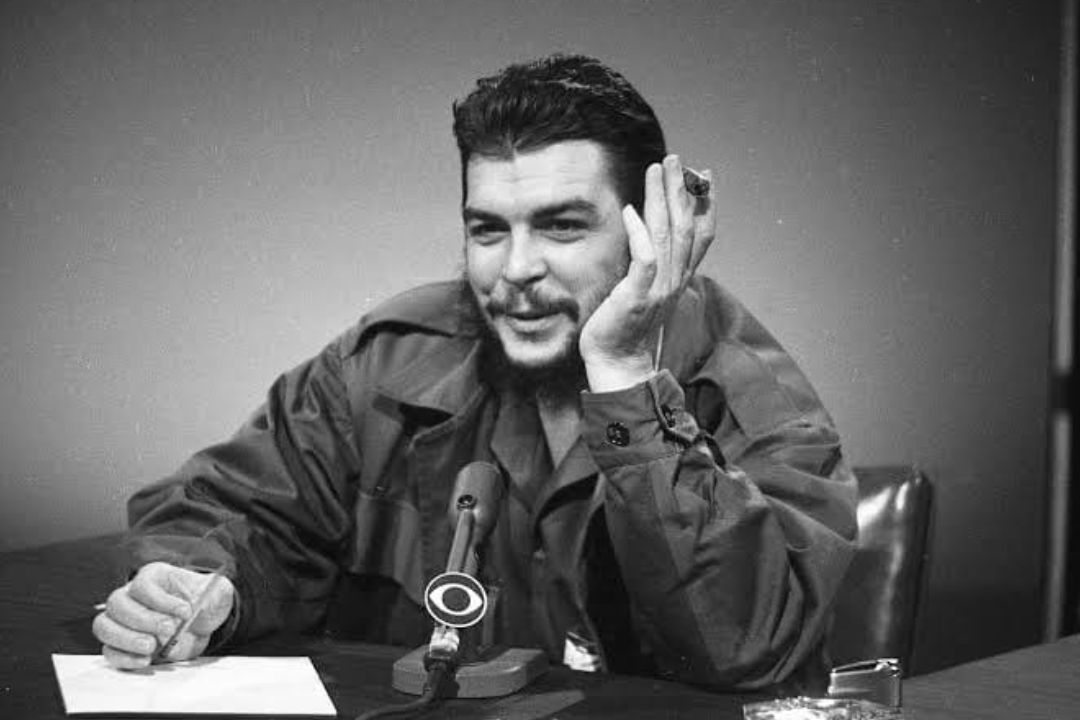
“Shoot, coward, you are only going to kill a man“ said Che Guevara to his executioner, Bolivian Sergeant Mario Terán, before being executed. Thus ended, tragically, the legendary revolutionary’s final journey, in which he sought to turn the Andes mountain range into the new Sierra Maestra. A steadfast commitment to the socialist revolution, a consistent internationalist vision, and an unshakable conviction left an indelible mark on the life of Ernesto Guevara, which we propose to revisit today—mentioning some of the debates surrounding him—on yet another anniversary of his death.
The Early Years
Born in 1928 in the Argentine city of Rosario, Santa Fe, Ernesto “Che” Guevara’s childhood was marked by constantly moving out in search of a suitable climate to manage the asthma he developed at an early age. His family’s financial stability eventually allowed him to find the right place in the province of Córdoba to cope with his illness, which, while forcing him to rest constantly, led him to develop the remarkable habit of reading that would define him throughout his life.
After finishing high school, in 1946 he moved with his family to Buenos Aires to continue his studies at the University of Buenos Aires Faculty of Medicine. It was a time of intense political activity in the city; and Juan D. Perón’s rise to the presidency that same year had been the result of a surge in working-class mobilization—a movement powerful enough to achieve historic victories, though lacking an independent leadership with the strength needed to challenge the Justicialist bourgeois nationalism for control of the government.
However, what would ultimately convince Che for the revolutionary strategy was discovered through his subsequent trips around Latin America. Riding his motorcycle, he was able to witness the painful reality of the continent, which urgently needed to be transformed. The exchange of ideas and the dynamics of the processes unfolding in the region led him to conclude his second trip in Guatemala and Mexico. The journey that had seemed inspired by leisure took a political turn.
During his visit to Guatemala Jacobo Arbenz’s government was in powe and tensions were escalating between it and the monopolistic interests of the United Fruit Company and U.S. imperialism, leading ultimately to his overthrow. In a letter to his aunt Beatríz, Che acknowledged that he was heading to Guatemala with the specific goal of “becoming a true revolutionary.” His contact with activists, political exiles, and revolutionaries from across the Caribbean who were gathering there reinforced the commitment and conviction that led him to continue his work while fleeing persecution in Mexico, where he joined Fidel Castro’s July 26 Movement (MJ26) and gained a deeper understanding of the situation in Cuba.
The Call to Revolution
The expedition was organized from Mexico to land in Cuba and overthrow the dictatorship of Fulgencio Batista—an attempt that had previously been thwarted in 1953 on the day that gave the MJ26 movement its name. The objectives that united the Movement’s activists were not at odds with the governing plans pursued by the region’s bourgeois nationalist movements. Even with the backing of a sector of the local bourgeoisie and imperialism, they originally intended to promote a process of democratization in Cuba along with a series of economic reforms within the framework of capitalism. The guerrilla struggle was not even part of the initial plan; it was the succession of events that led the MJ26 to spearhead an anti-dictatorial revolution through an armed struggle rooted in the peasantry, yet one that managed to gain mass support. In Havana and other urban centers, sympathy for the guerrilla movement spread, along with recognition of its leadership, which had been supported in rural areas throughout the 25 months of combat. This paved the way for Batista’s downfall in 1959, which in turn gave the movement even greater strength.
The government that was formed was unable to respond to a people who had carried out a revolution. Consequently, the demands of the student and worker sectors gained so much momentum that it became impossible for President Manuel Urrutia to hold onto his position, which positioned the guerrilla commanders as “arbiters” of the process, since no popular self-organizing bodies had emerged as an alternative form of government. Although Castro made it clear in April 1959 that “we are not communists,” pressure from below for wages, working conditions, democratic freedoms, and access to land led to an increasingly profound challenge to the private property of the bourgeoisie and imperialism through expropriations. With the White House leading the counterrevolution, the U.S. invasion of Playa Girón in 1962 was defeated, finally consolidating the government led by Castro, who celebrated the military victory to the chant of “Long live the socialist revolution!”
Although Stalinism ultimately ended up supporting Cuba’s new government, this was due more to necessity than to ideological affinities, which eventually converged in the Single Party of the Socialist Revolution (PURS), later the Cuban Communist Party (PCU). The need for an international ally of the USSR’s stature was a powerful incentive in the face of imperialist hostility, resulting not only in deep commercial ties but also in profound political influence.
Fight imperialism wherever it may be
At the same time, the Cuban struggle paved the way that the peoples of the region immediately sought to follow, demonstrating the international character of the revolution. Unfortunately, the influence of the Soviet bureaucracy and the opportunism of Castroism soon emerged as real obstacles to the process’s expansion beyond national borders.
It was Che Guevara who had established himself as one of the most prestigious revolutionary leaders on the island—who stood out for his criticism of the “stages-based” approach that Fidel Castro, backed by Moscow, sought to impose. Part of the debate centered on whether or not the revolution was exceptional in nature.
Previously, Stalinism had insisted on the existence of feudal remnants on the island. Later, it went on to assert that the pre-revolutionary social system was monopolistic capitalism without a national bourgeoisie of its own, thereby seeking by all means to “demonstrate” that the revolutionary lessons could not be applied to the rest of the continent, where “semi-feudal societies” and a national bourgeoisie would continue to exist. This clashed head-on with one of the positions held at the time by at least part of the Cuban leadership—and in particular by Che Guevara—namely, that beyond certain unique, unrepeatable characteristics, Cuba was not only the vanguard of the anti-imperialist revolution in the Americas but was also obligated to “export” that experience to the rest of the continent.
This debate, combined with other controversies regarding bureaucratization and industrialization policy, marked a point of divergence between Che and Stalinism that he would maintain until his final days. It was these very issues that led him to continue the international revolution on his own, applying the same methods that had guaranteed his victory in Cuba—first in the Congo and later in Bolivia. It was in Bolivia that the “comandante” fought his final battles until he was captured on October 8, 1967, and ultimately executed the following day. The guerrilla movement continued after his death; his passing marked a turning point in the development of foquismo, but the anti-imperialist sentiment and the fervor that shook all of Latin America persisted until the arrival of the bloody dictatorships of the 1970s.
Recognize successes to identify mistakes
The figure of Che continues to inspire millions to this day, because the causes for which he gave his life remain as relevant as ever. His contribution to the struggle against imperialist oppression and for a society free of exploitation was immense, but our admiration for him must not cause us to lose sight of the necessary criticisms.
The mechanical application of the methods that led to the triumph of the revolution in Cuba to other regions was one of the main limitations of the Guevarist perspective. Che’s lack of interest in the development of dual-power structures or the revolutionary party was combined with a fixation on guerrilla warfare, replicated in different contexts without regard for specific circumstances. Similarly, the view of the peasantry as the sole alternative for confronting the bourgeoisie stemmed from the imperative to replicate rural guerrilla warfare in every country, thereby imposing a subject on the needs of the method rather than adapting the method to the needs of the subject. All of this led a significant sector of the activist movement, with Che at its head, away from the masses. With the separation of the vanguard from the class struggle, the revolutionary potential of an entire era was ultimately confined to Cuba, with only a few partial victories in other countries.
In our times, when the far right in the White House is launching a new offensive against Latin America and reformists appeal to pragmatism to deny any prospect of transcending the system, we must draw from the past every example of defiance and consistency. The chain can be broken again at any link, and from there, we can spread across all continents the inspiration needed to build a new internationalist revolutionary direction. Now is the time, because “if the present is one of struggle, the future is ours” …