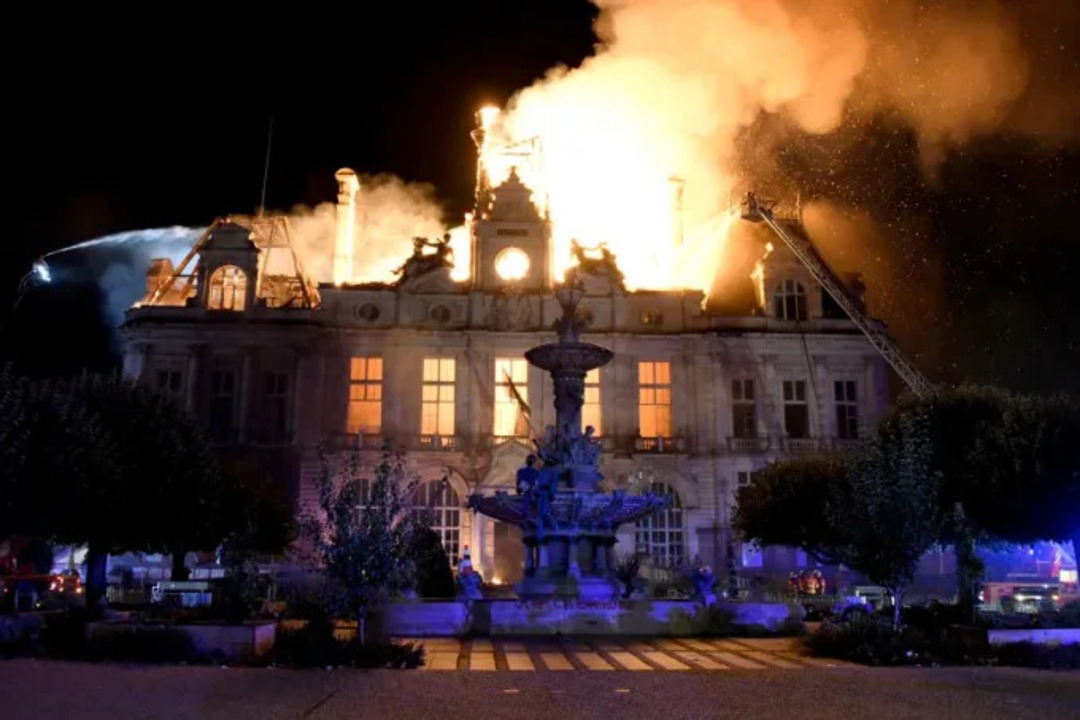
An autumn of protests is rocking France, Spain, Italy, Belgium, and other countries. Young people lead the demonstrations against rising costs, the housing crisis, budget cuts, and rearmament. Anger against governments that are shifting the burden of the crisis onto working people grows. We must unite these struggles, promote self-organization, and rally revolutionaries—on the path toward building an alternative, revolutionary, socialist, and internationalist leadership.
By Rubén Tzanoff
A new wave is sweeping across Europe
Europe is marked by growing social unrest. Youth protests, housing demonstrations, and opposition to austerity measures are beginning to converge, expressing a discontent that transcends national borders and challenges the policies of European Union governments.
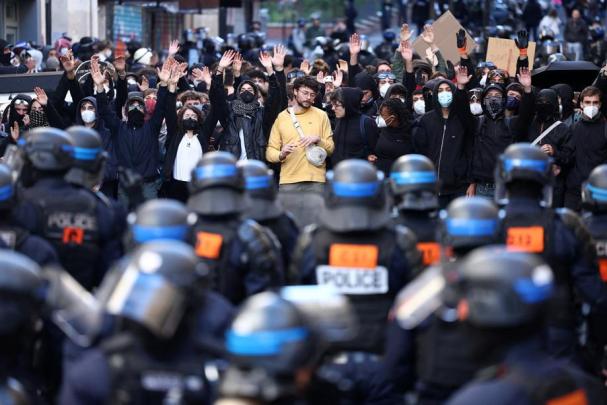
In France, the student protests at high schools and universities that began in September spread from high schools to numerous cities. The lack of staff and educational resources, difficulties in accessing higher education, and rising housing costs fueled the protests. This outrage is compounded by opposition to rising fuel prices and the deterioration of public services. The return of the “Yellow Vests” and demonstrations by various social sectors have once again brought to the forefront the profound structural, political, and social crisis facing the bloc of European imperialist powers.
You may also be interested in: “France in Flames: Youth Rebellion Against Austerity and Repression. Let’s Coordinate the Struggles for a General Strike!”
Clashes with the police, mass arrests, and state repression highlight the deepening social polarization in the face of the government’s failure to respond. At the same time, they underscore the urgent need for self-organization and self-defense.
Events in France are significant. This has been the case throughout history; in most instances, they have been the catalyst or a major driving force behind uprisings in Europe and around the world.
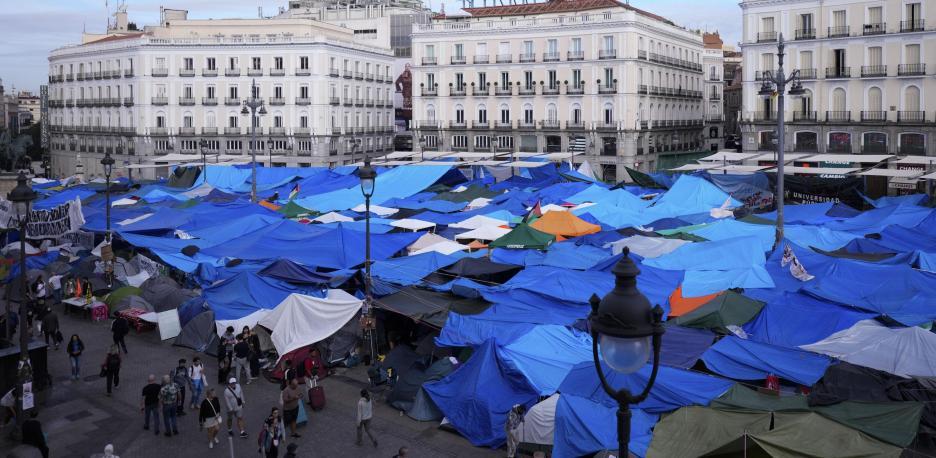
In Spain, Maricarmen’s eviction and subsequent death sparked a wave of outrage. The fight for housing spread to various cities and reached a high point with the encampment at Puerta del Sol in Madrid. The movement challenges exorbitant rents, real estate speculation, and the inability to become financially independent. After 14 years of turning a blind eye, the UGT and CC.OO. unions were forced to call a general strike for November 11, as demanded by the protests and organizations advocating for decent housing.
The crisis is so deep that Pedro Sánchez’s (PSOE) faltering government—abandoned by some of its coalition partners and losing ground—called for early elections on November 29. The key task is to prevent the strike from becoming a ploy to defuse social pressure and offer the people the option to “continue the struggle” by voting for Sánchez as the “lesser evil” against the PP and Vox. We need grassroots assemblies, coordination of demands, and continuity of the strike through a plan of action that advances the demands of the workers and the people. Along this path, it is essential to build a radical left-wing alternative and establish a revolutionary pole for the struggles and the elections.
You may also be interested in: “In the Face of the Struggle for Housing and November 29: Let’s Build a Radical Left Alternative”
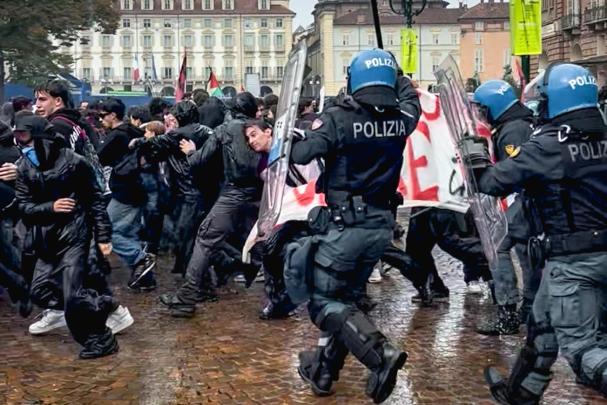
Italy is also in an uproar. Student protests, which began in Turin and spread to Rome, Bologna, and Naples, are calling for affordable housing, more scholarships, and free public transportation, among other demands. In Milan, Turin, and other cities, the demonstrations included calls to oppose the war, rising energy costs, and Meloni’s policies. The CGIL, Italy’s largest labor union, called for a general strike on November 20.
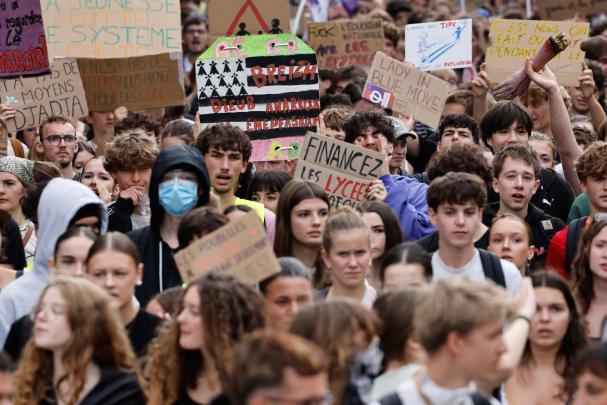
In Belgium, students in Wallonia and Brussels took to the streets to protest government-driven cuts to education, healthcare, and social benefits. The measures threaten school resources, free meals, and transportation assistance, in addition to making education more expensive. In Portugal, protests and sit-ins in Lisbon and Porto are demanding rent caps, a halt to evictions, and an expansion of public housing. It is worth noting that Portugal is coming off a successful general strike that was instrumental in defeating the anti-worker labor package. In Germany, thousands of young people are opposing the reinstatement of mandatory military service and warning of the consequences of militarization. Albania is also experiencing strong protests against the lack of job prospects, education cuts, and the government.
These are not isolated incidents. Although each country has its own particular circumstances, the protests reflect the same social crisis and a growing willingness to fight.
Young People, Leading the Way Alongside Workers
Young people are at the heart of this uprising. High school and college students, young workers, and the unemployed are taking to the streets in response to unmet needs that cast a shadow over their future.
Housing has become one of the main manifestations of this reality. In Spain, rents have risen far faster than wages over the past decade. For thousands of young people, moving out on their own means sharing rooms at exorbitant prices or continuing to live with their families. Added to this are job insecurity, low wages, educational challenges, and the fear of a future marked by instability.
But young people are not fighting alone. Teachers, healthcare workers, unions, farmers, and other sectors are beginning to join the student protests. This convergence is crucial: the strength of the youth can be multiplied when combined with the working class’s capacity for mobilization.
The demands are also taking on a political dimension. Governments, their budgetary priorities, and the repression used to quell discontent are being called into question. The struggle is no longer limited to demanding partial improvements: it is beginning to challenge who pays for the crisis and in whose interest society functions.
A brewing rebellion
The current upsurge did not come out of nowhere. It is part of a series of crises, rebellions, and protests that have swept across different parts of the world over the past two years.
The Palestinian resistance to the occupation and the devastation of Gaza, along with international demonstrations against genocide and in solidarity with Palestine, demonstrated the rejection by millions of people of imperialist barbarism. University protests and actions by workers and the people against the war and the policies of U.S. imperialism, led by Trump, demonstrated that there is widespread willingness to confront governments’ complicity with the State of Israel.
In Europe there was also a wave of strikes, protests against austerity measures, and demonstrations in defense of public services, wages, and pensions.
The underlying cause: a system that condemns the majority of society
The root of this process lies in the structural crisis of capitalism and its manifestations within the European imperialist bloc. Governments demand sacrifices from the majority while protecting corporate profits, financial speculation, and the interests of large property owners.
Wages are losing purchasing power, food and energy prices are rising, and housing is becoming unaffordable. Unemployment and job insecurity make it difficult for young people to become independent, while budget cuts are undermining education, healthcare, and public services. Furthermore, the immigrant population faces discriminatory policies, labor exploitation, and repressive measures aimed at dividing those who share the same class interests.
Added to this are institutional abuse, the criminalization of protest, and a lack of prospects. Governments fail to solve the problems faced by the majority, yet they strengthen their police forces and restrict the right to protest when demonstrations threaten to overwhelm them.
Rearmament for imperialist wars, austerity for the people
As the social crisis deepens, European governments are allocating more and more resources to rearmament and preparing for imperialist wars. Militarization is presented as a security necessity, but its costs fall on the majority of the population. Benefits are being cut, public services are deteriorating, and wage restraint is being demanded, while military budgets are increasing and the arms industry is growing stronger.
That is why we, the European parties of the International Socialist League (ISL), are vigorously raising the slogans: “No to Fortress Europe. No to austerity for imperialist wars. For workers’ governments and a Socialist Europe.”
Polarization: The far right is on the rise, but so is the resistance
The crisis is deepening political polarization. The far right is capitalizing on some of the discontent with rhetoric against immigration, feminism, and social rights. It is attempting to pit native workers against migrant workers, divide young people, and portray the most vulnerable groups as responsible for problems caused by the system.
However, the current protests also reflect an opposing dynamic. In the streets, people are rejecting budget cuts, precarious conditions, militarization, and repression. In various places, protesters are explicitly challenging right-wing and far-right governments. The struggle for housing, public services, and youth rights can strengthen class solidarity and open up a path forward from the left.
We must build an independent alternative capable of confronting the right and the far right without subordinating ourselves to the reformists who uphold capitalist privileges.
Let the working class rise up with all its might
The great challenge is for the working class to step in with all its might, uniting the struggles of young people with those of employed workers, precarious workers, the unemployed, and migrants. The general strikes called in Spain for November 11 and in Italy for November 20 are opportunities to move in that direction and become footholds for sustained mobilization, rather than isolated actions or those controlled from above.
We must demand that union leaderships put all their organizational capacity at the service of the struggle. It is also necessary to overcome their limitations, their passivity, and the agreements that subordinate our demands to the electoral needs of governments. Strikes must be prepared at the workplace, through assemblies, strike committees, coordination across sectors, and democratic decision-making.
Young people need to connect with the organized working class. Unity between these two sectors can broaden their demands, sustain their struggles, and counter attempts at division and repression.
Immediate tasks and strategic challenges for revolutionaries
For revolutionary socialists, this situation presents urgent tasks. We must advance every struggle, promote unity of action, and defend specific demands without losing sight of the need for a fundamental solution.
Unity in the struggle does not mean hiding political differences. Shared experiences allow us to debate strategies, demonstrate which proposals are effective in moving forward, and build a new, combative, democratic, and independent direction. This includes building our own political alternative.
The great challenge is to rally revolutionaries at the national and international levels in the effort to build a strong socialist, revolutionary, and internationalist alternative. In this regard, we at the ISL are active in this struggle and encourage the exchange of views with organizations and comrades from various political currents who view this as a positive step. In the search for a new political tradition that prioritizes consensus, a principled program, and a democratic method for resolving differences.
We must link our immediate struggles with the strategic goal of defeating capitalism and fighting for governments of the workers and the people, on the path toward a Socialist Europe.
You may also be interested in: “Third LIS Congress: Call for Revolutionary Regroupment”