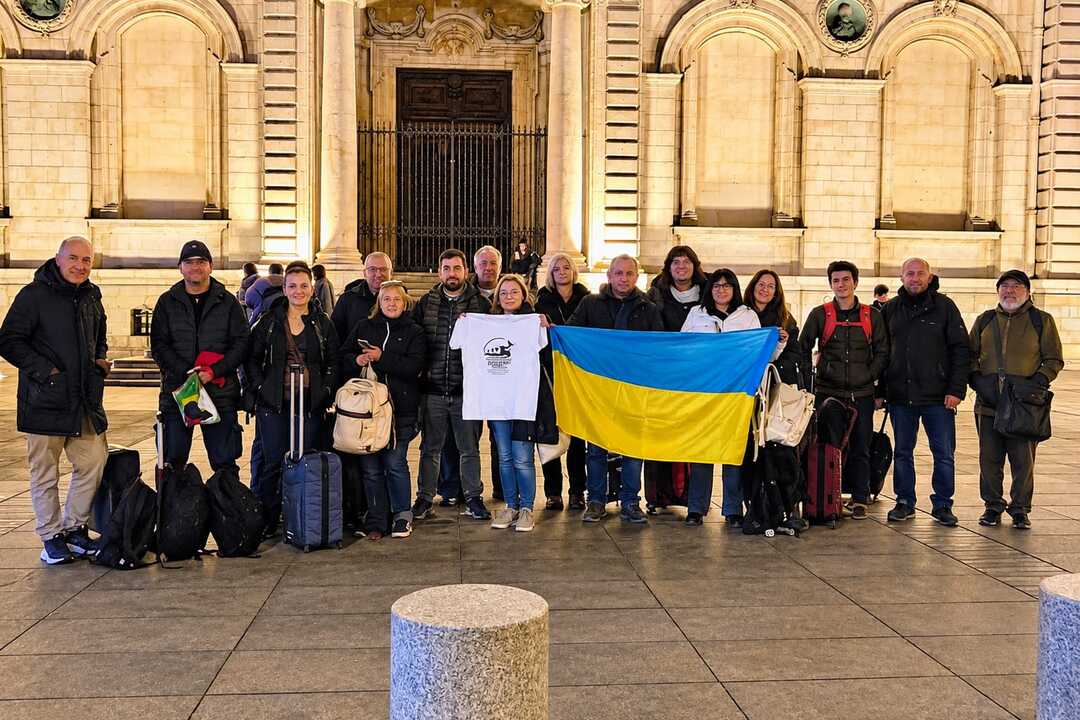
On Sunday morning, we were visited by various local organizations, who showed their warm support for the Convoy, which included an exchange of political views.
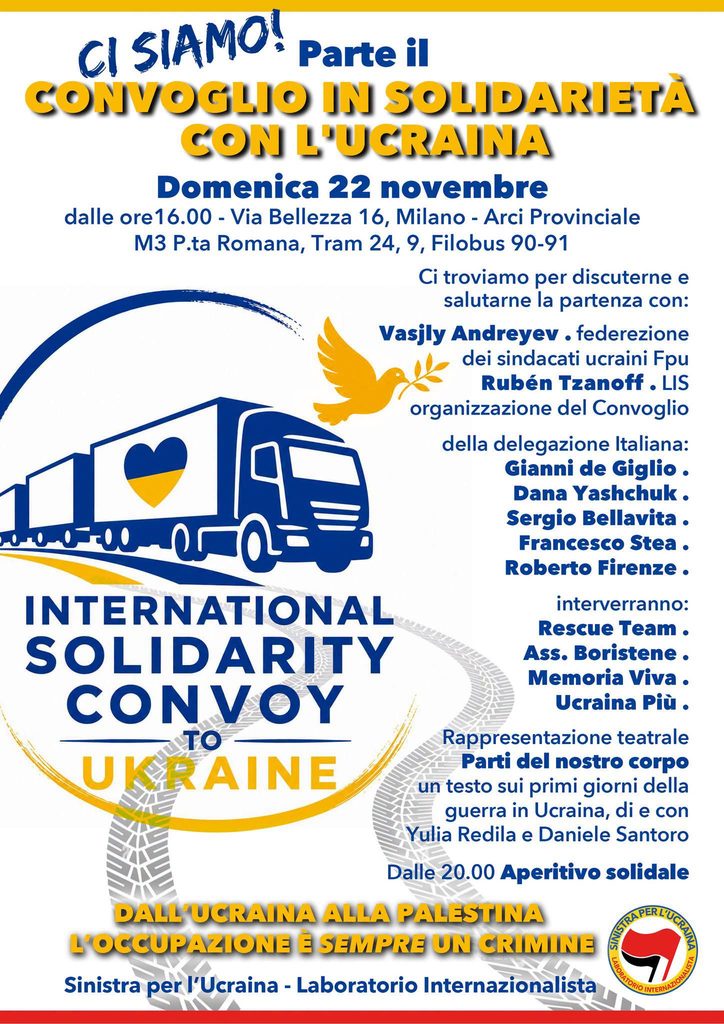
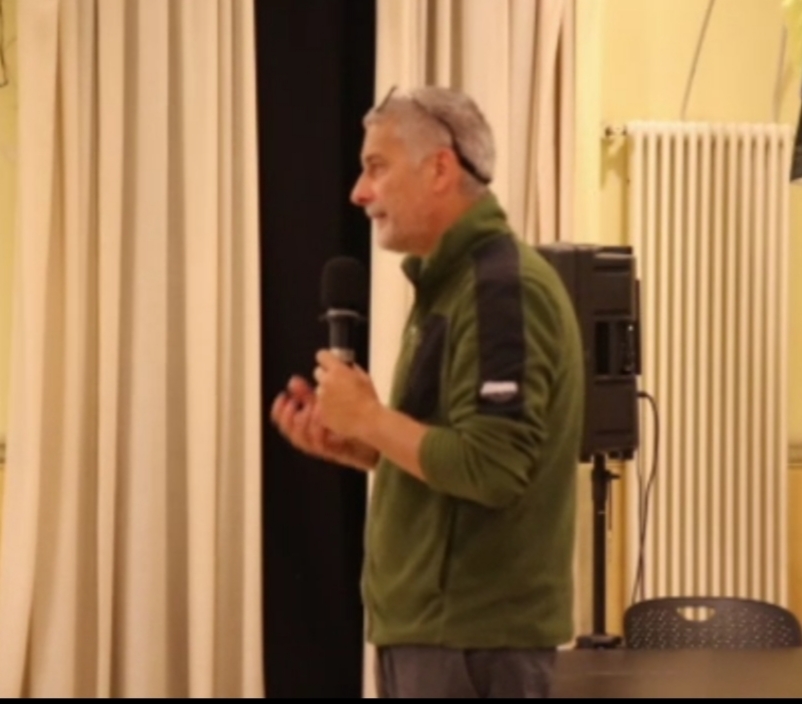
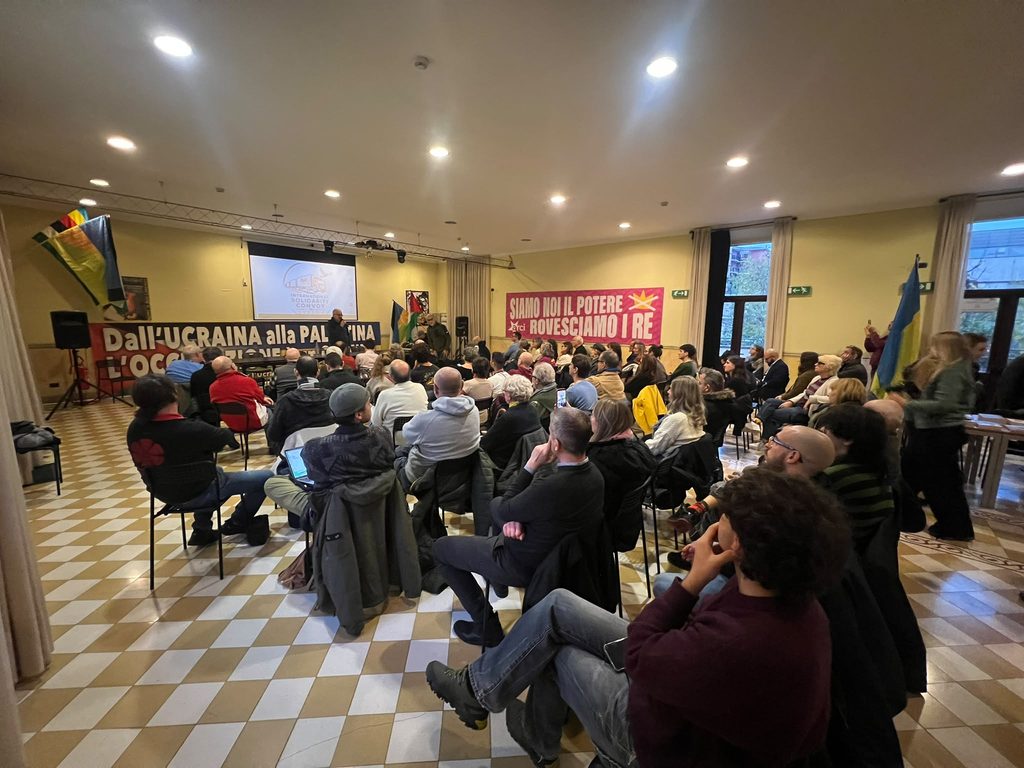
Later, in the midst of a heavy downpour, we set off for Geneva. As soon as we arrived, I took part in an important discussion organized in Italy ahead of the departure of the other branch of the Southern Route from Lecce.
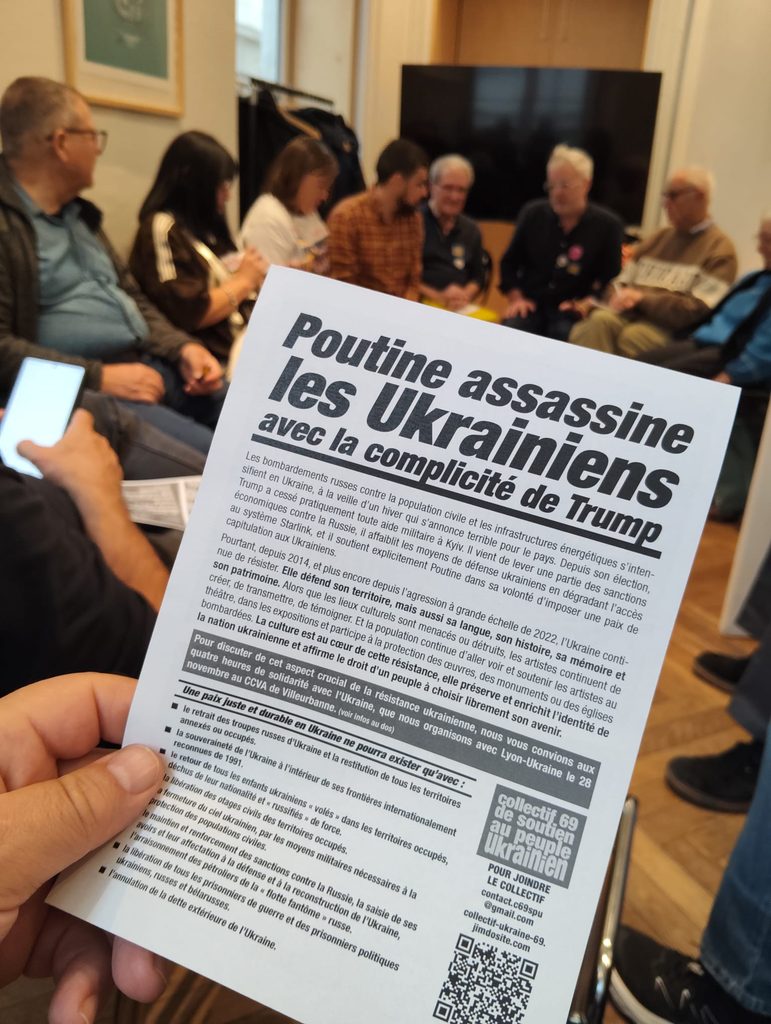
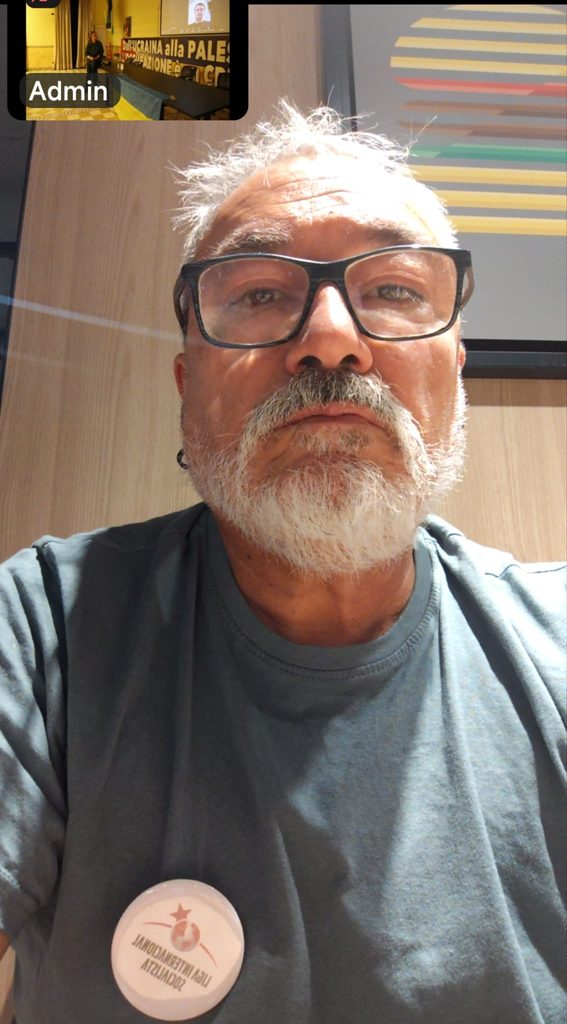
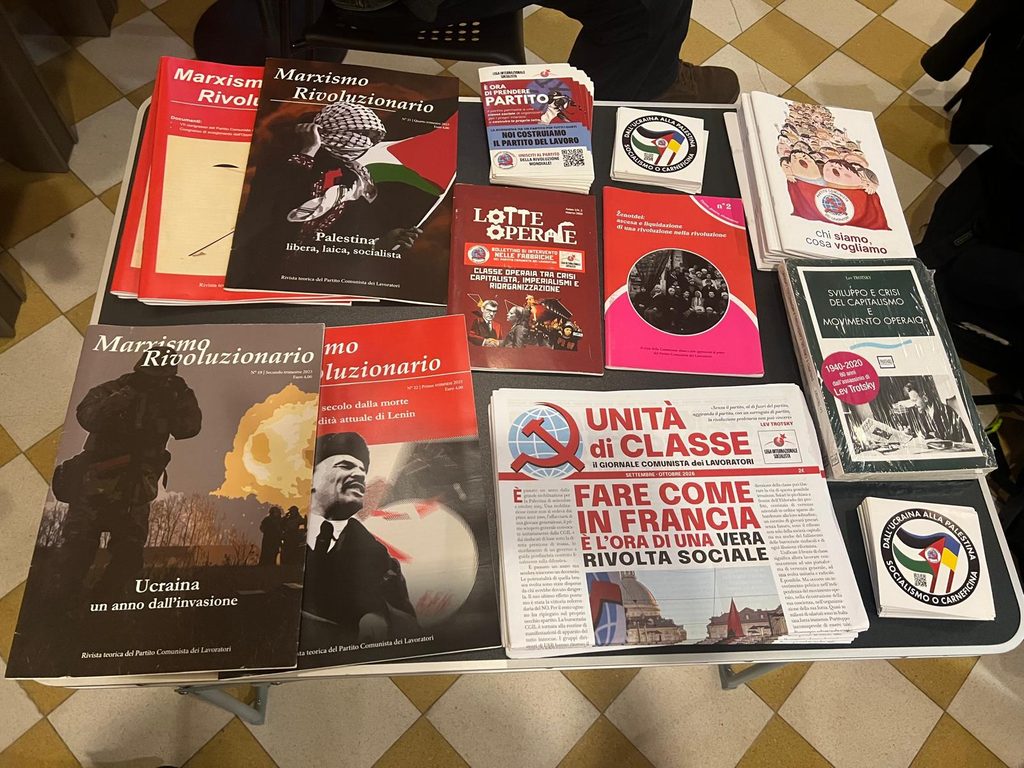
Sergio Bellavita.PCL promotional materials in Milan.Discussion in Milan.
Along the way, we’re forging closer bonds with our fellow travelers: activists, union members, and workers from different places of the world who decided to join this caravan. I’ll be sharing their views in the “Voices of the Convoy” section, starting today.”
Voices of the Convoy
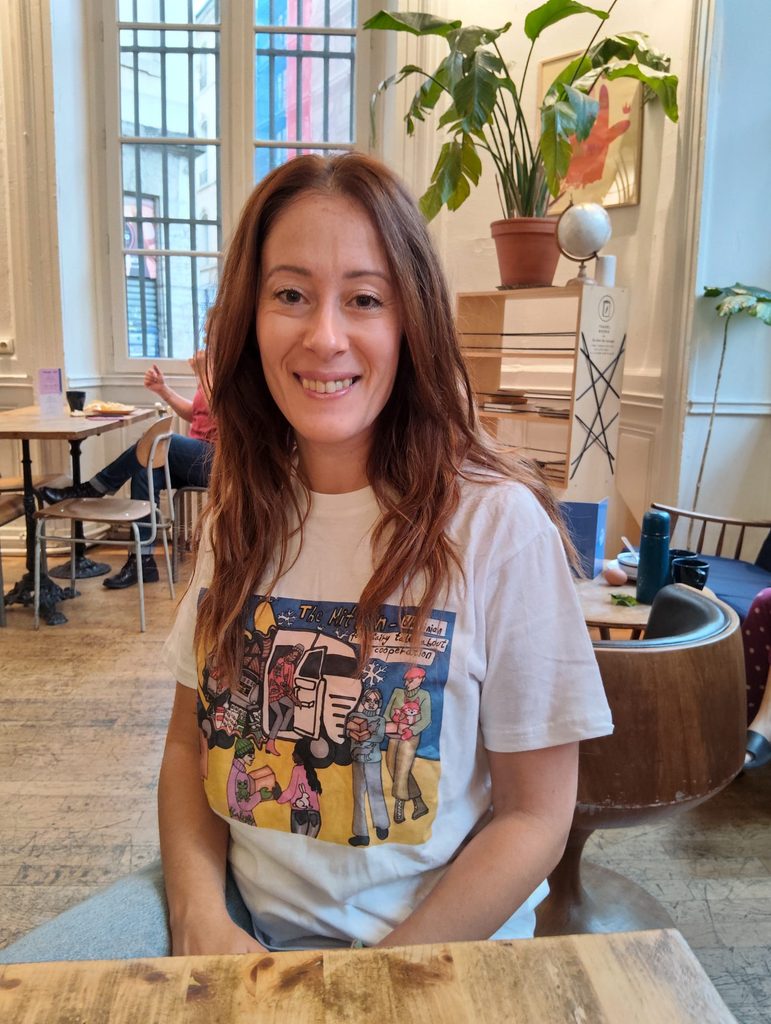
Raquel Perales Payán(UGT representative in the paint shop at Seat Cupra Martorell)
Raquel Perales
—Why did you decide to join the convoy? —Well, they proposed me to partcicipate, and it seemed like a really enriching experience—plus, you get to contribute and help others. It seemed perfect.
—What is the general perception of the workers at the factory regarding the war in Ukraine? —Everyone considers it as a complete injustice, something that shouldn’t be allowed in the 21st century. But, well, it seems there are some people who can’t move forward and put aside violence and absurd ideas of invasion.
—A lot of clothing was collected at your factory—a very charitable effort. How did you organize it? —And that was just in the paint shop; imagine if we’d been able to do it factory-wide, which we couldn’t because of time constraints. It was possible thanks to the workers with whom I have a good relationship and who wanted to support the cause. We formed groups to collect clothing across our three shifts; I would collect it, take it to the UGT headquarters at Seat. Guillermo and Matías helped Cati and Tesi bring all the clothing to the convoy.
—What do you think of this mission? —I think that this is courage. If it weren’t for brave people, help would never reach anyone, and that’s something to be highly valued; it says a lot about people and how supportive we are. People always help each other.
—Would you like to add anything else? —I want to say thank you for letting me be a part of this. I know it’s something I’ll remember for the rest of my life, and if I’ve been able to do my small part, I’ll always be grateful.
Colin Long(Fair Transitions Coordinator, Victorian Council of Trade Unions, Australia)
Colling Long and Rubén Tzanoff.
—Why are you participating in this mission? —To show solidarity with Ukrainian labor unions and left-wing organizations in their fight against the Russian invasion and for a socially just Ukraine that respects workers’ rights. I think it’s important to show Ukrainians that their struggle is known even in places as far away as Australia.
—What does the Australian working class think about the invasion? —The Ukrainian struggle receives broad support in Australia from the vast majority of the population. However, it does not have as much of an impact on everyday political consciousness as the Palestinian struggle. Left-wing organizations are much more committed to the Palestinian struggle. This is partly because there are far more people of Middle Eastern origin in Australia than there are of Ukrainian origin, and partly because the Palestinian movement has a long history in Australia. The Ukrainian community in Australia is quite conservative, and, as far as I know, there is no Ukrainian left-wing presence there. Nevertheless, the Australian government has strongly supported Ukraine, and people back that support.
—Has the union organized any solidarity activities? —My union hasn’t organized many solidarity activities. Ukraine isn’t a top priority on its agenda compared to other issues, such as Palestine and the political struggle against the Australian far right. However, it has donated money to ENSU (European Network of Solidarity with Ukraine) and to the convoy.
—Would you like to add anything else? —I believe that the Russian invasion of Ukraine is part of a broader global ethno-nationalist aggression, which includes Russian support for far-right parties around the world. It also bears parallels to other ethno-nationalist aggressions, such as the Israeli genocide in Palestine. The Putin-Trump alliance is, in my view, an international, fossil-fuel-based fascist alliance that must be countered if we are to prevent the destruction of what remains of democracy and if we are to have space for labor and left-wing organizing. The Ukrainian struggle is part of a global struggle against the forces of the far-right ethno-nationalists.
Buoyed by these exchanges along the way, the Convoy continues its journey toward Eastern Europe. We’ll continue sharing the travel diary and new voices from this internationalist caravan in our next stops.