By Francisco Torres
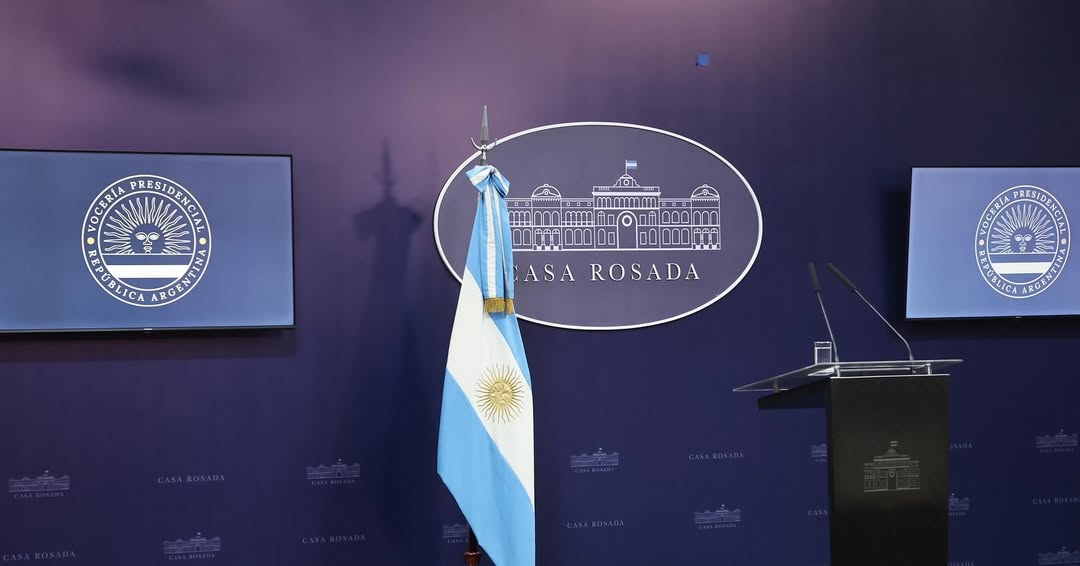
In the last weeks, Milei’s government started to go through a more complex scenario than the one that allowed it to advance with key laws, such as the exploitative labor reform, the lowering of the age of punishability to 14 years old and the attempt to sweep away the glaciers law.
These laws are part of a package of “structural reforms” demanded by the IMF, Trump and the corporations, in areas such as pension, tax, criminal and even political reforms. Everything points to a more regressive and authoritarian regime, with an economy of high precariousness, poverty and deprivation for the working majority and high concentration of socially produced wealth in the richest 1% that appropriates it and the caste of corrupt officials who work for them.
The government´s time of offensive, after the comeback it achieved with its October electoral victory over a PJ (Peronist Justice Party) in crisis, thanks to the support of Trump and the big bourgeoisie, together with the parliamentary complicities -even of Peronism-, is beginning to show signs of exhaustion.
The Adorni scandal and the libertarian caste
Today, the situation combines the crisis above, hard infighting in the government, economic complications, a tax collection that has been falling for eight months due to the decision to reduce withholdings to agribusiness and taxes to the rich, plus the slowdown in consumption and production. All this added to the pressure from the IMF for the payments of the debt scam, as well as the vulture bondholders, with a growing social unrest because people are not making ends meet. The combination creates a more complex panorama for the government.
The political crisis appears as the most dynamic element. The (Chief of Staff) Adorni scandal was a key issue, with 70% of the population wanting him to resign, despite the support of (Presidential Secretary) Karina Milei, President Milei and his cabinet. The new allegations included corruption, fraud and money laundering, as well as intimidation of those who exposed him. This strikes at the core of the libertarians’ “anti-caste” narrative, a discursive pillar that catapulted Milei after the disastrous PJ government and the Macri government before that.
It also reopened suspicions about the $Libra scam that the president himself is implicated in, the 3% bribes Karina Milei is acused of taking from, the favoritism and credits given by the Banco Nación to officials and libertarian and allied parlamentarians, or the high salaries of governors and senators . This combo caused a significant erosion of the government and a fall in the polls. Also in the social expectations, where 60% of the people state the need for a “change of government”.
Added to this are the economic problems that belie the official narrative. They insist on highlighting the drop in inflation and the fiscal “deficit”, but inflation has been rising for almost a year, while tariffs and transportation increases hit the people’s pockets, and the drop in consumption, massive layoffs and job losses persist.
The lack of reserves to guarantee debt payments deepens the dependence on the IMF, contradicting Milei when he said that resorting to the Fund was synonymous of “failure”. In a framework of economic stagflation that makes it difficult for them to advance in the counter-reforms demanded by big capital.
There are also tensions in the political-institutional area. The relationship with the allies in Congress is getting more complicated and the governors that used to facilitate agreements are recalculating their support in view of the cost of the adjustment. At the same time, there are greater frictions with the bourgeoisie and Trump’s war with Iran due to the increase in fuel prices.
Even sectors of the judiciary, particularly in the labor courts, have begun to put the brakes on and oppose measures that curtail rights: several court rulings against key articles of the labor reform show that legislative advances are encountering limits.
24M and an overheating social unrest
This deterioration “at the top” is combined with changes “below”. Social mobilization took a leap with the massive marches of March 24, which were a strong response to negationism (of the last dictatorship’s genocide) and invigorated the mass movement in the face of the far-right government.
Before that, the fourth national of Milei’s term, which was massive, despite its isolated character, without mobilization and delayed by the CGT leadership. Important conflicts are also developing, such as that of university teachers, and there are strong teachers’ struggles in ten provinces, in several cases in conjunction with health or state workers. There is also a reactivation of neighborhood assemblies and social movement road blocks against the termination of 950 thousand Back to Work programs, and labor struggles such as that of the recently closed FATE tire factory, which we must continue to support.
The government has in its favor the absence of a strong opposition. Peronism, in crisis, with infighting and no clear leadership, does not capitalize on Milei’s decline. Its responsibility for the failure of the previous administration and the defeat against Milei continue to weigh heavily.
This situation opens a space for the left, playing a consistent role in the streets, confronting the adjustment and the reactionary measures of the government. This growth is beginning to be reflected in the vanguard and in various polls, in a context of a growing general crisis of political representation.
How to intervene in the current situation
In short, we are facing a moment with new elements: a government with problems and signs of weakening; an economic situation that is not improving for the majority; and a process of reactivation of the class struggle that may deepen.
The government’s authoritarian offensive -with repressive protocols and attacks on democratic rights- finds limits in the social response. But at the same time, economic power and imperialism continue to support Milei in the absence of alternatives.
For the left, this scenario poses challenges and opportunities. It is key to promote the broadest unity, support and coordination of all struggles, to strengthen each conflict and fight for their generalization. To demand from the unions centrals a real plan of struggle, without subordinating to their passivity: we must promote organization from below, with assemblies, plenaries and coordination between militant sectors.
At the same time, we must raise a political solution. In the face of the permanent austerity, we propose a workers’ and popular emergency plan: prohibition by law of dismissals and suspensions, distribution of working hours without wage reduction, general increase of wages, pensions and social programs, no to the cessation of Back to Work, continuity of that program, increase of its amount and reopening of enrollment to those who have no income, together with a public works plan to generate genuine work.
In the face of companies that close or lay off, we propose the opening of their accounting books, their nationalization or provincialization without payment, as we demand in FATE, to put it to work under the control of its workers. Together with a plan of First Employment for young people, with equal salary and without precariousness.
The current crisis shows that there is no solution within the framework of Argentine semi-colonial capitalism. That is why, together with every struggle, we must raise a fundamental alternative: that the corporations, bankers, landowners and the IMF pay for the crisis. A road that can only be taken with struggle, with strikes and mobilizations and the strengthening of a consistent and united left, as the MST in the FIT Unity advocates.
Crisis, infighting and decline: without recovering, the PJ seeks to recycle itself
This is what explains the crisis of Peronism, which has continued to deepen. Not only after losing the national government in the runoff, but also in a process of regression that included the electoral fiasco in October’s national legislative election, after having won the Buenos Aires provincial election in September by 13 points.
These defeats and its lack of alternative to the capitalist framework leave the PJ in an unprecedented situation for a force that has always relied on a unified leadership. It appears fragmented, without leadership or capacity or decision to “stop Milei” or a project to confront the decadent semi-colonial capitalism of the country.
Historically, Peronism was characterized by its verticalism and the existence of strong leaderships that kept everything in line. Today, the opposite is the case. The figure of Cristina, once the unquestionable leader, is under house arrest and maintains a long and deliberate silence.
Their lack of intervention in key events, such as the approval of the exploitative labor reform achieved by the government with the complicit vote of PJ deputies and senators, does not express a personal shift, but the vacuum of leadership and project in a movement that once claimed the historic labor gains as their own. Gains they now allow to be liquidated because they want Milei to do the “dirty work” of the capitalist reconfiguration the bourgeoisie needs since the systemic crisis of 2008, in order to later “return” to govern with those advances against the working people taken care of.
The context in which Peronism wanders and debates itself
Buenos Aires Governor Kicillof was able to place himself at the head of the PJ of the Province of Buenos Aires, the most powerful party apparatus in the country, but his attempt of national projection has not taken off. He appears as a reference with weight in the Province, but without being able to unify the PJ tribes or synthesize a common program. His Movimiento Derecho al Futuro (Right to the Future Movement) proposes to “enlarge” the PJ with all those who oppose Milei, which seeks a similar amassing to the frustrated experience of the Frente de Todos (Front of All).
On the other hand, Sergio Massa was weakened after losing the runoff to Milei. His figure lost centrality and his space is trying to reposition itself as opposition, but his block accompanies laws such as the lowering of the age of punishability, which evidences a degree of adaptation to the new political scenario that clashes with any attempt of a real opposition identity. A more polite Mileism, is more of the same.
Another wing is that of Grabois: he criticizes, but does not take his feet off the plate and insists on “fighting from within”. His proposal for a big open primary, with candidates ranging from Kicillof to Massa, including “Wado” de Pedro, Schiaretti, Uñac, Llaryora, Pichetto and even Guillermo Moreno, reflects more an attempt to contain everyone than to overcome the crisis. It is an attempt to recycle Peronism under new forms, like an ambulance picking up the wounded and many unsavory characters.
At the same time, the attempts of “federal Peronism” are being recreated. Cordoba’s Schiaretti was one of its main expressions, but his electoral performance was a fiasco. At the same time, governors such as Jaldo from Tucumán, Jalil from Catamarca or Sáenz from Salta have been key to guarantee governability to Milei. This collaboration deepens the crisis of Peronism and evidences that wide sectors of the PJ are part of the support of the current model.
This attempt to seek “broad” alliances includes the meeting between Cristina and Pichetto -who was Macri’s vice-presidential candidate- as an eloquent example. The idea of an “anti Milei” front that includes leaders who have passed over to the right or collaborate with Milei’s La Libertad Avanza shows to what extent Peronism is willing to dilute any delimitation in order to “come back” in 2027.
The debate about the zurdos (lefties) and Trotskyism
This debate is also expressed in the ideological and media field and in the social networks. Sectors linked to Peronism have launched criticisms to the left and Trotskyism, such as those of Tomás Rebord or Grabois, seeking to delegitimize the possibility of the emergence of a left-wing alternative, outside the PJ.
In a context where the rejection of Milei is growing, as well as the disbelief and even the rupture with Peronism, with the left we are beginning to gain visibility, as shown by the installation of figures, legislative advances, social insertion and the debate on the role of the Frente de Izquierda Unidad (Left Front Unity). Even Milei is vocally against the zurdos.
The problem is that Peronism does not offer a way out of the crisis. The proposal to reissue a political front in the style of Lula with the right wing in Brazil or to rebuild a scheme similar to the Frente de Todos, implies going back to failed experiences. Alberto’s government, with Massa and Cristina, ended up adjusting, validated the debt with the IMF and generated a deep social frustration that was the breeding ground for Milei’s rise.
Repeating these recipes can only lead to new disappointments, particularly with a PJ that turns to the right and acts with a conservative logic in the face of social conflict. The CGT and the bureaucracy that responds to Peronism refuse to raise a plan of struggle. Their delayed strikes, without mobilization or continuity, have spared the government when it was hanging by a thread.
And they let the disastrous labor reform pass. This responds to a strategy of letting the government apply the adjustment, while Peronism positions itself as an electoral replacement. A speculation that prioritizes the power dispute over the urgent needs of the working majority.
Something new on the left, for real change
Therefore, in view of Milei’s crisis and the exhaustion of Peronism, the need for a different political alternative becomes evident. It is not enough to discursively oppose or recycle old coalitions. A fundamental solution is needed, independent of those who have already governed and failed.
In this sense, the growth of the political space on the left opens an opportunity for us. From the MST in the FITU we propose that it is time to take courage and make a serious change. And we call for raising an alternative with the vocation to lead millions. To open the FITU, to debate and advance towards a unified party of the left with freedom of tendencies, on the basis of the program of the FITU.
To those who are disappointed with Peronism, but confront Milei, we say that there is another way. The defeats and crises of the PJ are not a passing thing, but the expression of historical exhaustion. It is time to dare to change seriously. It is time to strengthen the left and build a real power alternative of the working class and the people. Join the MST in this challenge.