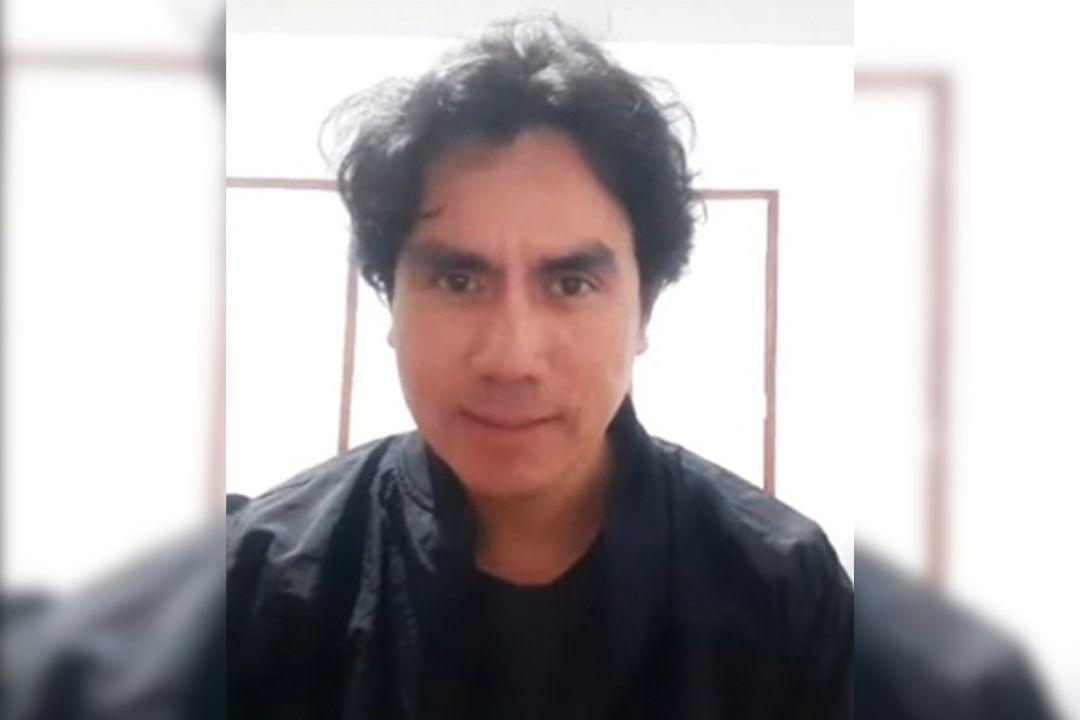
Interview with Juan José Villa of the MST Bolivia*
ISL: What are the causes and demands of the uprising of the Bolivian people and proletariat against the government of Rodrigo Paz?
JJV: The causes are based on a deep economic crisis aggravated by the leadership of a government that is a lackey of U.S. imperialism. With an inflation rate that the government says is 20%, but in daily life, where it is necessary to have access to a basic family basket, it translates into more than 100%. The average kilo of beef that used to fluctuate between Bs.41 and Bs.45, now it does between Bs.85 and Bs.95; the liter of refined oil that used to fluctuatebetween Bs.11 and Bs.13, today reaches Bs.21 and Bs.26. Public transportation, services, all life has become exorbitantly expensive. If wages were already insufficient to make ends meet, today the situation has worsened.
The political cause is the fact that the government is a subject of Donald Trump. The country complies to the designs of the IMF and the World Bank, representing the interests of the national sell-out oligarchy. Rodrigo Paz took office with populist promises of granting bonuses, preserving social gains, maintaining food and energy subsidies, but once in office, he applied a neoliberal austerity, unloaded the crisis on the backs of the workers, popular sectors and peasants, while benefiting the most powerful by eliminating the tax on large fortunes and imposing Supreme Decree 5503 on Christmas, with more than 120 articles that facilitate handing over natural resources to transnational corporations, as well as raising fuel prices, annulling the subsidy to hydrocarbons, among other pro-imperialist measures.
The combative response of the masses was not long in coming. The Federation of Miners and the Bolivian Workers’ Central had held their historic congresses changing the traitorous leadership of the MAS era, and replaced conciliatory theses with ones based on class independence: no support to any bourgeois government, accompanied by a list of struggles that denoted the opening of a new revolutionary process.
In December 2025, under pressure from the rank and file and at the head of the mining proletariat, the COB assembly unanimously voted the Indefinite General Strike for the abrogation of DS. 5503. The struggle culminated in January 2026 with a powerful victory. The workers, peasants and popular alliance was formed. The decree of the pro-imperialist government was defeated. The COB ceased to be a simple union and became an organ of dual power. The masses considered that it was possible to go further; that the forces were not only enough to abrogate a decree, but that it was possible to remove the entire government by revolutionary means.
However, the new COB leadership ordered the lifting of the blockades. This generated uneasiness, especially among the peasant base. The COB leadership gave pure oxygen to the government. That is to say, Rodrigo Paz was no longer sustained by his own forces, but by the assistance of oxygen from an antagonistic class organization, the COB.
This oxygen allowed Paz to recover for a new package of laws. The elimination of the subsidy to hydrocarbons was consolidated, increasing the price of public transportation. He eliminated the subsidy on flour, which caused the price of bread to skyrocket; he established pro-surrender laws emulating in parts the abrogated DS 5503, such as the one on electricity, and a campaign to bankrupt state enterprises for their respective privatization, among others, where the straw that broke the camel’s back was Law 1720 on land conversion, where the oligarchy and the banks could easily take over the lands of small peasants and indigenous territories. In addition to this, it showed its total rejection of the peasant councils and the COB’s petition, which was based on wage demands, where the spearhead was the urban and rural teachers.
From the May 1 meeting called by the COB, the so-called “Indefinite and Mobilized General Strike” began against the sell-out laws and for a wage increase, among other demands that quickly merged into a single demand: the resignation of Paz. The rank and file put pressure on their leaders not to sell out and forced the COB leadership together with the peasant and popular organizations to sign the “No Betrayal Pact”.
Paz no longer has the vital oxygen, the rank and file overtake their conciliatory leaderships, the dual power body is reactivated from below. The government was forced to abrogate Law 1720 and offer bonuses to the striking teachers, backed down and called for dialogue, only to immediately apply a military police offensive, leaving two indigenous leaders dead and hundreds of people arrested and wounded in its wake. The workers, peasants and popular bases, far from being intimidated, increased their forces and pointed the way: There is nothing to dialogue! Peace must fall.
The government has unleashed a persecution of the main leaders with immediate arrest warrants coming from the corrupt, illegitimate and widely rejected by the oppressed majorities court of justice.
The struggle continues, Paz and the oligarchy of the east are now supported by reactionary and fascist middle class sectors such as the Unión Juvenil Cruceñista, who are pushing for the declaration of a State of Siege. However, they are in the minority and their responses are defensive. The revolutionary process can triumph, for the power of the COB, CSUTCB, Túpaj Katari, Fejuves and all the workers, peasants and popular institutions that today are unified around the COB!
LIS: What do you think of the COB and CSUTCB leaderships? What are the different union and political sectors present there?
JJV: The leadership of the COB arose from a process of breaking the chains with the Masista, Arcista and Evista leadership, which for years demobilized the workers’ movement. This process began from the rank and file of the mining proletariat. It is not the same leadership as the previous one. Hence, the masses are calling on them to take the lead in the struggles. A similar process arose in the peasant movement within the Central Sindical Única de Trabajadores Campesinos de Bolivia (CSUTCB) and the Federación Túpaj Katari, seeking new leaders and inaugurating a new stage of struggles by overcoming the obstacle of the MAS.
The influence of the schools of cadres of MAS, the party that governed for 20 years, is still present with the support of the Communist Party and the petty bourgeois indigenism of García Linera, which explains the conciliatory practices with Paz that led to the lifting of the indefinite strike in January.
However, the Bolivian revolution objectively proposed to break with these practices, and the grassroots pushed the leaders to sign the Non-Traition Pact.
It is the duty of the current leadership to lead the dual power to victory. This translates into the government of the COB and the peasant and popular organizations in struggle. The concrete alliance that has emerged at the head of the COB must govern. There is no room for the succession of Vice President Lara, or the oligarchic parliament and court of justice when it comes to a revolution.
Argollo (COB), Paye (FSTMB), Salazar (Túpaj Katari), Severo (CSUTCB) and executives of Fejuves and popular sectors, are all committed to lead the working class to the conquest of power by revolutionary means.
Trade union sectors present?
CSUTCB and all its peasant federations, Túpaj Katari and all the Ponchos Rojos of the 20 provinces of La Paz, the militant FEJUVES of El Alto, the free, interprovincial and city transport federations (they are entering in a staggered manner), the Federations of Trade Unionists and Artisans; factory workers at the head of the CGTFB, among others, I am going to fall short with the answer. All these sectors are affiliated to the Central Obrera Boliviana, a dual power organization led by the salaried miners and which, together with the peasants, is leading the indefinite strike.
Regarding the question of political sectors, I have pointed out that the influence of the MAS and the petty bourgeois indigenism of the García Linera wing is present, which, although cracked, has not disappeared, and is responsible for the political education of the majority of leaders. So is the Communist Party allied with MAS in its different factions. They mashed the defeatist theses of the workers’ movement, recommending defensive lines, conciliatory with the government and the bourgeoisie. They were surprised by the objective revolutionary process.
Within the mining proletariat and assemblies of the COB, Trotskyist participation was only in two organizations, the Partido Obrero Revolucionario (POR), which proposes creating a Popular Assembly as a way out, and our own, Movimiento Socialista de los Trabajadores (MST), which proposes fighting for all power to pass into the hands of the body already created by the masses, the COB.
LIS: Is it true, as the bourgeois press says, that there is a kind of conspiracy of Evo Morales’ MAS behind it?
JJV: The Bolivian revolution arises from the workers, peasants and popular bases, not from Evo Morales. In fact, the COB, the CSUTCB, the Tupaj Katari federation go to struggle after a process of rupture with Evo and the MAS.
Evo has a new party called “Evo Pueblo” and wants to take advantage of the process to recompose himself in the face of the MAS debacle. The revolutionary upsurge is propitious to build working class left alternatives, but it also benefits the reformist parties that ride on the protests. Evismo entered the mobilizations late, after seeing the magnitude of the Indefinite Strike. It joined the petition for Paz’s resignation, with which we make unity of action in the streets, but it proposes a political solution contrary to the revolution, promoting bourgeois succession and the electoral diversion of the struggle, a political line that historically has only allowed to extinguish the fire of the revolution and to recompose the forces of the right wing and oligarchy.
LIS: What is the level of consciousness and organization of the proletariat and the popular masses?
JJV: The answer to this question is contained in the previous ones: in short, the proletariat has advanced in recovering the COB for the struggles, this has allowed forging it once again as a dual power posing that a workers’ government is possible. This has developed objectively, spontaneously. Even the subjective factor, that is, the workers vanguard organized in a conscious revolutionary party of mass influence, is not fully developed. But the objective conditions to make workers’ power a reality are more than mature, laying the foundations to resolve the problem of revolutionary leadership as long as this alternative is built without denying the objective process and intervening in the struggle within the dual power (COB).
In a large part of the peasantry, the political line of constitutional succession of Vice President Lara is present before the fall of Paz, with the objective of calling for presidential elections. Class conciliation still weighs heavily.
But in the majority of the proletarian mining base, the figure of Lara is rejected along with that of Evo Morales and the MAS. They question their leadership’s lack of clarity regarding the objective of struggle in the face of the possible fall of Paz. Here is where the door is open to fight for the COB government. With this alternative, the most hardened peasantry can fight for workers’ and peasants’ power, leaving behind the succession of Lara. Here the importance of fighting for democratic assemblies to define the alternative of the working people. With these lines of action we activate the proletariat.
To deny the Bolivian insurrectional process only because the “Bolshevik party of mass influence” does not exist is a blunder. On the contrary, that party can be built if the cadres who intervene in the struggle clarify loudly and in writing the objective potential of the masses’ own forces, pointing out that their worker, peasant and popular unity around the COB has created an organ of dual power, that the leaderships should not be freed from their responsibility, that they should assume the seizure of power to inaugurate the era of working class government. That in the face of the possible fall of Paz, power should not be handed over to the bourgeoisie and its servants, Lara and company. But to assume the workers’ and peasants’ government.
To deny the revolutionary situation only because one’s party is small, ends up being self-proclaimatory, sectarian to the marrow; and opportunist outwardly, since it denies the objective potential of the masses, reduces the revolution to conceptions of revolt or rebellion, invisibilizing the leading role of the proletariat and the dual power, thus benefiting petty-bourgeois electoralist political outlets.
In this way, the revolutionary internationals are also obliged by the Bolivian revolution to campaign for workers’ and peasants’ power in concrete and not in abstract. Let them not remain in the discourse or abstract proposals of Assemblies of the People or organs with pretty names created only in the heads of their leaders, denying the organ created in concrete by the masses. All power to the concrete workers’, peasants’ and popular unity in Bolivia, All power to the COB!
LIS: What is the way out at this decisive juncture that will lead to a workers’ and popular triumph?
JJV: The political solution lies in trusting in the own forces of the working class, in the workers, peasants and popular unity achieved so far. To fight firmly for the seizure of political power by the COB – CSUTCB and organizations in struggle as a result of the revolution that is underway. Indecision in this respect gives the initiative to the oligarchy’s exits, to its parliamentary or electoral traps, to its recomposition and generation of doubts in the revolution because it would have no conscious alternative of its own.
Paz, imperialism and the oligarchy intend to impose attrition, demoralization and, with the reactionary middle class, a state of siege. But they are not strong, they have retreated by repealing law 1720, offering bonuses to the teachers, their military police offensive could not against El Alto and the blockades, the exploiters are on the defensive, the initiative has the struggle in the streets. We can beat them, not one step back!
Down with the neoliberal government! All power to the COB and peasant and popular organizations in struggle!
*Leader of the Bolivian Socialist Workers Movement, led the construction of the Socialist Youth at the Universidad Mayor de San Andrés, promoter of the COB – ADEPCOCA – UMSA alliance in 2017 – 2018 as alternative organizations of struggle to the MAS government. Author of the Contribution to the XXXIII Mining Congress of the FSTMB and the Theses for the XVIII Congress of the COB of the MST, documents of 2025, where the current revolutionary upswing is foreseen.