Automatically translated by AI.
By Sonia Albornoz and Alberto Giovanelli
Throughout the length and breadth of the country, day after day there are confrontations between different sectors that oppose the liberal policies that the Peace Government is trying to implement.
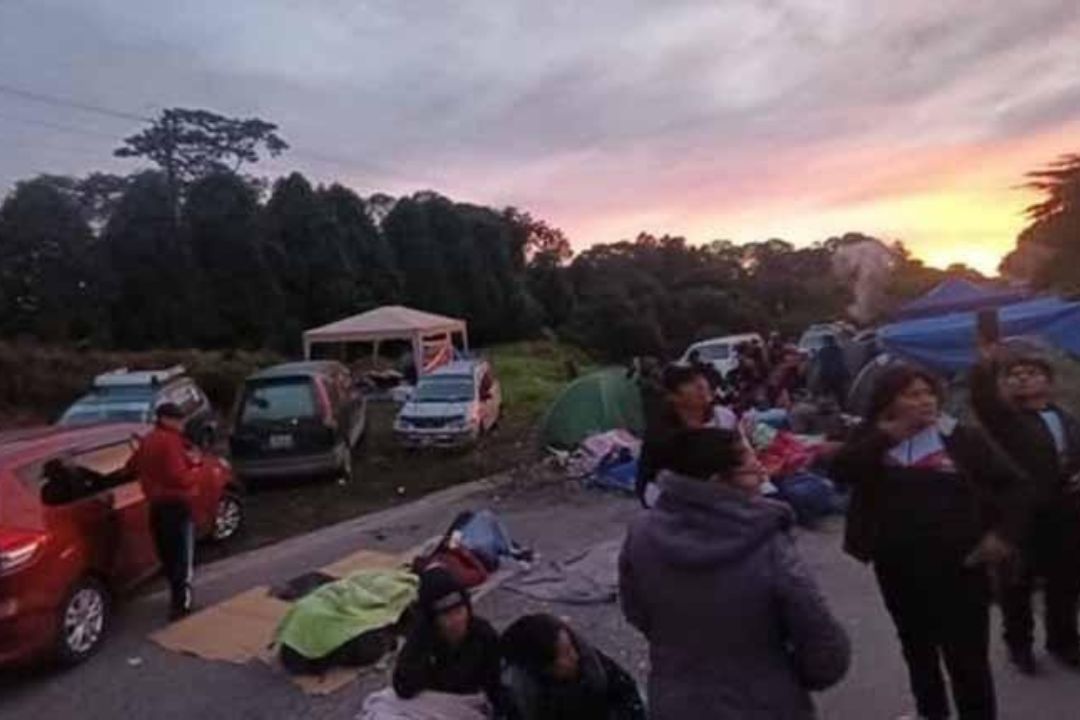
Rural teachers in the Cochabamba tropics are currently on a 48-hour mobilized strike and on Monday 11th they proceeded to block the main road to Santa Cruz. At the same time, in the city, teachers mobilized and marched to the Departmental Directorate of Education (DDE) to demand a higher budget for education, salary increase, creation of items and improvements in educational infrastructure.
In Quillacollo, the teachers’ union also called for a blockade of Blanco Galindo and Victor Ustariz avenues, on the road to the west of the country.
The Bolivian Highway Administration (ABC) reported 25 points with traffic problems in the country due to blockades and another 40 partial roadblocks due to various mobilizations.
Farmers also
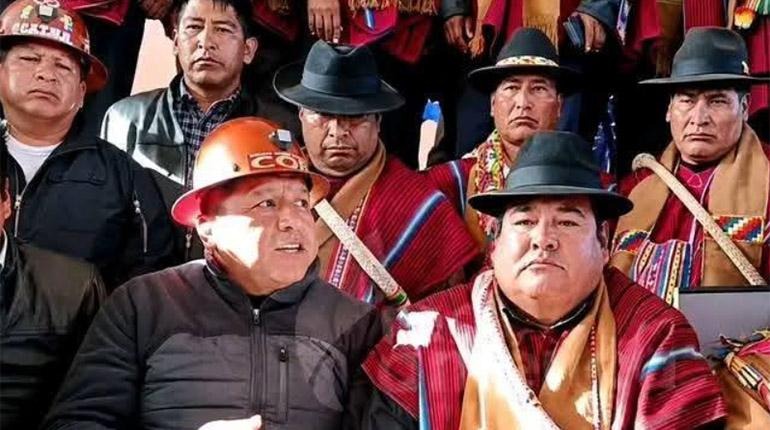
The executive secretary of the Single Departmental Federation of Peasant Workers of La Paz “Tupak Katari”, and one of the main promoters of the blockades, Vicente Salazar, assured this Monday that this is no longer the time for dialogue, but that the pressure measures will be massified with the request for the resignation of President Rodrigo Paz.
“Many leaders want to sell out. We call for awareness, this is no longer the time to be negotiating or dialoguing. The people have been very sincere and wise and today they want a vindication, because it seems that the government no longer represents us“, said Salazar.
The leader rejected the government’s call for a meeting with the authorities of the department of La Paz, and assured that the people no longer want dialogue.
“No one here is going to dialogue.”
“The people are really fed up with the government and we are seeing that the mayors are going, but not the great majority of them,” he said.
“To all my brothers in the factories, miners, all those who are in this struggle, let’s move forward. No one here is going to dialogue,” Salazar concluded.
The peasant leader considered that the request of “the entire population” is the resignation of the president.
“It is not me asking for it, it is not a leader asking for it, (but) the whole population, the revolutionary cry because of what this crisis is happening, is asking for the resignation of President Rodrigo Paz, we must be very clear,” he said.
Peace, a succession of crises in just over 6 months
The confrontation now with teachers and peasants is the continuity of other conflicts that in recent months have accelerated the government’s loss of prestige. The COB’s claims, the opposition to the fuel increase, the paralysis resulting from the poor quality of fuel and the institutional crisis that is reflected day by day in the daily differences expressed by Vice President Lara, are the most complete expression of this process.
Meanwhile, the MAS (Movimiento al Socialismo), which for years exercised a strong influence over the sectors now in struggle, is engaged in an internal fight that seems to have no end.
With broad sectors mobilized, a government that has no other proposal than to call for sterile dialogues where time and again they explain that the only way out is to apply more austerity measures to the popular sectors, it becomes imperative for those of us who claim to be anti-capitalists, socialists and revolutionaries to call together to promote the struggles and begin to debate the basic measures that the people need and that can only come from the hand of a democratic government of peasants and workers that emerges from the bowels of the Plurinational State. From the LIS (International Socialist League) we commit all our efforts behind these objectives.