For more than a decade, the Delegation of Argentine Jewish Associations (DAIA) has been promoting ideological and political persecution against those who speak out critically against the repressive and criminal policies of the Israeli government. The atrocities committed against the Palestinian people and Israel’s decision to deny them full sovereignty have generated deep empathy for the victims and, at the same time, condemnation of those responsible for such barbarity.
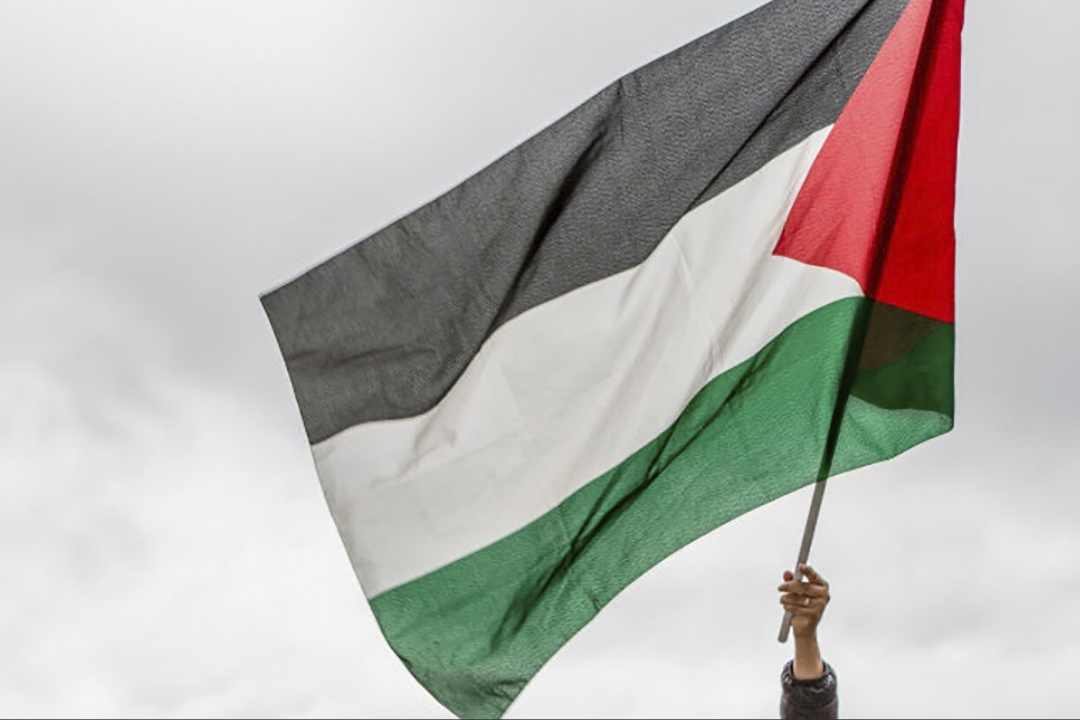
Expressions of solidarity with the Palestinian people, voiced by various political, social, and cultural leaders in Argentina, join the many condemnations of the Israeli government and its policies of occupation, ethnic displacement, land theft, and apartheid. Many of these political criticisms are directed at Israeli Prime Minister Benjamin Netanyahu, against whom an arrest warrant has been issued by the International Criminal Court.
It is worth noting that the massive human rights violations committed against the civilian population of Gaza—including mass murder, the destruction of infrastructure, land confiscations, forced displacement, and the blockade of humanitarian aid—have been classified by the International Criminal Court (ICC) as crimes against humanity.
In the same vein, the United Nations-appointed Special Rapporteur on the situation of human rights in the Occupied Palestinian Territories, Francesca Albanese, urged the Prosecutor of the International Criminal Court to investigate the State of Israel’s commission of crimes such as apartheid and genocide. In turn, the Independent International Commission of Inquiry on the Occupied Palestinian Territories concluded, following an exhaustive investigation, that Israel is committing genocide against the Palestinian people, and urged the State to put an end to this atrocity and to punish those responsible.
According to information published by the United Nations Relief and Works Agency for Palestine Refugees in the Near East, between October 7, 2023, and April 1, 2026, 72,289 Palestinians had been killed and 172,040 had been injured. Likewise, UNICEF reported that as of February 3, 2026, 21,289 children had been reported dead and 44,500 injured in Gaza. It also noted that at least 1.3 million people—the majority of Gaza’s population—remained displaced. In April 2025, according to information released by the United Nations, 92 percent of homes in the Gaza Strip had been damaged or destroyed, and 11,000 people were missing under the rubble.
Faced with these appalling figures, the DAIA has chosen to respond by tendentiously distorting these political questions and criticisms, portraying those who denounce the massacres as harboring anti-Jewish and/or anti-Semitic views. To this end, they have sought the complicity of sycophantic journalists, media outlets, and the judiciary, which serve their purposes in carrying out their attempts at discipline and censorship.
The persecution of the Jewish people has claimed millions of victims throughout history, especially during the Holocaust (Shoah). To invoke that horrific collective torment—etched in the universal memory of infamy—to legitimize or justify Netanyahu’s colonial policies against the Palestinian people constitutes an unforgivable trivialization. The memory of the Holocaust must serve as a guide for rejecting any act of extermination against any people. To further confuse Argentine society, critics of the Israeli government’s policies have been labeled as defenders of Hamas, the organization that carried out a ferocious and utterly reprehensible massacre against the Israeli civilian population in October 2023.
Examples of this “witch hunt” spearheaded by the DAIA include the criminal complaints filed against musician Roger Waters and against political leaders such as Alejandro Bodart, Leopoldo Moreau, Vanina Biasi, Horacio Pietragalla, and Senator José Mayans. The DAIA—which fraudulently presents itself as the representative of the entire Argentine Jewish community—has also filed complaints against Norman Briski, Alejandro Bercovich, Tomás Rebord, educator Federico Puy, Amnesty International, and the Rosario chapter of ATE. In the face of these repeated attempts by the DAIA to sow confusion and distort reality, we, the undersigned, state clearly and with deep conviction that:
● Taking a stand against all forms of colonialism is not antisemitism.
● Condemning the bombing of the civilian population in Gaza, which resulted in the murder of 70,000 people—20,000 of whom were children—cannot be used to label those who oppose such massacres as anti-Semites.
● Defending the right of Palestinians to a sovereign state, alongside Israel—as established by the United Nations in 1947—cannot be associated with any form of anti-Semitism.
● Denouncing Netanyahu cannot be associated with any form of hatred toward Jews.
In its current bylaws, the DAIA states that its primary objective is “to combat all forms of discrimination.” By persecuting those of us who choose to stand in solidarity with the victims, they betray their own principles, rendering them a dead letter.
Fighting against all forms of discrimination means opposing any type of stigmatization and social marginalization. The fight against racism, aporophobia (rejection of poor or dispossessed people), the mistreatment of Indigenous peoples, xenophobia, misogyny, oppression of sexual minorities, religious discrimination, Islamophobia, anti-Semitism, and all forms of hatred—are causes we cannot delegate to others as we continue to fight for full democracy, upholding the principles of Memory, Truth, Justice, and Sovereignty.
Let the DAIA and its sycophantic propaganda outlets know that their relentless persecution will not succeed in confusing our political positions with anti-Semitism. No accusation, slander, or defamation will silence those of us who stand in a place of integrity and dignity in history.
Mothers of Plaza de Mayo—Founding Line, H.I.J.O.S. Capital, Relatives of the Disappeared and Detained for Political Reasons, APDH, Argentine League for Human Rights, SERPAJ, Argentine Jewish Appeal, Federation of Jewish Cultural Organizations (ICUF), ESMA Survivors’ Collective, NIETES, Group of Priests in Solidarity with the Poor, Pallottines for Memory, Soccer Human Rights Coordinating Committee, Liberpueblo Alperin, David, Araya Masry, Rafael; Barrancos, Dora; Blejman, Eduardo; Dyment, Fanny; Edelman, Luis; Elbaum, Jorge; Feldman, Marcelo; Frenkel, Susana; Fridman, Alejandro; Fuxman, Laura; Galina, Esther; Garbarz, Ariel; Goldberg, Susana; Goldberger, Ricardo; Gorodneff, Pablo; Gorojovsky, Néstor; Gruszka, Irina; Gurvit, Víctor; Horestein, Marcelo Claudio; Israel, Mirta; Junio, Juan Carlos; Kleiman, Carlos; Kogan, Diana; Kogan, Raquel; Kon, Luis; Kwater, Adriana; Lerman, Gabriel; Levin, Silvia; Lois, Graciela; Malamud, Elina; Nemierovsky, Guillermo; Rabi, Tilda; Rabovich, Alicia; Rocha, Agustina; Roitman, Mario; Rosé, Alberto; Rubinstein, Pablo; Rybak, Ana; Saal, Marcos; Salita, Abelardo; Samuel, Liliana; Sapunar, Cristina; Scheinfeld, Daniel; Schmerkin, Carlos; Schvarzman, Mirta; Sclar, Leonor; Seltzer, Marcelo; Susana, Socolovsky; Teszkiewicz, Alberto; Vinter, Susana; Visacovsky, Maira; Visacovsky, Nerina; Weisz, José; Wengrowicz, Mónica; Wengrowicz, Tomas; Winikor, Daniel; Zelmanovich, Silvana. Agunin, Ester; Bairach, Nicolas; Baliner, Eduardo; Bartolomucci, Leonel; Ben, Hugo; Berendorf, Néstor; Biber, Guillermo; Blejman, Silvia; Bodnar, Marta; Bodnar, Silvio; Brescovich, Milena; Brodsky, Patricio; Brodsky, Pedro; Cohn, Silvia; Cozujovich, Janet; Deira, Martín; Dinsmann, Miriam; Dinsmann, Osvaldo; Distenfeld, Lidia; Ditsch, Herbert; Edul, Vanina; Eliezer, Marisa; Español, Esteban; Etchebarne, Silvia; Fairstein, Juan; Fingherman, Saul; Firbank, Celina; Fiszlejder, Pablo; Fleischmann, Hana; Flekenstein, Julieta; Forte, Gustavo; Freidemberg, Daniel; Frías, Carmen; Fridman, Edith; Galestok, Rosa; Ganz, Ella; Gluzman, Osvaldo; Grinberg, Saul; Grinschpun, Victor; Guelman, Anahi; Gurbanov, Jorge; Gusner, Sara; Gutman, Paulina; Gutt, Susana; Guttfleisch, Jorge; Jenks, Zulma; Joselevich, Pedro; Kalizsky, Raquel; Karpinsky, Sophie; Kaufman, Araceli; Kaufmann, Patricia; Keitelman, Alberto; Kenepple Menees, Martina; Knopf, Lilia; Kogan, Laura; Kohan, Miriam; Kosakiewicz, Denis; Koval, Salomón; Koval, Sofia; Kramer, Guillermo; Krasuk, Raul; Ladowski, Sara; Lahoz, Laura; Leale, Ernesto; Lerner, Carlos; Leszczuk, Sol; Levy, Larry; Lewi, Nora; Lewin, Norberto; Lewin, Sylvia; López Foresi, Liliana; Malec, Daniel; Mandler, Liliana; Marino, Juliana; Marquardt, Alberto; Masllorens, Enrique; Menaker, Pola; Meyer, Leonor; Mitrik, Maria; Morresi, Claudio; Muchinik, Ruth; Niedzwiecki, Dora; Niemtzoff, Liliana; Ostoich, Emma; Pensel, Silvina; Perelsztein, Gustavo; Pisoni, Carlos; Pomeraniec, Sergio; Pridmenik, Eduardo; Pupko, Jaime; Rabinovich, Alfredo; Raigorodsky, Irene; Rapisardi, Flavio; Rasdolsky, Isaac; Rosenberg, Martha; Rucovsky, Liliana; Russo, Sandra; Said, Emilia; Samolski, Luis; Saxlund, Marta; Schebor, Gabriel; Scheinin, Rita; Schlemenson, Silvia; Schonfeld, Mario; Segal, Celia; Silber, Paula; Silberman, Nilda; Smaliroff, Claudia; Smietniansky, Sergio; Solá, Felipe; Solá, Mercedes; Steinman, Daniela; Stiberman, Ruben; Streiger, Judit; Taffarel, Mary; Talsky, Alicia; Teper, Juana; Tiraboschi, María; Valmaggia, Luisa; Varela, Adriana; Varsky, Carlos; Vélez, Ignacio; Wainstein, Daniel; Waitman, Sara; Wald, Alejandro; Warjach, Monica; Weisenberger, Elvira; Wiszniewer, Matias; Wortman, Javier; Wozniak, Maricel; Zacutinsky, Mayra; Zalcman, Julio; Zarzuelo, Mauricio; Zborowski, Ernesto; Zinik, Valeria. (Signatures follow…)