By Naira Carcelen
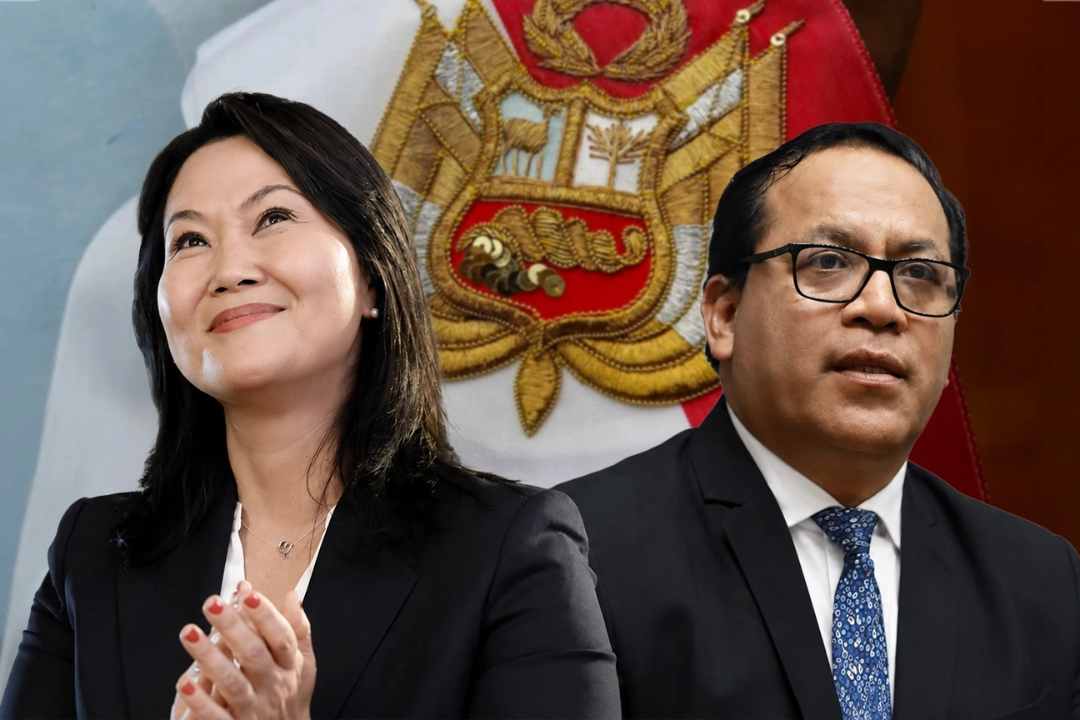
With nearly a month to go before the presidential runoff, Peru still does not officially know who will govern the country in the coming years. With more than 99% of the ballots counted and a razor-thin margin between Keiko Fujimori and Roberto Sánchez, the country once again finds itself facing a scenario that has become a constant in its recent history: an election decided vote by vote, amid deep political and social polarization. If the trend continues, this could become the third consecutive presidential election decided by less than one percentage point—a fact that, far from being a mere statistical curiosity, reveals the magnitude of the political crisis the country is facing and the lack of consensus capable of offering a stable solution to the problems faced by millions of Peruvians.
However, it would be a mistake to interpret this situation solely as a national phenomenon. What is happening in Peru today is part of a much broader trend sweeping through Latin America and the world. In recent years, we have seen the rise of various right-wing and far-right movements that have managed to capitalize on the social unrest generated by years of economic crisis, institutional decay, and frustration with governments incapable of responding to the needs of the vast majority. From Milei’s arrival in the Argentine government to the strengthening of conservative movements in Ecuador, Colombia, Chile, and now Peru, we are witnessing a regional political realignment that must be understood as part of a deeper crisis of contemporary capitalism—a crisis that is no longer merely economic but also environmental, cultural, social, and political. As inequality, job insecurity, and uncertainty about the future increase, ever-larger segments of the population are seeking urgent answers, and it is precisely in this arena that the right is attempting to present itself as an alternative capable of restoring a supposed lost order.
Keiko Fujimori’s campaign is one of the clearest examples of this phenomenon. Her platform has been built around the promise of restoring order through heavy-handed policies against crime, declaring a supposed “war” on extortionists, promoting the permanent deployment of the Armed Forces on the streets, military control of prisons, and the strengthening of mechanisms for state surveillance, persecution, and repression. Behind this rhetoric lies a deeply dangerous logic: exploiting the legitimate fear felt by a significant portion of the population in the face of rising crime to justify the curtailment of democratic freedoms, the expansion of the state’s repressive powers, and the consolidation of an authoritarian political project that presents force as the only response to problems with much deeper social, economic, and structural roots.
It is no coincidence that these proposals are causing concern among broad sectors of society, as the legacy of Alberto Fujimori’s government remains vivid in the country’s collective memory—not only because of its authoritarian nature, but also because of the serious human rights violations and crimes committed under the guise of the so-called “fight against terrorism.” During those years, Peru experienced a period marked by state terrorism, extrajudicial executions, forced disappearances, the persecution of political opponents, and the criminalization of social protest. That is why, when Keiko Fujimori today once again raises the banners of order, militarization, and a heavy-handed approach, she is not proposing anything new, but rather reviving a political tradition whose legacy continues to weigh heavily on Peruvian society. What is presented as a solution to insecurity runs the risk of becoming, once again, a tool to strengthen mechanisms of social control that have historically been used against workers, youth, and the working classes far more than against those who hold economic and political power.
The momentum that Roberto Sánchez’s candidacy has gained should be understood precisely as the flip side of this very crisis. His message resonated because it connected with a reality that millions of people experience on a daily basis: while mining exports continue to generate enormous profits for national and transnational corporate groups, broad sectors of the population continue to face insufficient wages, deteriorating public services, and increasingly precarious living conditions. The proposal to review mining contracts, strengthen state intervention, increase social investment, and ensure that the wealth generated by natural resources effectively benefits communities resonated with the discontent that had been building for years and allowed broad sectors of the populace to see his candidacy as a possibility for change in the face of the current model’s exhaustion.
However, the campaign’s own progression also highlighted the limitations of that project. As the second round progressed and new political alliances took shape, Sánchez’s campaign gradually moderated its rhetoric and adapted some of its proposals to reassure the markets, large business groups, and traditional power structures. This dynamic is not merely a unique feature of his candidacy but reflects a broader contradiction that runs through much of Latin America’s progressive movement: the difficulty of offering a real alternative to the crisis without quickly entering into negotiations and making concessions to the very sectors responsible for managing it. In this sense, the Peruvian scenario also highlights the limitations of projects that seek to manage social discontent without consistently challenging the structural foundations of the system.
As the vote count continues and political uncertainty drags on, another phenomenon is beginning to gain prominence: popular mobilization in defense of the vote. The demonstrations organized by organizations and supporters of Juntos por el Perú not only express concern about the election’s outcome but also reflect the desire of broad sectors of society to actively participate in a political contest that for years was monopolized by economic elites and traditional parties. It is telling that the authorities’ response has been to restrict movement and limit demonstrations under the pretext of preserving public order. Once again, the double standard with which institutions tend to operate is evident: while conservative demonstrations are tolerated and even supported, expressions of grassroots organization are quickly labeled as a threat.
Whatever the final outcome, the Peruvian election leaves us with a conclusion that is hard to ignore: the crisis is far from over. The polarization currently dividing the country is not an isolated phenomenon, but part of a much broader conflict sweeping across all of Latin America. While the right wing advances, attempting to capitalize on fear, insecurity, and social discontent to strengthen increasingly authoritarian agendas, millions of workers, young people, women, and the working class continue to seek a way out of a crisis that the system itself is incapable of resolving.
For this reason, the response cannot be limited to the electoral arena. The protests in defense of the popular vote show that there is a growing willingness to organize and defend democratic freedoms against those who seek to restrict them. It is this force that must be strengthened in the coming months, regardless of who is declared president.
We in the International Socialist League reaffirm our anti-Fujimori stance and our rejection of any authoritarian solution presented under the guise of order and security. But we also maintain that the profound transformations Peru needs will not come from agreements among the elites or within the confines of existing institutions, but rather from the independent organization of the working class, youth, women, and the popular sectors.
In the face of a crisis that has already become international, our response must also be international. That is why we remain committed to building a socialist, revolutionary, and internationalist alternative—one capable of uniting the struggles currently sweeping the continent and effectively challenging those in power to serve the interests of the vast majority.
The task remains the same: to organize the resistance, strengthen grassroots mobilization, and build a political tool capable of transforming this system from the ground up. Because in the face of the right’s advance, the answer is not resignation. The answer is more organization, more struggle, and more socialism.