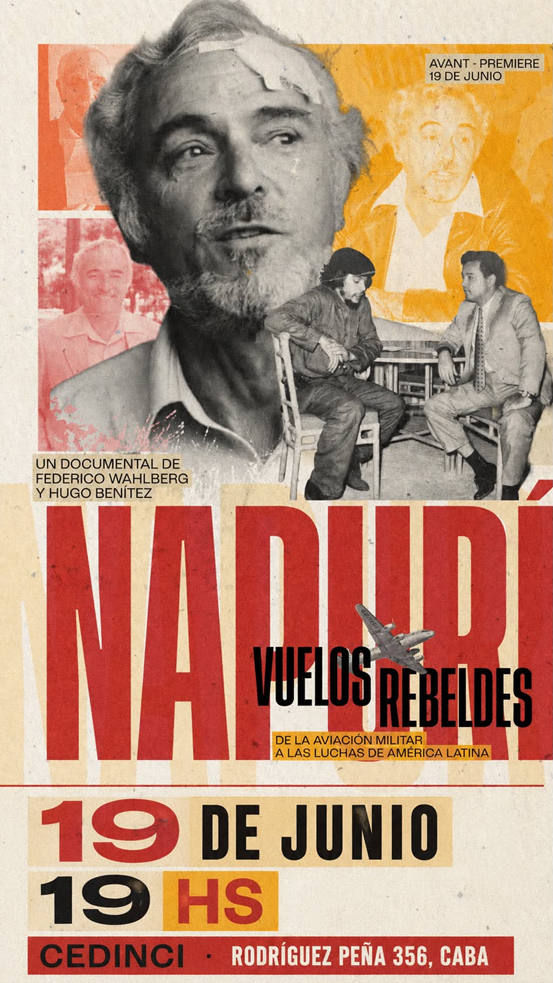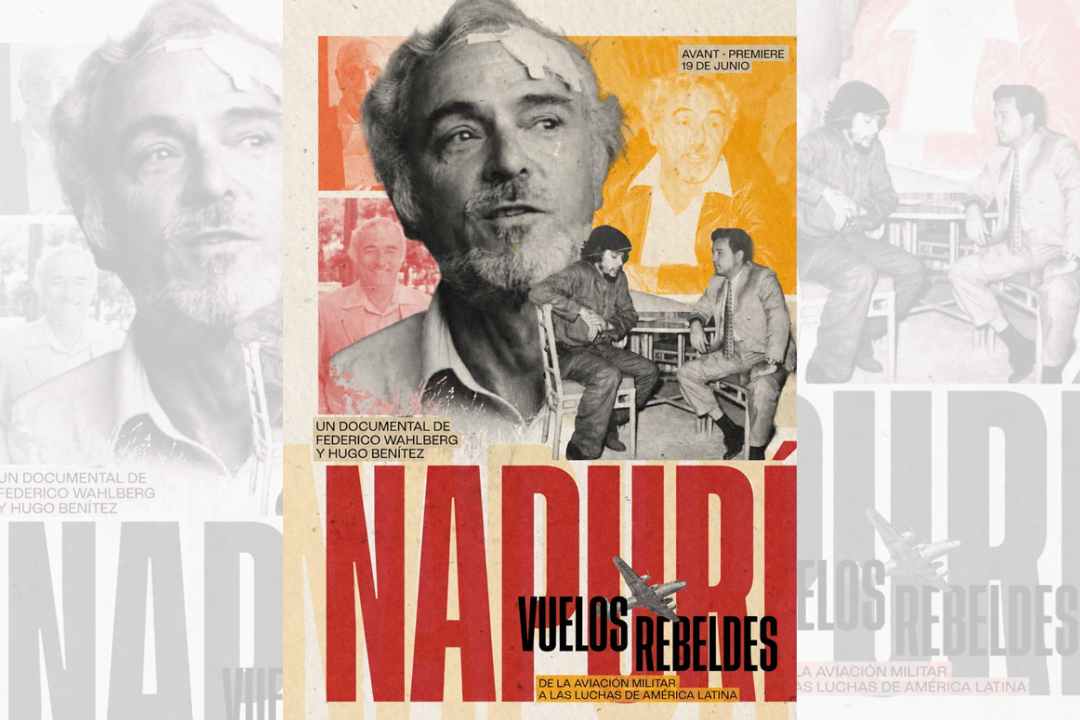
On June 19, we participated, on behalf of the MST and the International Socialist League, in the screening of the documentary directed by Federico Wahlberg and Sebastián Benítez about the life and career of the legendary Peruvian revolutionary Ricardo Napurí.
By Alberto Giovanelli
The film tells the story of Ricardo, who came from a very humble family, began working in the mines as a child and joined the Peruvian Air Force at a very young age, quickly rising to the rank of lieutenant. In one of the events that would shape his life, he refused to obey an order to bomb a popular uprising led by a faction of the APRA party, for which he was deported from his country and taken to the Argentine border, exiled from Peru in 1948 for violating the duty of obedience.
Shortly thereafter, upon arriving in Argentina, he was arrested by the Federal Police. His sister went to seek out Silvio Frondizi, who rescued him from prison and with whom he formed a very deep bond. Through this bond, Ricardo was introduced to Marxism for the first time.
He became a contributor and later joined the Praxis Group alongside some fifty prominent intellectuals. Deeply moved by the Cuban Revolution, he traveled to Cuba. Together with Che Guevara’s mother, he managed to interview him and strike up a friendship with him. He later returned to Peru and became one of the founders of the MIR (Revolutionary Left Movement). The Praxis Group split into two factions, and Ricardo moved toward a Trotskyist faction linked to Pierre Lambert.
Ricardo Napurí also established a connection with Salvador Allende in Buenos Aires as part of the meetings that Latin American activists held with the Praxis group. He remained in that country until Allende’s fall and then went into exile in France.
Back in Peru, he co-led the FOCEP (Workers’, Peasants’, Students’, and People’s Front) alongside Hugo Blanco (the prominent peasant leader and left-wing politician in Peru) and was elected to the Senate.
In May of ’78, he was kidnapped and deported to Argentina by the dictatorship of General Morales Bermúdez as part of Operation Condor. Later, the Videla dictatorship expelled him from Argentina, and he went to France for the second time.
In 1982, he played a key role in the massive demonstrations that took place in Peru in solidarity with Argentina during the Falklands War; during that process, he aligned himself with Nahuel Moreno’s faction and co-founded the LIT (International Workers’ League). He remained active in that faction until the breakup of the MAS and the LIT itself.
We believe the documentary omits a very important detail for understanding Ricardo Napurí’s career: his relationship with LIT, his revolutionary principles, and his break with the faction led by the French Trotskyist Pierre Lambert.
In the early 1980s, Napurí voiced political and methodological differences and was accused of theft by Lambert.
At that time, Napurí had no particular political ties to Nahuel Moreno. However, Moreno did not hesitate and, following Trotsky’s policy, proposed convening an International Moral Tribunal to determine whether the accusations were true or false.
The Tribunal, composed of prominent figures from the international left and the labor movement, ruled in favor of Ricardo Napurí’s revolutionary honor. That principled stance, consistent with the defense of revolutionary morality, was also decisive in Ricardo’s involvement in the founding of the LIT.
Over the past 30 years, Ricardo has maintained a critical and observant stance toward political processes. He has written several works that reflect his long history of activism.
As he approaches his 101st birthday, we believe this documentary is a heartfelt and well-deserved tribute to Napurí’s political career. On August 7, Ricardo’s birthday, the documentary will be screened again in the FOETRA auditorium, located at Hipólito Irigoyen 3174, at 7:00 p.m.