It officially set August 7 as the date for its first street protest.
By Alí Hammoud
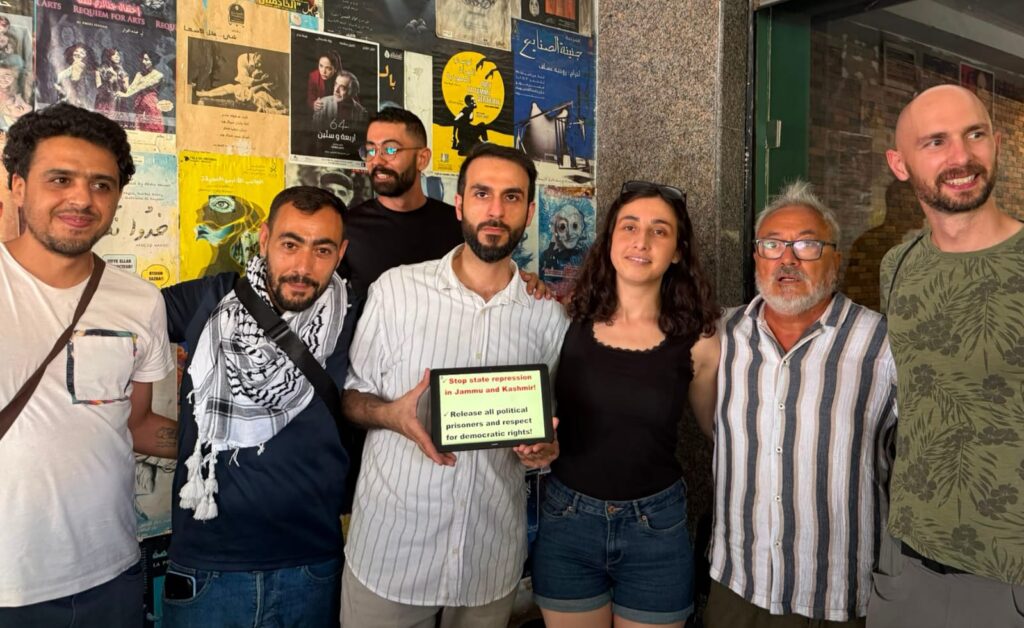
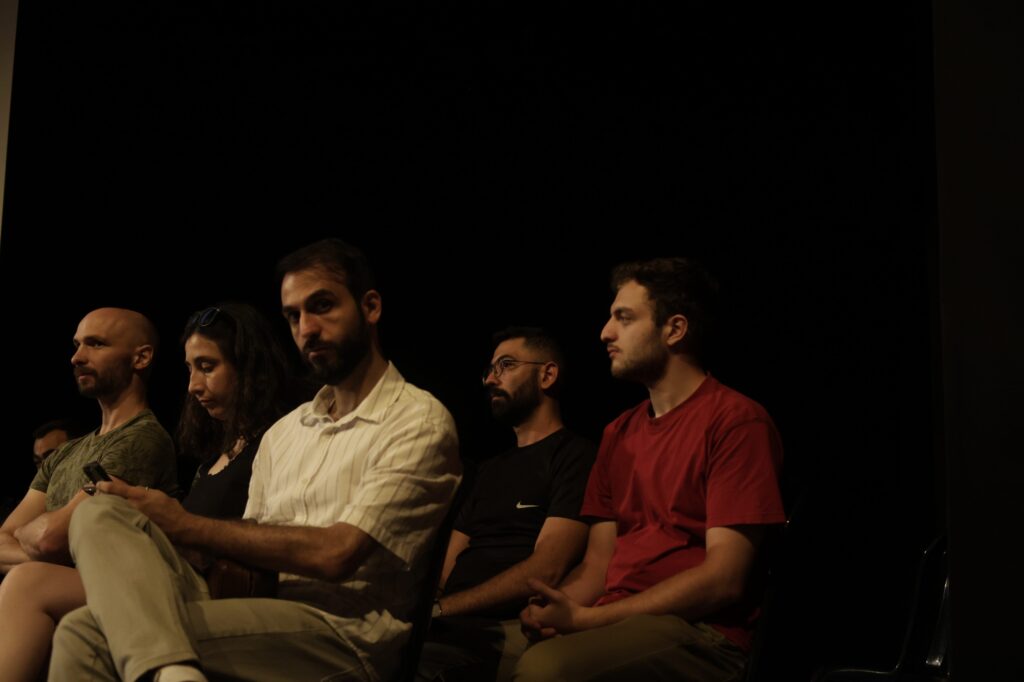
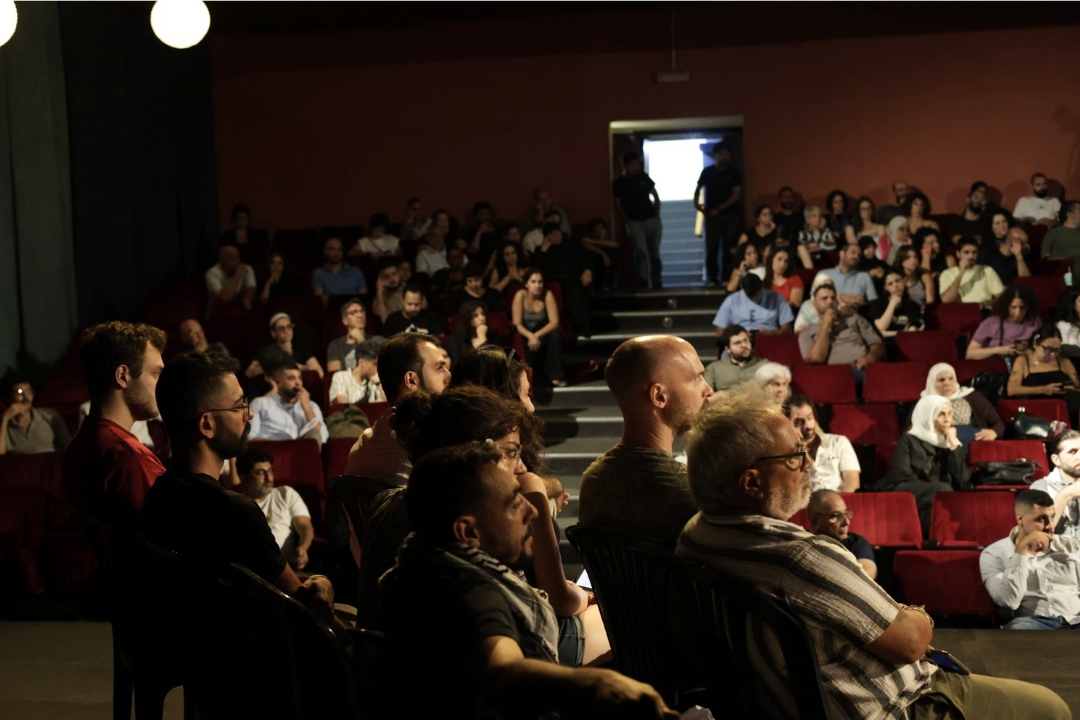
On Saturday, July 18, in Beirut, the Campaign to Confront the Occupation and Normalization in Lebanon held its second conference, that is, the official announcement of its establishment. The event had broad participation from political and labor organizations, associations, and cooperatives, as well as political and social activists. There was also a significant international presence, with the participation of comrades from the International Socialist League, the Revolutionary Left Current in Syria, as well as independents from Egypt and other countries.
The conference included a wide-ranging internal debate, held behind closed doors, on the political and organizational tasks of the campaign and the mechanisms for strengthening its work in the next phase. Participants were divided into four working committees: the Committee on the Development and Production of Political Discourse, the Committee on Local Coordination and Resistance, the Committee on International Coordination, and the Committee on Grassroots Action. Each commission held extensive discussions that concluded with a series of recommendations and conclusions that will form the basis of the campaign’s action plan for the coming period.
The discussions agreed that the current stage requires a shift from scattered initiatives to a unified political and organizational framework capable of linking the struggle against occupation and normalization with day-to-day grassroots work, strengthening coordination among the various forces and activists, and expanding solidarity networks at both the local and international levels, in line with the magnitude of the challenges facing Lebanon and the region.
On a practical level, the participants agreed to organize the campaign’s first mass mobilization for August 7, with both a local and international focus. In Lebanon, the campaign called for a demonstration in front of the Government Palace in Beirut, while, at the same time, solidarity actions will be organized in front of Lebanese embassies and consulates in various countries, with the aim of broadening international solidarity and increasing political pressure against the normalization process and the occupation.
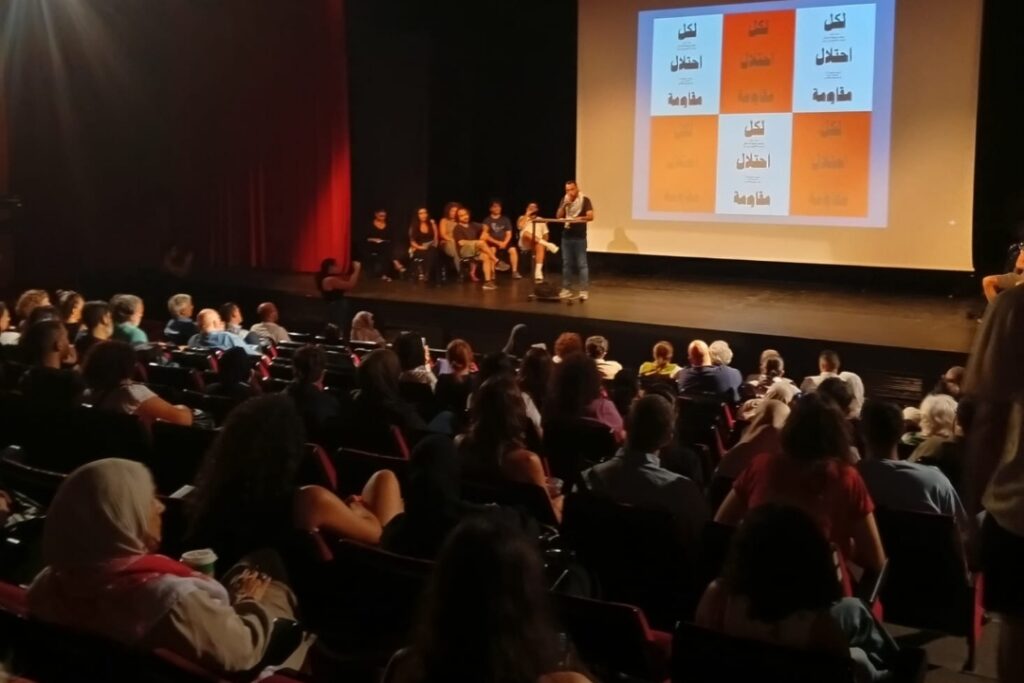
The conference concluded with a press conference during which three political statements were made.
The first, speaking on behalf of the campaign, reaffirmed its rejection of the normalization process and any form of concession, emphasizing the need to confront the occupation by all possible means. She also linked the struggle for national liberation and liberation from the occupation to the need for political change in the face of the current system.
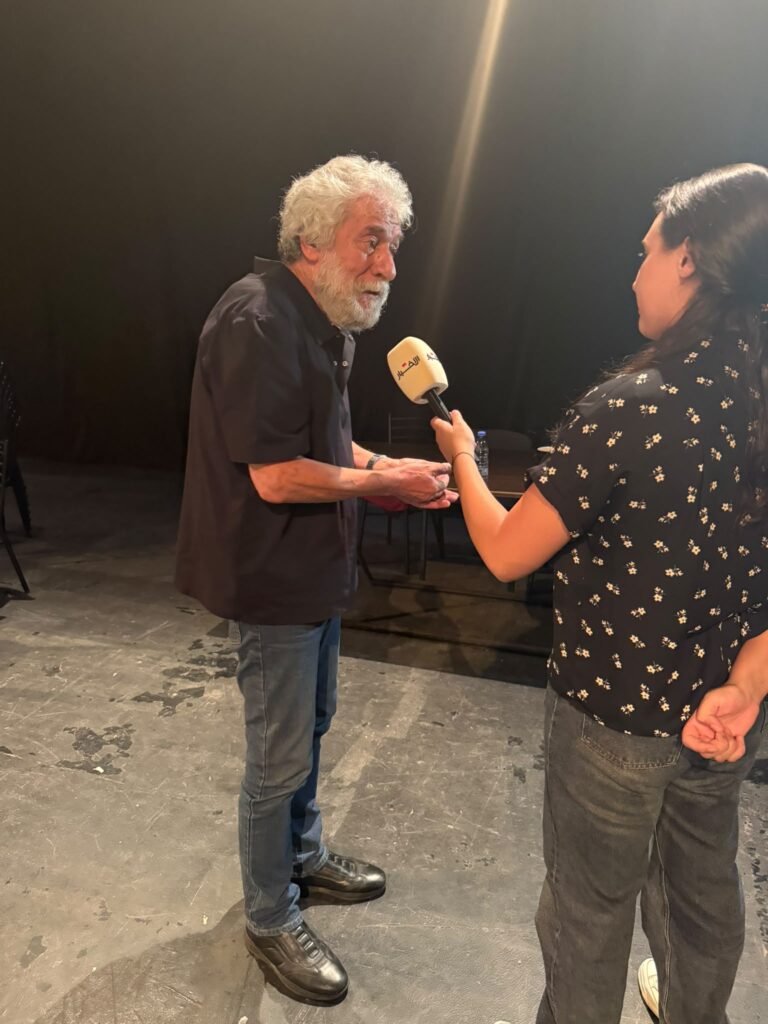
The second speech was delivered by Egyptian political activist Alaa Abdel Fattah (a former political prisoner), who emphasized the need to expand solidarity with Lebanon and the Lebanese resistance, describing it as the last front of direct confrontation with the enemy. He noted that the continuity of this front requires mobilizing all political, popular, and material resources to sustain it, as well as moving toward a war economy that guarantees the basic needs of the population and strengthens the conditions for social resistance, allowing people to continue living, resisting, and fighting.
The third speech was delivered by a representative of the International Socialist League, who expressed the position of the organization and of the Revolutionary Left Current in Syria. In her speech, she emphasized the importance of internationalist and militant solidarity with the peoples of Lebanon, Palestine, and Syria in the face of occupation, affirming that the peoples of the world reject U.S. hegemonic projects and support the resistance that has been confronting the State of Israel for more than seven decades. She also maintained that the task of the revolutionary forces is to link this struggle to a socialist and emancipatory perspective.
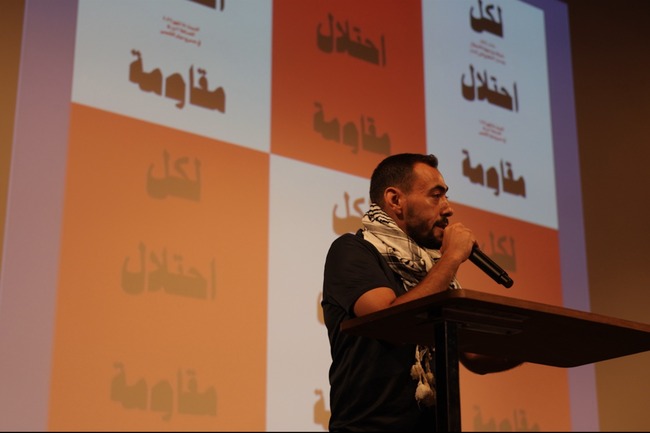
At the close of the conference, the campaign renewed its call to all political, labor, and youth forces, as well as activists from all regions, to join its ranks and help build a broader alliance against the occupation and normalization. It also confirmed August 7 as the date of its first street action as part of its program of struggle, emphasizing that this is not a temporary battle nor one tied to a specific event, but rather a prolonged process of organization and struggle against the occupation and projects of domination and subjugation.
The participants reaffirmed that confronting normalization is an inseparable part of the struggle for liberation, and that building a radical popular movement—capable of unifying the forces of popular resistance and linking the political struggle with the social and class struggle—is the primary task of the current stage. They also emphasized that the confrontation with the Zionist and imperialist project cannot be separated from the struggle for social justice, freedom, democracy, and socialism, and that expanding international solidarity, along with strengthening organizational presence and on-the-ground action within Lebanon, will constitute the two fundamental pillars of the campaign’s work in the coming period.