By Alberto Giovanelli
On August 20, 1940, the Stalinist bureaucracy and the global bourgeoisie celebrated the death of a man whom they had persecuted all over the world in an effort to destroy his legacy. They were deeply mistaken: revolutionaries can be killed, but the revolution itself cannot.
When, in the 1920s, Lenin’s early death, the retreat of the world proletariat, and the isolation of revolutionary Russia led to the entrenchment of the most conservative tendencies within the homeland of the Soviets—and, with them, the strengthening of the bureaucracy and of Stalin— while many capitulated to the increasingly powerful general secretary, Trotsky proved to be the sharpest and most tenacious of Marxism’s swords, fighting the bureaucratic caste and the “gravedigger of the revolution.”
Stalin first cornered him in the Soviet Union, then expelled him from the country and hunted him down throughout Europe. He finally managed to assassinate him in Mexico.
Trotsky has the enduring merit of having saved Marxism from ignominy. He drew a red line between revolution and counterrevolution. The historical verdict is clear: while the name of Stalin and the Stalinist organizations have been swept into the dustbin of history, Marxism retains its vitality in the thousands of young people and workers who continue to fight for a world free of all oppression and exploitation. And that is the case, above all, due to the tenacious battle waged by Leon Trotsky.
That is why, on the 86th anniversary of his death, we consider it necessary to pay tribute to this unwavering revolutionary.
Who was Leon Trotsky?
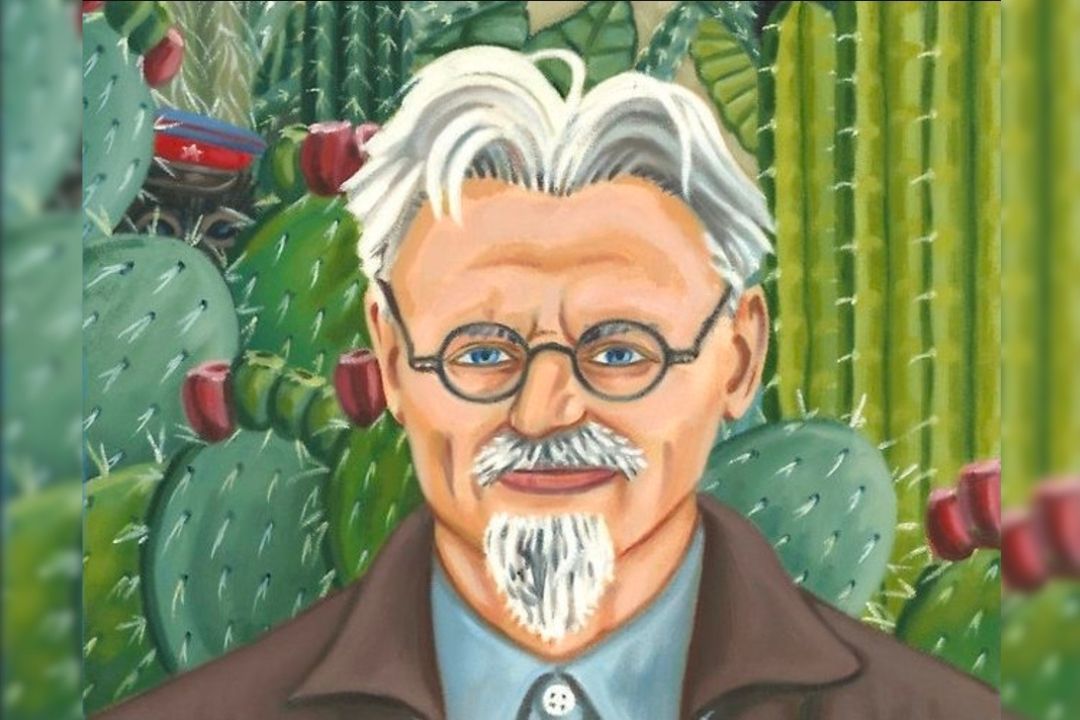
Leon Davidovich Bronstein, known worldwide as Leon Trotsky, was born on November 7, 1879, in Yanovka, Ukraine. He was assassinated in Mexico on August 20, 1940, by a hitman sent by Stalin.
His life was marked by total dedication to the revolutionary cause and the struggle for the emancipation of the working class. He played a leading role in some of the most momentous events of the 20th century and left an indelible mark on the history of revolutionary Marxism.
Trotsky was born into a well endowed peasant family and was able to receive a quality education. From a young age, he displayed great intellectual curiosity and a penchant for literature. By the age of 17, he was already active in revolutionary circles and founded the Southern Russian Workers’ League, an organization that grew rapidly and made him a target of Tsarist repression. He was arrested in 1898 and sent into exile in Siberia, where he devoted himself entirely to the study of Marxism. He then adopted the pseudonym Trotsky to evade police persecution.
Trotsky joined the Russian Social Democratic Party and played an active role in the 1905 Revolution, where he distinguished himself as president of the Petrograd Soviet, one of the first organizations in history dedicated to workers’ self-organization and self-determination. This experience was fundamental to the development of his political thought and to the subsequent formulation of the Theory of Permanent Revolution, which held that the working class must lead the revolution and not stop at the limits of bourgeois democracy, but rather advance toward socialism.
After the defeat of the 1905 revolution, Trotsky was once again arrested and exiled. Over the following years, he lived in various European countries, where he engaged in intense debates with Lenin and other leaders regarding revolutionary strategy and party organization. With the outbreak of World War I, he broke with the Second International over its support for the imperialist war and was one of the driving forces behind the founding of the Third International.
In 1917, following the February Revolution, Trotsky returned to Russia and joined the Bolshevik Party. Together with Lenin, he led the October Revolution, which brought the workers to power. He was one of the principal organizers of the uprising and, later, as People’s Commissar for War, he created and led the Red Army, which defeated 14 imperialist armies during the Russian Civil War.
After Lenin’s death in 1924, Trotsky became the leading opponent of the bureaucratization of the Soviet Union spearheaded by Stalin.
He denounced the degeneration of the party and the workers’ state, defending Soviet democracy and the need for international revolution. Because of his resistance, he was removed from his duties, persecuted, and finally expelled from the USSR in 1929, beginning a long exile that took him through Turkey, France, Norway, and, finally, Mexico.
During his exile, Trotsky devoted himself to theoretical work and to organizing the International Left Opposition, which in 1938 would lead to the founding of the Fourth International, with the aim of preserving the continuity of revolutionary Marxism in the face of the betrayal of Stalinism and preparing the workers’ vanguard for the challenges of the era.
He was a prolific writer, addressing topics in economics, politics, history, art, and everyday issues. Among his most important works are My Life, The History of the Russian Revolution, The Revolution Betrayed, and the Transitional Program. His theory of permanent revolution, his defense of workers’ democracy, and his relentless critique of Stalinism are pillars of his political legacy. Furthermore, he was a great speaker and debater, capable of adapting his rethoric to different audiences and situations, and a staunch defender of the role of youth and women in social transformation.
His political and theoretical activity continued unabated until he was assassinated by a Stalinist agent in 1940. His death was the result of a systematic campaign of persecution and slander by the Soviet bureaucracy, which saw him and his ideas as a threat to its power. However, his legacy lives on in the struggles of the working class and in the tradition of revolutionary Marxism. As he himself wrote in his will: “Life is beautiful. Let the future generations cleanse it of all evil, oppression, and violence and enjoy it to the full.”
Thinking about Trotsky is inseparable from the history of the revolution and the struggle for human emancipation. His biography is, at the same time, the story of an era of great hopes and tragedies, of advances and setbacks, but above all, of an unwavering determination to transform the world. His example and his ideas remain a source of inspiration and a guide for those of us who continue the fight for a society free from exploitation and oppression.