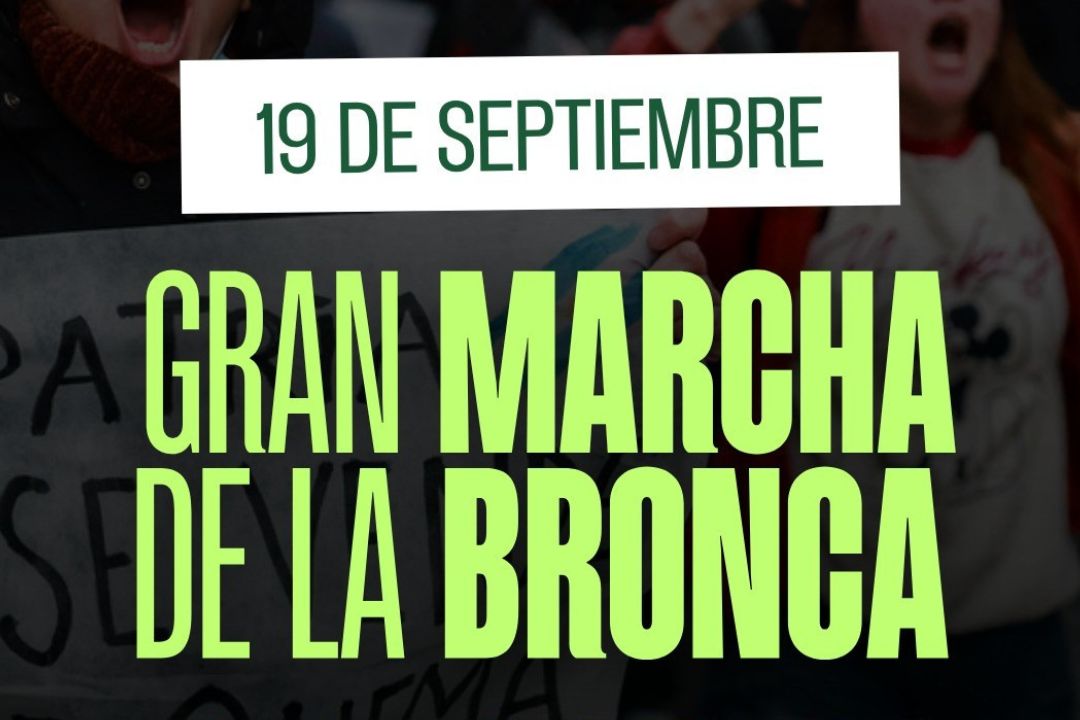
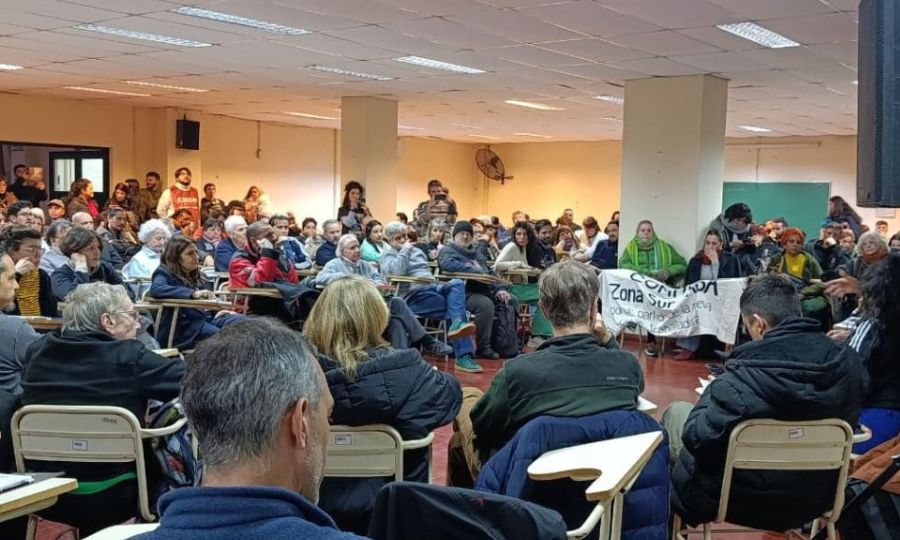
On Saturday, August 22, an important national Zoom meeting was held with the primary goal of federalizing the organization and laying the groundwork to put the“Marcha de la Bronca”on the agenda, scheduled for September 19 and called for by the grassroots group that gathered at the School of Social Sciences last Thursday, August 13, to protest against Milei and his accomplices.
The important meeting was attended by more than 250 participants, representing the vast majority of the country’s provinces, marking a significant step toward consolidating a broad, democratic forum for coordination and action, while also promoting organization in each region to launch a major national day of action on September 19, with marches and actions across the country.
This initiative seeks to organize the growing anger against the government and coordinate the various forms of resistance to mobilize against the plan of plunder and austerity, breaking through the inertia of the traditional leaderships, which are complicit through action or inaction. The discontent witnessed on August 6, during that massive street protest against the“immunity law,”demonstrated in practice that Milei’s austerity plan can be stopped through mobilization; however, in the face of a weakened ruling party and an economy that is crushing wages, the leadership of the CGT and the PJ maintain a policy of passivity, betting on electoral speculation for 2027 while demanding that working families endure the deterioration of their living conditions.
A broad and independent call for participation
Guillermo Pacagnini (ANCLA-MST)andRaúl Godoy (MAC-PTS) led the opening and coordination of the meeting. The most significant political aspect of the day was the nationwide scope and diversity of the participating sectors: all factions of the FIT Unidad and other militant and left-wing sectors, labor unions, environmental assemblies, indigenous peoples’ collectives, piquetero movements, student movements, and gender and diversity movements, with strong participation from independent sectors and independent activists.
The militant labor movement lent strength to the gathering. Notable among the attendees were workers from Villa Constitución—longstanding leaders of the class struggle—along with delegates from unions and organizations across the country. Representatives participated from the local chapters of Suteba Tigre and Suteba La Matanza, Ademys, Adosac from Santa Cruz, Sitradu from Entre Ríos, ATEN Capital and Plottier from Neuquén, UEPC from Córdoba, and ADIUNJU from Jujuy.
During the meeting, leaders who are facing the criminalization of protest in their respective provinces took the floor. The remarks by Leandro Sánchez (general secretary of UTEM and the Autonomous CTA of Misiones) and by Lucía Castro (a member of the ADIUNSa executive committee) served to illustrate the severity of the austerity measures in the interior and the escalation of judicial persecution against those who are fighting back, but also the tenacious resistance.
A multisectoral agenda
The plenary session served as a sounding board for the various ongoing struggles, shaping a unified agenda. The feminist agenda featured prominent figures such as Nina Brugo (founder of the National Campaign for the Right to Legal, Safe, and Free Abortion), along with the active participation of various feminist organizations from across the country, including Mujeres Autoconvocadas de General Alvear, Autoconvocados Defensa y Resistencia, Defensa y Resistencia de Entre Ríos, Juntas y a la Izquierda, Plenario de Trabajadoras, Pan y Rosas, “Ni una Menos” groups from different towns, and feminist organizations from Paraná. This sector unanimously emphasized the non-negotiable need to maintain street protests in the face of the national government’s ongoing anti-rights policies.
For its part, the defense of the commons dominated much of the debate. Dozens of environmental assemblies took the floor to denounce the consequences of the Incentive Regime for Large Investments (RIGI) and its respective provincial variants. Participating groups included water defense assemblies from Mendoza and Catamarca, the Uspallata encampment, the Viedma Maritime Region Multisectoral Coalition, and collectives from Rosario and Tucumán, joined by the voices of the Río Movement, Enough with False Solutions, “Autoconvocados por Nuestras Tierras” from Tucumán, “Nuestra Tierra” from Rosario, “Ambiente en Lucha” from Viedma, and the “Agüita Pura” Assembly for San Juan, alongside the active presence of theEcosocialist Network, with representatives from various provinces across the country, and the support of leaders such as Juan Aquino, a provincial deputy from Chubut representing the MST within the FITU, and Mara Espinosa, President of the Student Center at the UNPA in Río Gallegos, Santa Cruz. One of the specific issues was the opposition to the construction of the new dam in Misiones. On this same economic and sovereignty-related issue, the debate revealed a strong consensus among the various organizations and activists. The different speakers agreed on the structural roots of the plundering, arguing that a definitive break with the IMF and the repudiation of the foreign debt are unavoidable necessities. This demand cut across the entire assembly, establishing itself as a central demand to halt capital flight and recover the country’s resources.
The demands of the indigenous communities were highlighted in the remarks by David Torres (president of the Lule indigenous community and secretary for Indigenous Peoples of the CTA) and by the well-known Mapuche leaders Moira Millán andHugo Aranea, who articulated the sector’s position. They demanded a halt to the evictions taking place in territories such as Neuquén, called for the immediate restitution of lands, and urged the repeal of the Anti-Terrorism Law, which has been systematically used to criminalize indigenous peoples.
Resolutions and the Consolidation of a Unified Space
The event was attended by all the parties that make up the Left Front-Unity (FIT-U): MST, PTS, PO, and IS. At the same time, the event demonstrated great breadth by including the participation of numerous political organizations outside the FIT-U, such as Autodeterminación y Libertad, the Nuevo MAS, the PSTU, Marabunta, Vientos del Pueblo, the Partido de la Liberación, and sectors of the independent left in Chaco. All of this militant force came together democratically with a wide range of coordinating committees, territorial assemblies, pensioner fronts, and independent groups—as well asBeverlyKeene representing the Self-Convened Movement Against the Debt—affirming the general commitment to prioritize collective action and unity in diversity in the streets.
We reaffirm the need and the opportunity to establish a broad political and social coordination effort—one that is participatory, based on unity in diversity and a plurality of identities, and operating by consensus—that brings together existing partial and sectoral coordination efforts and fosters new ones where they do not yet exist. To ensure effective and democratic operations in the coming weeks, the establishment of three working committees was approved: Documentation, Organization, and Communication. An explicit invitation was extended to all political and social sectors that share these programmatic priorities to join these committees in order to broaden the base of the movement.
The approved roadmap establishes the immediate need to replicate this model of coordination and self-organization in every corner of the country. It was decided to strengthen coordination efforts in places where the first steps have already been taken (such as the successful meeting held at the Luz y Fuerzaheadquarters in Córdobaor the one held in Rosario) and to establish them in places where they do not yet exist. As we work to organize the discontent, make our demands, and simultaneously prepare a plan of action leading up to a general strike to defeat Milei and his accomplices and build a new political movement of workers that can present itself as a viable alternative for government.
Organizational and Activism Timeline
To carry out these resolutions—in addition to supporting the march to the Congress on August 26 at 6:30 p.m. for freedom, the dismissal of charges, and an end to the persecution of prisoners for their activism, as well as the work of the committees—we ratify the national calendar:
- Saturday, September 5: Another in-person assembly at Lezama Park (CABA) to coordinate efforts across the AMBA, while simultaneously organizing meetings in all provinces to address the specific needs and circumstances of each location.
- Saturday, September 19: Great National March of Anger, featuring a main march to Plaza de Mayo and organized actions in public squares across the country.