Over the coming weeks in October, the coordinator of the International Socialist League, Alejandro Bodart, will embark on an international tour focused on the political situation in Argentina, the struggle against Javier Milei’s government, and the opportunities opening up for the revolutionary left.
For revolutionary currents, this discussion has an international dimension. In a landscape marked by the rise of far-right forces with Milei in office, the weakening of traditional parties, and the erosion of reformist experiments—as reflected in a historic crisis of Peronism— and a phenomenon of polarization that places the revolutionary left center stage and shapes the political struggle within a sector of the mass movement, the need to present itself as an alternative for power takes on an importance that extends beyond the electoral arena. An opportunity is opening up in which the advance of the revolutionary left in Argentina would, as a whole, strengthen left-wing forces around the world.
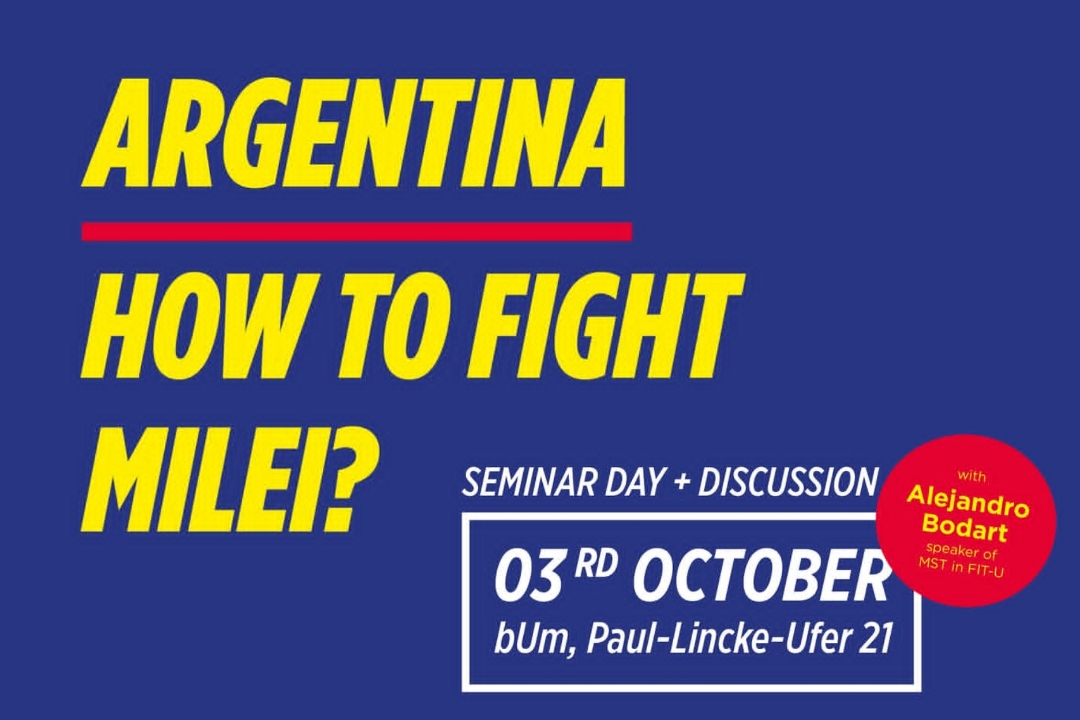
The tour will begin in Berlin, where a day of discussions on Argentina , organized by Gruppe Arbeiter:innenmacht— the German section of the ISL — will take place on October 3. The event consists of a series of workshops to discuss the prospects for the revolutionary left in Argentina, its history and current situation, the crisis of Peronism, workers’ struggles, the student movement, and the youth. The main panel of the day, headlined by Alejandro Bodart, will address the debate on how to defeat Milei, the prospects for the Workers Left Front–Unity (FIT-U), and the tasks facing the revolutionary left in light of the situation the country is currently facing.
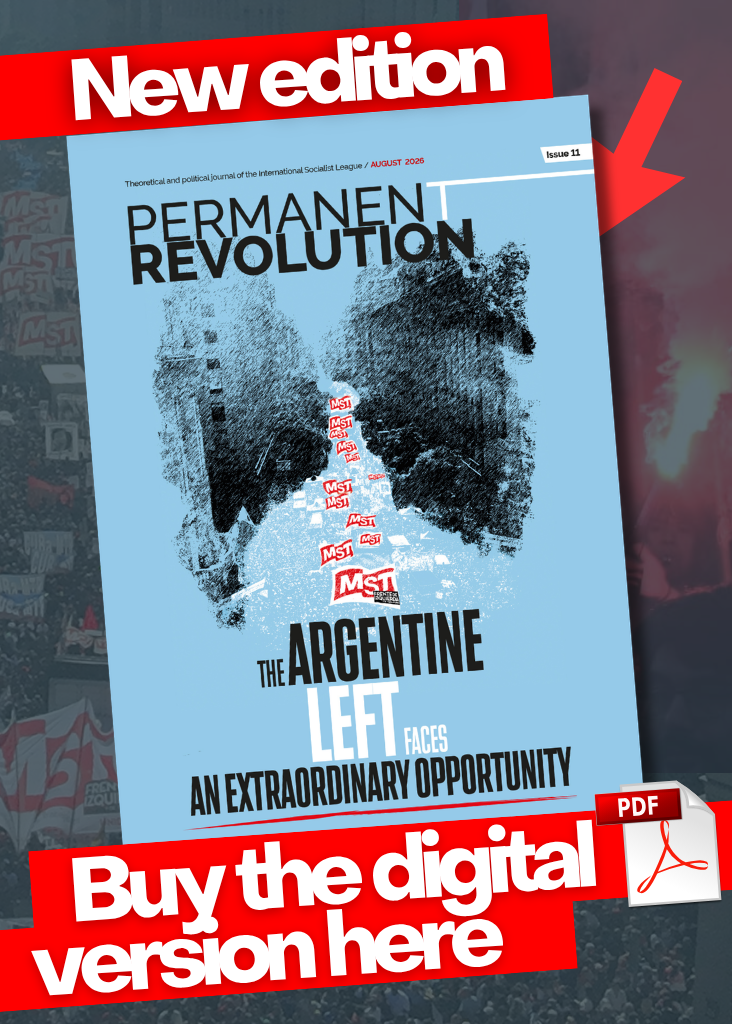
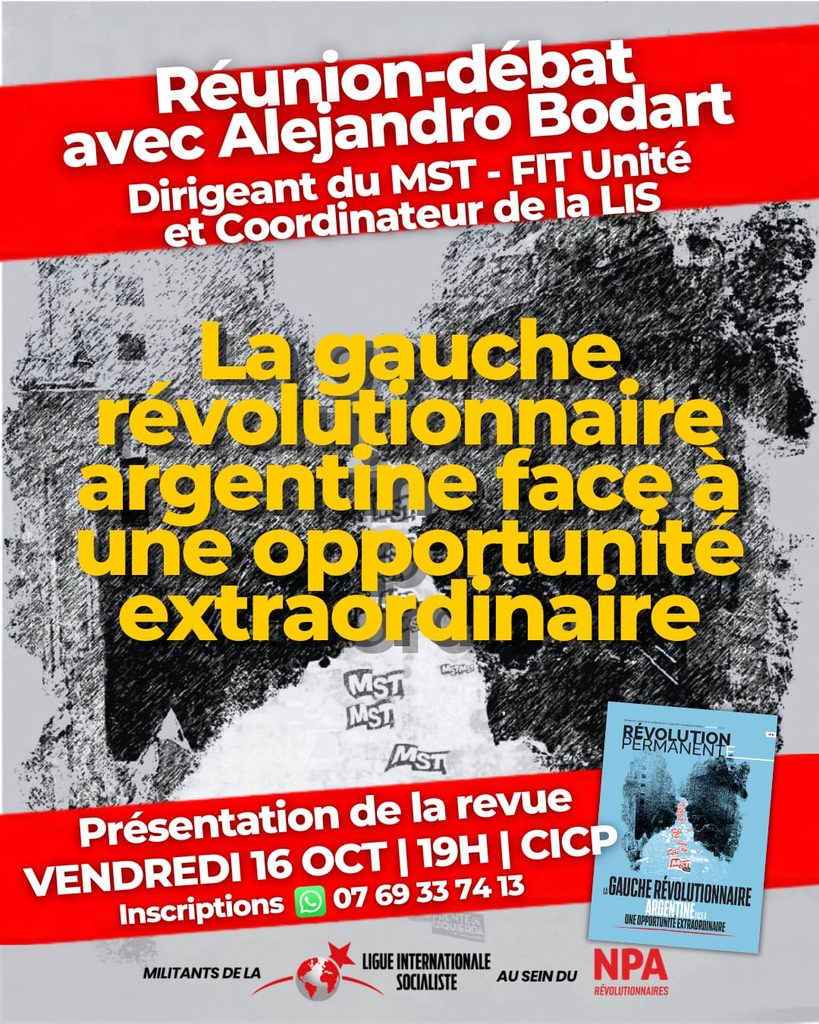
The tour will continue with a workshop in Vienna, organized by the Austrian section of the ISL, Arbeiter*innenstandpunkt (ASt), and a visit to Barcelona. The European tour will conclude in Paris with a similar event and the presentation of the latest issue of *Permanent Revolution*, the ISL’s theoretical-political journal, as the first initiative of the French ISL section.
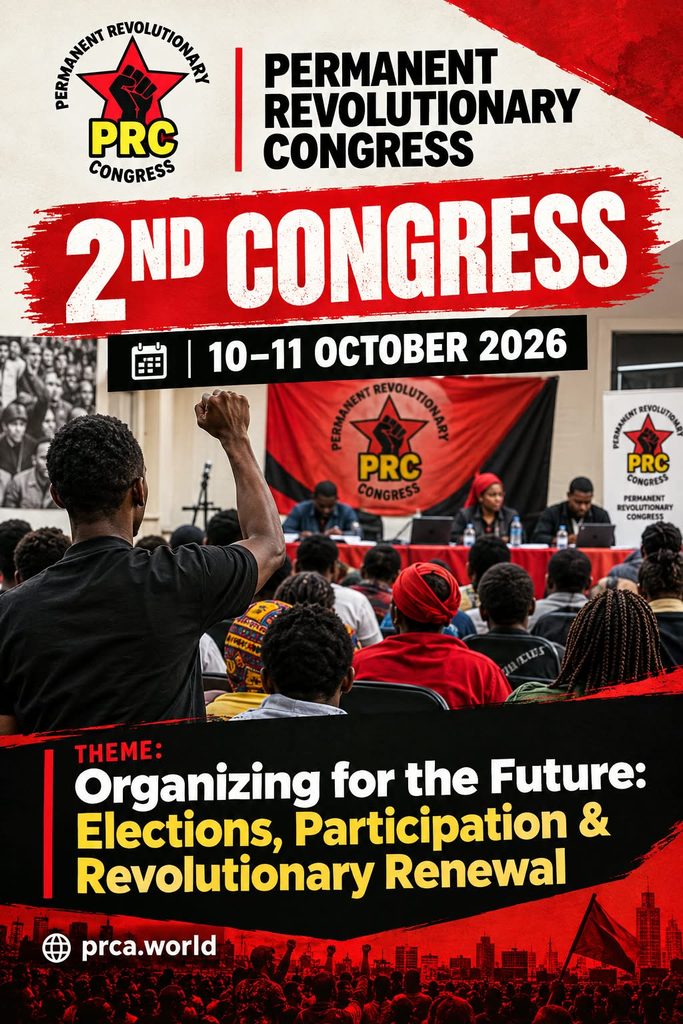
Afterward, Alejandro Bodart will participate in the National Congress of the Permanent Revolutionary Congress (PRC), ISL section in Kenya, in Nairobi. The Congress will address the country’s political situation, discussions on building the organization, and the outlook for the August 2027 elections.
The PRC emerged in 2025, in the wake of a mobilization process in which young people played a leading role. The protests against the financial bill proposed by William Ruto’s government evolved into a much broader movement against living conditions, debt, economic policies, and the functioning of the political system.
Its National Congress will serve as an opportunity to take stock of that process, discuss the nature of Kenya’s political and economic situation, and outline the tasks leading up to the August 2027 elections. It will also allow for a deeper discussion on how to engage with a youth that has demonstrated a significant capacity for mobilization and plays a central role in the country’s political crisis.
The exchange between the different sections of the ISL allows for the sharing of experiences in the struggle, progress made, difficulties encountered, and the strategies for building the movement developed in each country. The debates in Berlin, Paris, and Nairobi are aimed at strengthening the revolutionary groups in Europe and Africa. The situation in Argentina and the prospects for defeating Milei will be the focus of the European activities, while the experience of revolutionary organization in Kenya and the outlook for 2027 will be the central theme of the PRC Congress.
In a world marked by the crisis of capitalism, the rise of the far right, and the emergence of new forms of mobilization, strengthening revolutionary organizations and their capacity to intervene in social conflicts and the labor movement is a task that transcends national borders. The discussion on Argentina is part of this effort: helping the revolutionary left make a qualitative leap forward and organize a sector of the mass movement can open up new possibilities in the struggle for power in Milei’s Argentina and, at the same time, contribute to the strengthening of our international revolutionary current.