By Sergio García
Automatically translated by AI.
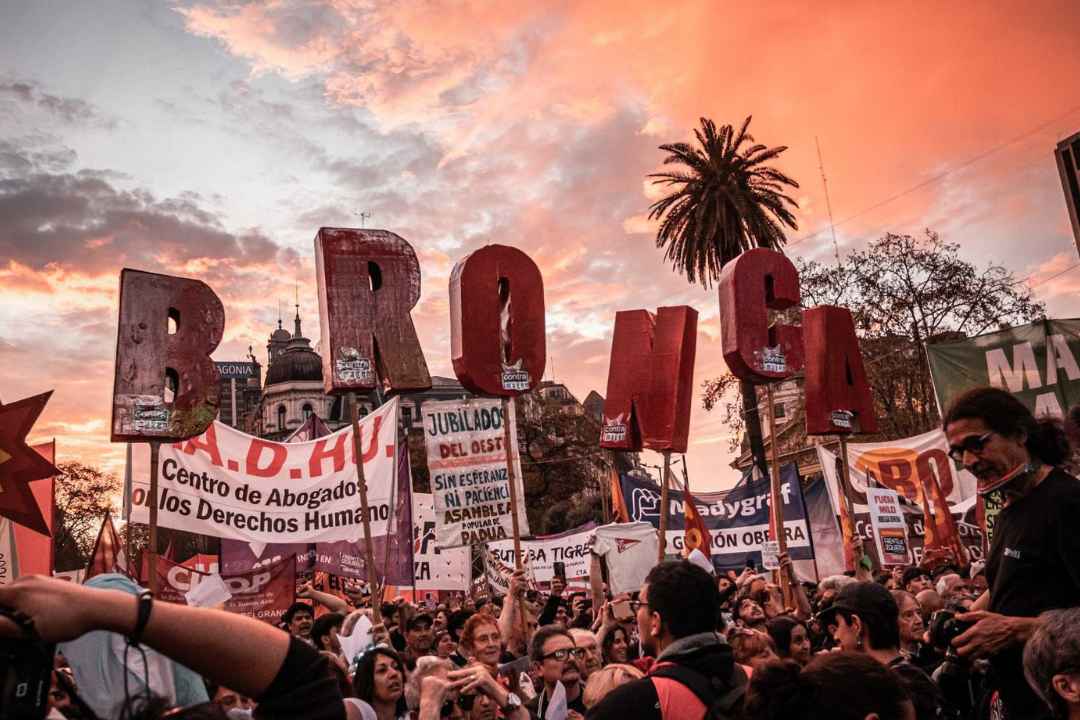
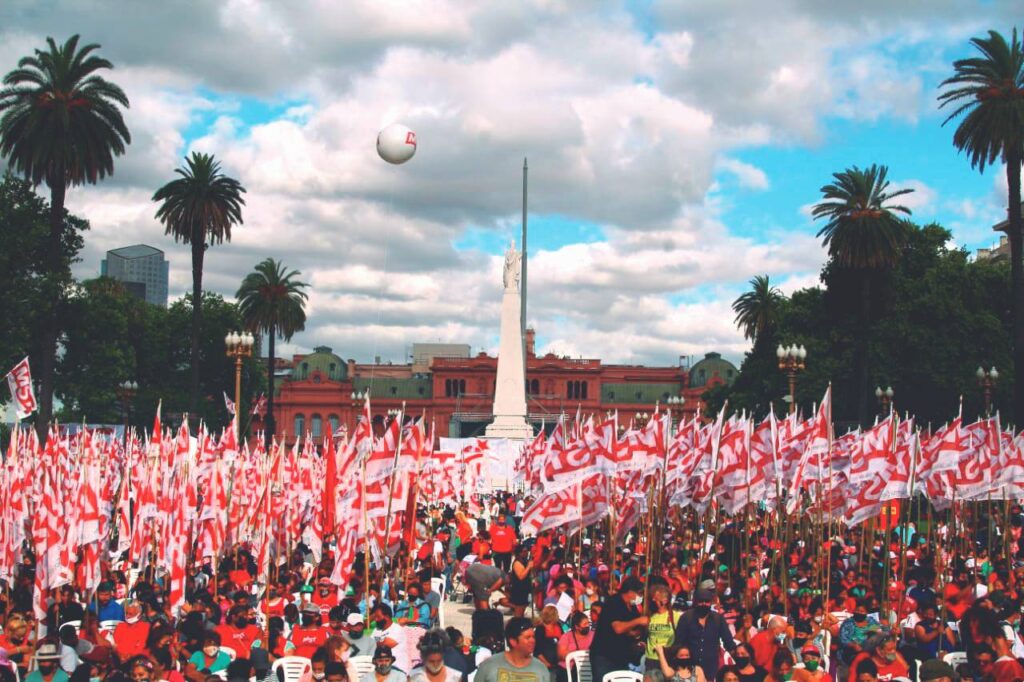
The national day of action on September 19 was a major political event and a catalyst for mobilization and organization that was clearly driven by the left and brought together significant sectors of society. The initiative, which filled Plaza de Mayo and spanned dozens of cities and provinces across the country, yielded new and profound political and social conclusions. We will not address all of them in this article, but we will focus on one that we consider decisive: the need to transform all the pent-up anger against the government into active political organization from the left, so that we can truly commit ourselves to confronting and defeating this entire system of capitalist and decadent domination.
It is clear that in the wake of the massive and successful September 19 protest, a central task is to organize the fight against the government, its plan, its accomplices, and all the austerity-pushing governors throughout the country. There is no doubt that such a united and powerful action requires ongoing coordination in every region, as well as new measures of struggle based on the coordination of this uprising that began with the central proposal to push for a general strike until Milei and his entire plan are defeated. Unfortunately, all of this runs counter to the old, bureaucratic union leaderships—led by the CGT—which continue to do nothing in the face of the reality of austerity, capitulation, and repression we are experiencing.
At the same time, as the various proposals put forward with political restraint by the different factions of the PJ fade into the background, we are striving to bring to the fore a political strategy that is better suited to the challenges at hand. And this task confronts us with political questions that must be resolved: What do we propose to the thousands of workers and young people who joined the call for action driven by anger and the left? This question demands clear, concrete, and urgent answers. If one thing is clear from everything happening in the country, it is that simply getting rid of Milei is not enough. The urgent debate is what alternative from the left—one with significant influence among broad sections of the masses—we can build, so that millions do not have to endure new and frustrating political experiences.
An exceptional situation calls for bold policy responses
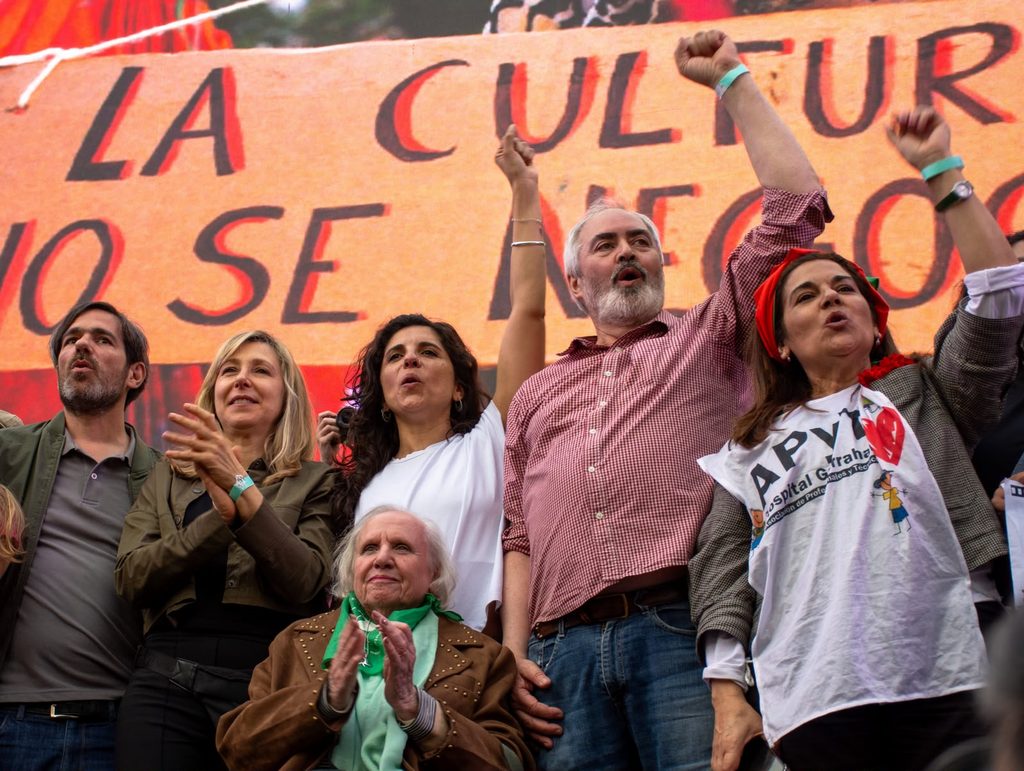
We once again emphasize an issue we consider central: the general political and social situation—complex, polarized, dynamic, and open-ended in terms of its outlook and prospects—has in turn become an exceptional opportunity for political advancement by the anti-capitalist and socialist left. Never before have growing social discontent, anger, and the break with all the old political structures appeared so directly linked to the search for something new on the left. And this left, which is emerging as a visible alternative, is not just any left; it is neither lukewarm, reformist, nor opportunistic. The left that is gaining ground and took on the challenge of organizing the March of Anger is anti-capitalist and socialist, just like its main public leaders, who were at the forefront of the mobilization: comrade Myriam Bregman, whose presence is growing in every poll and opinion survey, along with Cele Fierro, Alejandro Bodart, Nicolás del Caño, and other leaders of the Left Front–Unity who, from day one, gave their all to ensure that the anger was organized and widely self-mobilized. We are talking about a sector of the left that decided to put all its strength and political standing at the service of a national struggle, which became a political event of great magnitude.
The ongoing political and social process reflects a shift in discontent with the current government and previous ones, making the emergence of something new—primarily on the political front—more than necessary. However, this also has a clear, direct, and unequivocal connection to social struggles and the methods to be employed within them. It is impossible for those who are driving the construction of something new from the left to simultaneously be, within the working-class and popular sectors where they are active, mere replicators of the methods and vices of the previous bureaucratic model. Or to put it another way, it is no coincidence that those within the left who mistakenly reproduce and perpetuate these vices are the very same sectors that fail to see the need to build, politically and in unity, something new, superior, and qualitatively stronger.
Among other reasons—including these highly topical political issues—in the wake of September 19, it has become essential to resume a profound debate within the Left Front. For a long time now, we have been proposing that our front transform itself, based on the clear assessment that, as it stood—limited to electoral matters—it was insufficient to respond to the major challenges of reality.
That deficit of the past is intensifying and exacerbating its insurmountable limitations, against a backdrop of a significant segment of the population shifting to the left and the revolutionary left playing a more prominent political role. At a time when there are greater opportunities to elevate and consolidate our position as an alternative for millions, anything that reduces the debate to an electoral front leads to political defeat from the outset. Because we are talking about the historic opportunity to seek mass influence and contest political power for a government of the working people. These are strategic objectives that go far beyond an electoral agreement among the left, since while such an agreement is positive, it is always tactical and limited.
It is clear that, alongside all our efforts to fight the government and our fundamental and strategic policies, we will also, when the time comes, wage the electoral battle against Milei’s government, the PJ, and all the traditional factions and elements of the capitalist regime. Because all political struggles must be waged thoroughly from the left, and the electoral struggle, of course, is no exception. What was not correct before—especially in the run-up to September 19—was to focus, as our comrades in the PO and Izquierda Socialista have mistakenly done, on promoting electoral committees, and on top of that, splitting the calls for action. All the while, they categorically refused any serious debate on a substantive political project, all under the guise of their fallacious belief that the FIT-U is enough. This is an argument that is untenable in reality and purely electioneering from start to finish, since an electoral front can never be enough or satisfy those of us who believe in fundamental changes achieved through struggle and constant mobilization, guided by a socialist political orientation against an entire perverse system of domination.

What do we mean by a new and historic movement?
In the face of these conservative and routine notions that hinder the real tasks ahead of us on the left, we insist on the need to go much further in shaping the political strategy we must define. We will undoubtedly have to tackle the electoral debate in the coming months, and we will do so with all our strength. However, as always, strategy comes first and dictates everything. In that regard, first and foremost, we are talking about not repeating the same old patterns, not resting on our laurels, not settling for superficial or formal agreements, and certainly not discussing any electoral format or coalition.
We are talking about building a new revolutionary political organization with real clout and influence among broad sections of the masses, and with a comprehensive and holistic program for breaking with the capitalist system and confronting all of its political, social, institutional, and ideological agents. And if we want it to have that real clout and make progress toward those goals, then there is a new and historic task: to build a massive movement that brings together and coordinates tens of thousands of activists within a single political organization—which, as we understand, is a challenge for the many, not a possibility created by just a few.
And no progress can be made toward that goal without first understanding the political context that makes it possible and demands it, without understanding that no one can resolve the dilemma on their own without working alongside others who also embrace it as a shared project, and without having the political courage to take on strategic and shared challenges, seeking to overcome difficulties, underpinned by solid agreements and respect for nuances and partial differences. A new historic movement, this time driven by the left, is possible, necessary, and the time is now. When else? What else are we going to wait for to take our first steps together?
Among which political and social sectors can we promote this?
From the various opinions, proposals, and real-world experiences within the left in general—and our front in particular—it is clear that not everyone is recognizing the tremendous scale of the changes underway, nor are they considering how to respond to them with decisive and bold policies. As is evident from recent political practice and from spoken and written opinions, there are forces such as PO and Izquierda Socialista that are a world away from politically grasping this necessity, and their current proposals contain no novel ideas or alternatives that go beyond an electoral front or the PSC’s rigid formalism in the labor movement—combined with deeply misguided practices on the part of the SUTNA leadership. Therefore, a profound change and reflection by these organizations on all these issues would be necessary if they truly wish to contribute to and be part of building a new historic movement. It is their decision whether or not to do so; for our part, we hope they will, allowing them to join us in this challenge. Until that happens, unfortunately—given these profound differences in analysis, policy, methods, and objectives—it is not feasible to move forward with them in this task of promoting a new, shared political project.
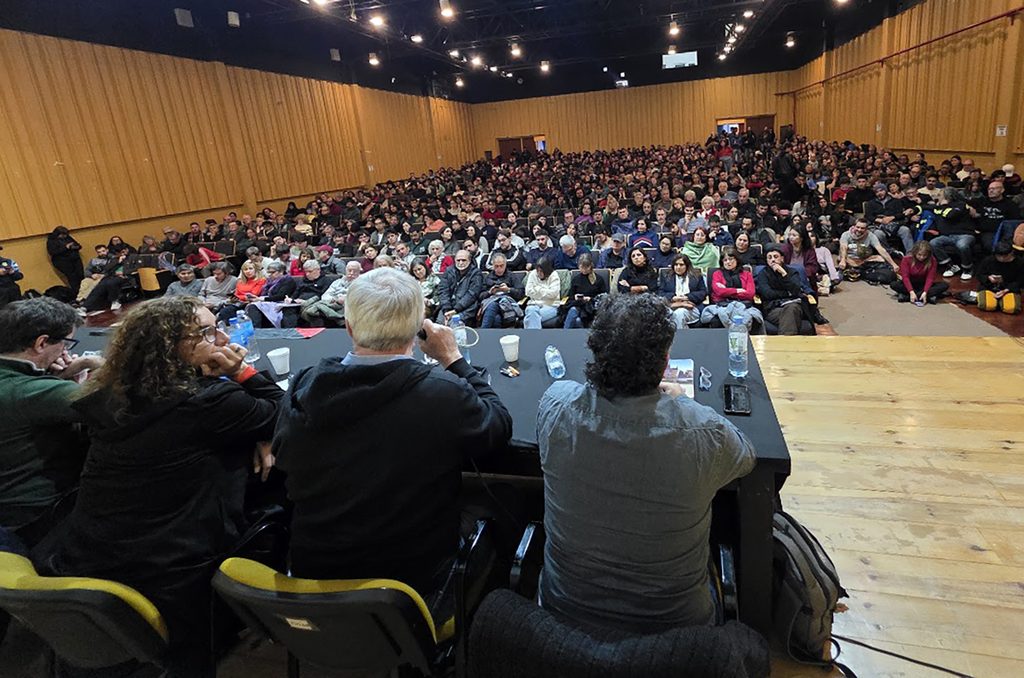
The task of building a new historic movement begins, first and foremost, with making an effort among the organizations and sectors that do recognize this political necessity and the concrete possibility of bringing it to fruition—those of us who, at the same time, have been striving to promote policies and methods that share common ground and are suited to such a challenge. Within the FIT-U, it is the MST and the PTS that, in one way or another, have been proposing this. And joining us could be a vast number of independent workers and young people, members and activists from various social struggles, labor, popular, and social leaders, human rights advocates, intellectuals, and left-wing groups who also take on this task and agree with a fundamentally anti-capitalist and socialist program.
What forms could it take?
In our view, we must be clear about the political and programmatic objectives—revolutionary and fundamental—that will enable us to build a new political organization capable of bringing together and organizing thousands of activists. We are talking about a great historical movement or a workers’ party that fights for socialism and for the rule of our class, with its democratic institutions and genuine organizations that the working class builds and develops.
At the same time, based on these strategic premises, we must be open to seeking democratic mechanisms of operation that take into account the reality of all our constituent sectors. For our part, if we were to move toward a new, large, united party, we believe in a democratic-centralist structure, where everything is thoroughly debated democratically, and at the same time, we act collectively to address real-world issues. In this context, should nuances or differences arise on certain issues, they would be resolved through that same collective and organic debate, resulting in majority positions that we must all respect in order to establish a public stance, and minority positions that must also be respected—without being ignored—thereby allowing for the free expression and dissemination of ideas.
An organization of this kind—with the understanding that the majority’s decision always prevails—can, at the same time, coexist for as long as necessary during the transitional period with the existence of internal factions or groups, which allow for the reflection and integration of the previous backgrounds of various sectors and facilitate a natural process of collective and shared development, until the organization itself becomes consolidated. This could be a possible form of transitional operation, which does not preclude this new and large party from acting in unity in practice, while at the same time allowing for democratic processes within it. Something similar could develop on the international level, allowing for free affiliation with organizations as long as there is no common position or structure at that internationalist level.
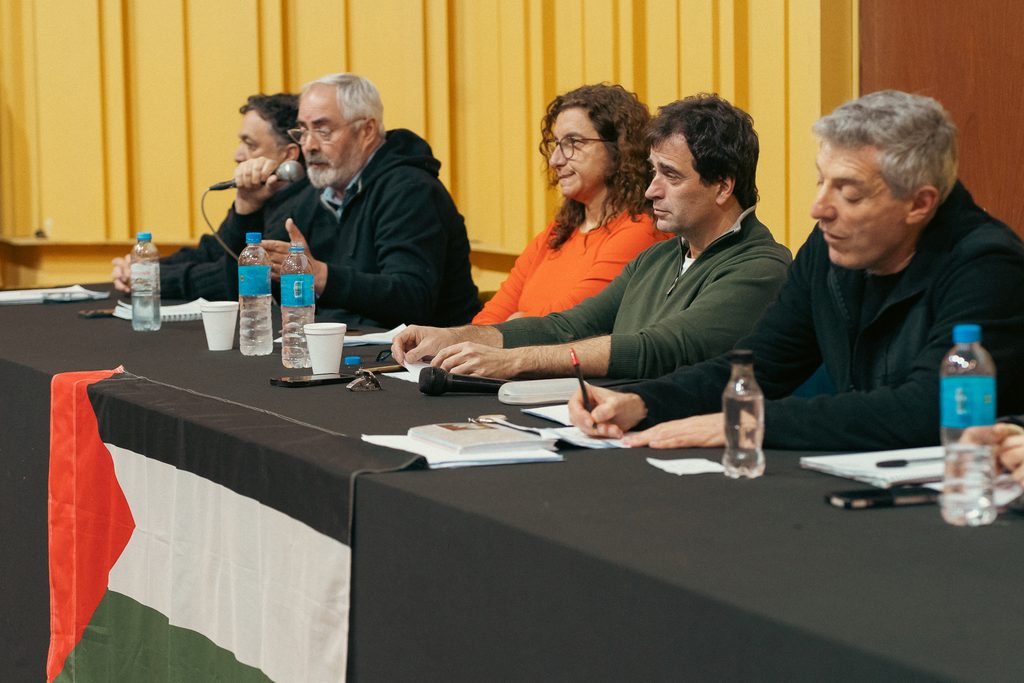
An Open Debate, an Urgent Task
Thus far, we have comprehensively developed our opinions and proposals. We put them forward with the conviction that we must move forward, without delay, toward building a new and powerful political tool of a revolutionary nature. The tremendous political success of organizing the Marcha de la Bronca—with the tangible results of tens of thousands joining that initiative—is a key factor in the current reality that significantly enhances the possibilities of mobilizing thousands politically. The worst thing we could do is lose momentum, remain stagnant, or simply go our separate ways—which, in one way or another, would mistakenly lead to squandering all that human and political capital that we so wisely set in motion. That is why we are convinced that, at this point, the worst political mistake we must avoid is slowing down the process of issuing a call to build something new. On the contrary, we must seek ways—by opening a frank debate on various possibilities—to begin doing this together. We sincerely believe that this is the great political challenge that lies ahead of us.
Our comrades in the PTS are promoting similar debates through their own committees for a party of the new working class. As we have already argued in other articles, we always believed that the best course of action would have been to promote these committees jointly. Since, unfortunately, our comrades decided otherwise, we must seek new avenues for convergence among these committees and their organizers, together with the thousands of us in the MST who come together in assemblies and events across the country, and by also bringing in other independent sectors that wish to participate, in an effort to culminate in a unified building process. Logically, for this to happen, there must be conviction on the part of all involved—as there is in our case—as well as a sense of responsibility. We hope that other comrades and organizations will also be encouraged to commit to a common effort. And along that path, we can strengthen spaces for coordination where we can debate everything and act in unison as much as possible. Specifically, while we discuss all these matters, we could establish effective coordination between our two organizations, where everything is discussed periodically and serves to strengthen our joint engagement in political events and the class struggle.
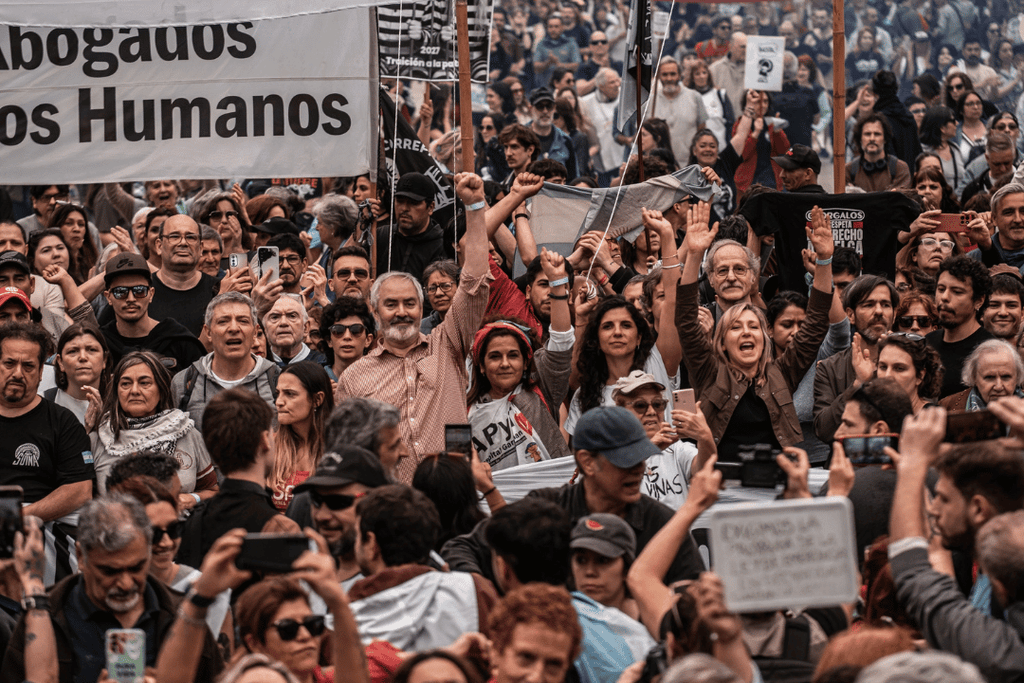
As we advance all these political and organizational proposals, engaging in deep and fraternal debate and exchanging ideas with all those who seek to advance toward similar goals, we will also continue to build our MST throughout the country. We invite the thousands of workers and young people who have been joining us in social struggles, in union and student organizing, in mobilizations, open assemblies, meetings, and events throughout the country to join us as activists in our party.
Now more than ever, we need to grow in numbers, become stronger in promoting our ideas, be better organized, and expand our reach to new companies, universities, schools, and working-class neighborhoods. We must become better known through the voices of our national and provincial leaders, the actions of our entire membership, and the advancement of our communication channels—such as Periodismo de Izquierda, our print newspaper Alternativa Socialista, our LIS magazine, and other tools for dissemination, exchange, and political debate. There is much ground to cover, and we can do it now. We need more hands and more voices to join us with their contributions and experiences, helping to build this collective, socialist, and revolutionary movement. Let’s not waste any time.