By Verónica O’Kelly
Popular mobilization was decisive in securing this victory. Now, we must continue to take to the streets, defeat the far right once and for all, and build an independent political alternative that serves the working class, the youth, and all oppressed sectors.
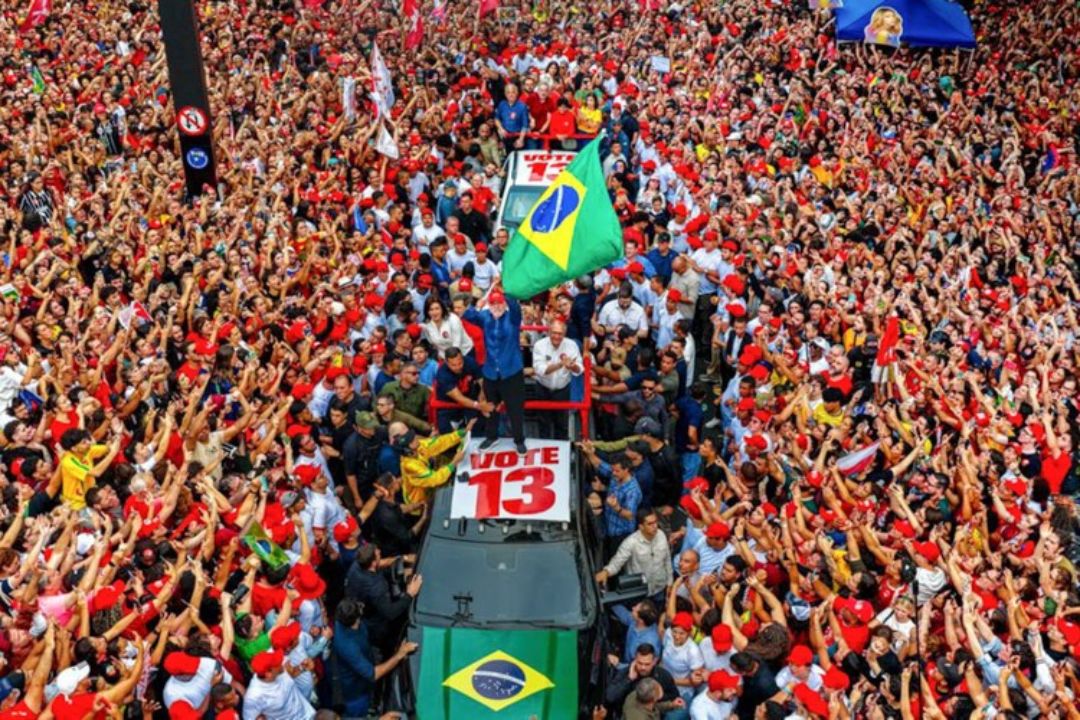
The Brazilian people have shown that they are strong enough to defeat the far right and its plans against the working class, the youth, and the most oppressed sectors of society. Lula’s victory represents a major defeat for Bolsonarism and for those who sought to intensify the attacks on achieved rights. However, this is also a message to the government: the Brazilian masses have shown that they are not willing to continue paying for the crisis created by capitalists. The neoliberal government of “Lula 4.0” will face a people unwilling to keep accepting austerity measures and new “fiscal plans” against the interests of the working class.
Popular mobilization was the decisive factor in this victory. Spontaneously, with young people at the forefront, thousands of people took to the streets, not waiting to be called to by political leaders. On Monday after the first round, a wave of mobilizations began to spread throughout the country. Mass rallies and mobilizations in large and small cities, vote-switching campaigns, assemblies, plenary sessions, meetings, and countless other initiatives showed the willpower of broad sectors of society to fight.
This initiative did not come from above. It was built on the drive of thousands of people who understood how serious the situation was and set out to act collectively to halt the advance of the far right. Young people played a key role in this process, demonstrating that they will not passively accept a future of authoritarianism, precariousness, and the erosion of rights.
Bolsonaro, Trump, Milei, and the entire far right—defeated
The electoral defeat of Bolsonarism also represents a setback for sectors of the international far right that were counting on the advancement of their allies in Latin America. Bolsonaro, Milei, and Trump share the agenda of attacking social and democratic rights, strengthening authoritarian policies, and waging an offensive against working-class organizations.
Trump interfered in the Brazilian electoral process directly. He sought to ensure a victory for Flávio Bolsonaro. However, popular mobilization and the election results thwarted that effort. The defeat of Bolsonarism exposes that the far right is not invincible and that mass mobilization can impose limits on its agenda.
However, we cannot underestimate the strength of these sectors or think that an electoral defeat, on its own, will put an end to this reactionary offensive. The far right has a social base and international connections and will continue to use it to win over the masses and regain ground.
We won this battle. The fight continues!
The reaction of Bolsonarism immediately after the results were announced—questioning the election results and Flávio Bolsonaro calling on the public to “defend Brazil”—demands our attention and mobilization. We need to monitor these groups next steps and be prepared to respond to any attempt to delegitimize the will of the people or threaten our democratic rights.
We achieved an important victory. But the struggle against Bolsonarism and the far right continues. Our goal must be to politically defeat this project, dismantle its support base, and prevent it from once again threatening the rights and freedoms of working people.
To achieve this, we cannot abandon the streets. The mobilization that made this victory possible must continue, expand its organizational reach, and find expression in permanent spaces for popular participation. It is not enough to only take to the streets at decisive moments during elections: we must strengthen our organization in workplaces, schools, and neighborhoods, and build unity to confront attacks, regardless of which government perpetrates them.
To defeat the far right, we must address the needs of the people
Mobilization against Bolsonarism must also turn into specific gains for the majority of the population. We must respond to the interests of the 99%: the working class, youth, women, the Black community, and all oppressed sectors. This means tackling job insecurity, fighting inequality, expanding social rights, and ensuring decent living conditions. The political experience of recent years shows the limits of a project based on reconciling the interests of workers with those of big business, bankers, and agribusiness sectors. Without breaking with the interests of those at the top, the needs of those at the bottom will continue to be thwarted, creating space for the rise of the far right.
That is why we cannot abandon the streets. We need to keep up the mobilization and strengthen our organization. The struggle to end the 6×1 workweek is a great example: popular mobilization drove this demand and pressured the government to take a stand in favor of reducing the workweek.
Building an independent left-wing political alternative
The strength in the streets raises a fundamental strategic question: How can we transform this mobilization into a permanent organization and a political alternative capable of confronting both the far right and the limits of class conciliation? We at Revolução Socialista called to vote for Lula in the runoff election, but that does not mean trusting that his government will do what is necessary to serve the interests of the people: breaking with imperialism and capitalism.
We advocate for the creation of a socialist alternative—one that is independent of the government and committed to the interests of the working class and oppressed sectors. An alternative that does not merely administers the system, but confronts exploitation and oppression and fights for a society organized according to the needs of the majority.
This alternative cannot be built solely through agreements among leaders or during election cycles. It must emerge from the struggles, from grassroots organizing, and from the participation of those who took to the streets. It must politically express the collective strength that was manifested in this historic mobilization and offer a vision for transformation that goes beyond electoral disputes.
The anti-fascist victory showed that, when people mobilize, it is possible to defeat reactionary agendas. Now we need to build on that momentum, expand our organization, and move forward in building a socialist, anti-capitalist, and revolutionary alternative.