By Verónica O’Kelly
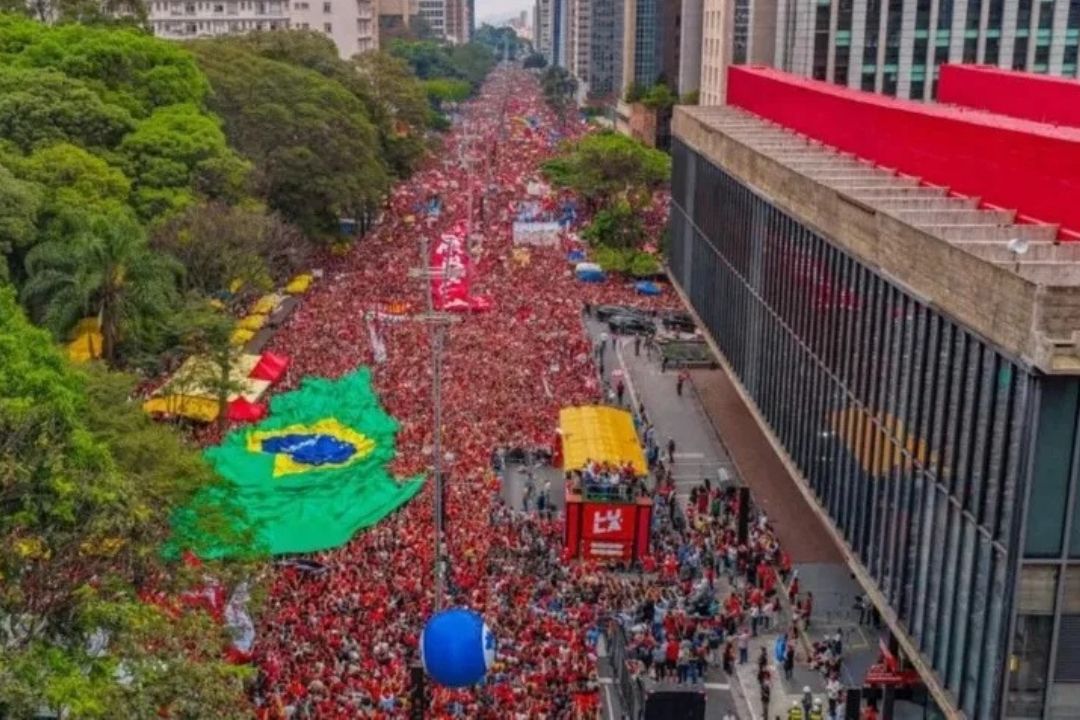
The popular reaction to the possibility of the far-right Bolsonarists returning to power went beyond the limits of the election campaign and turned into a genuine anti-fascist uprising. That mobilization set in motion a social force capable of confronting the Trump plans and imperialism, plus imposing a new dynamic on Brazilian the class struggle. It has been demonstrated that there is the strength to build a political alternative to the left of Lula’s government and the PT, with an anti-capitalist and socialist perspective.
The willingness of broad sectors of the masses to radicalize and confront the far right—while also fighting the policies of Lula 3.0’s neoliberal government—had already been evident in the first round, when the left wing of the PSOL achieved significant electoral results, winning new seats and garnering thousands of votes. This shows that there is room to mobilize broad sectors of the working class around an independent left-wing project—separate from the government—based on a broad front, with a program that breaks with fiscal consolidation and neoliberal austerity policies. There is room to build and strengthen an anti-capitalist and socialist left-wing project. This is the main conclusion we must draw from this process, which opens up a new political situation in Brazil.
The first round of the elections revealed a deep political and social polarization. On one side, the far right emerged stronger electorally, expanded its parliamentary representation, and showed that it retains a significant social base. On the other, the “Lula 3.0” government received a message from the masses: millions of workers are no longer swayed by promises of a better life when, in practice, what they receive are fiscal cuts, austerity, and policies that preserve the privileges of the wealthiest and shift the burden of the crisis onto the 99%.
This polarization, however, was not limited to the electoral contest. Just a few hours after the results of the first round were announced, a wave of spontaneous protests began to gain momentum and grew to enormous proportions.
The pressure from the streets forced Lula to change the tone and content of his campaign, incorporating popular demands into his electoral platform. The achievement of ending the 6×1 work schedule (6 days worked for every 1 day off) is a significant example of this dynamic. Once again, the mobilization showed that these gains are not concessions from governments, but rather the result of pressure and organization by the masses in struggle.
This process shows that there is room to build a third political option, capable of appealing to the masses in the face of a polarization that—although it reflects real differences between the two competing projects—occurs between two bourgeois, capitalist projects. This possibility was expressed in two complementary moments: in the first round, with the excellent electoral results of the radical left, which expanded its representation and garnered thousands of votes; and, subsequently, with the rise of popular mobilization, which culminated in the defeat of Bolsonaro’s bid to return to power. Both at the polls and in the streets, a social force emerged that can be channeled toward an anti-capitalist, socialist, and independent alternative—one different from the two projects that polarize the political contest. The challenge is to transform this possibility into an organized political project capable of offering the masses a path forward of their own.
We are entering a new political stage. The defeat of the far right’s attempt to return to power—achieved in the streets—represents a victory of enormous significance for the masses, but it does not put an end to the challenges we face. We cannot abandon the streets following the far right’s electoral defeat. We must maintain our mobilization and transform this momentum into real gains: continue to confront the far right, fight against austerity and neoliberal policies of the new Lula 4.0 government, and defeat the Fiscal Framework; demand the repeal of the counter-reforms, debt forgiveness for working families, taxation of the wealthy, the elimination of taxes on food and basic services, the demarcation of indigenous lands, and increased public investment in health, education, and social assistance, among other urgent measures.
Recent experience shows that we do not lack social power. The challenge is to organize this power around a collective project capable of sustaining the struggles, unifying our demands, and presenting an independent political alternative. However, this possibility will not materialize automatically. It requires that organizations of the revolutionary left engage in an urgent debate: How can we overcome political and organizational fragmentation and move forward with a process of regrouping in Brazil?
For a revolutionary regrouping in Brazil!
PSOL’s shift toward reformism and the fragmentation of revolutionary organizations reflect political problems that we must address. It is not enough to denounce the capitulation of the PSOL’s majority leadership or to point out the limitations of the organizations operating outside of it. We must build a process to regroup revolutionaries in Brazil—one capable of bringing together organizations and activists who, despite their different paths and experiences, share the need to build an anti-capitalist, socialist, and revolutionary alternative.
In this regard, MES bears a significant responsibility. Its criticisms of the PSOL majority leadership’s adaptation to reformism are correct, but they must be taken forward, drawing conclusions about the structural limits of broad-based parties that include reformist organizations and committing to promoting a reorganization of the anti-capitalist left. In turn, organizations operating outside PSOL—such as PSTU, PCBR, and MRT, as well as other revolutionary currents—also need to confront their own limitations. It is necessary to break with sectarianism, self-proclamation, and practices that fuel fragmentation. Political and programmatic differences exist and need to be debated, but they cannot serve as a justification for maintaining fragmentation. All these organizations have a role to play in initiating a process of dialogue, rapprochement, and the development of common initiatives.
Regrouping does not mean ignoring existing differences or dissolving organizations into an artificial unity. On the contrary, it requires a willingness to discuss them openly and to establish political relationships based on trust, respect for differences, and the development of joint actions. In the face of the profound crisis of capitalism, the rise of the far right, and the limitations of both traditional right-wing governments and so-called progressive ones—such as those of Lula and PT— and the significant responses from the masses—who are leading major mobilizations and uprisings—it becomes necessary to advance the coordination and convergence of revolutionary organizations through a process of regroupment.
Through the International Socialist League (ISL), we have driven this debate at the international level, fostering closer ties and convergence among organizations from different revolutionary traditions around a shared political project. This experience demonstrates that it is possible to move beyond fragmentation. It can also help pave the way in Brazil.
This new phase presents us with both an opportunity and a responsibility. The space for the revolutionary left to grow is evident in the government’s contradictions, in the dissatisfaction of broad sectors of the population, and in the strength demonstrated by the recent mobilizations against the far right. The challenge is to transform this momentum into organization and build a political alternative that meets the needs of the working class. It falls to us—the organizations of the revolutionary left—to rise to this historic task.