Is the new government a bulwark against the far right?
It was a difficult “birth.” Parliamentarism is in crisis throughout Europe. Capitalism has only reactionary answers to the swarm of systemic crises it has created itself. Its deeply reactionary “solutions” are incompatible with even the veneer of bourgeois parliamentary democracy. That is why political polarization and instability are raging—even in a small imperialist “paradise” like Denmark. That is why forming a government was so difficult.
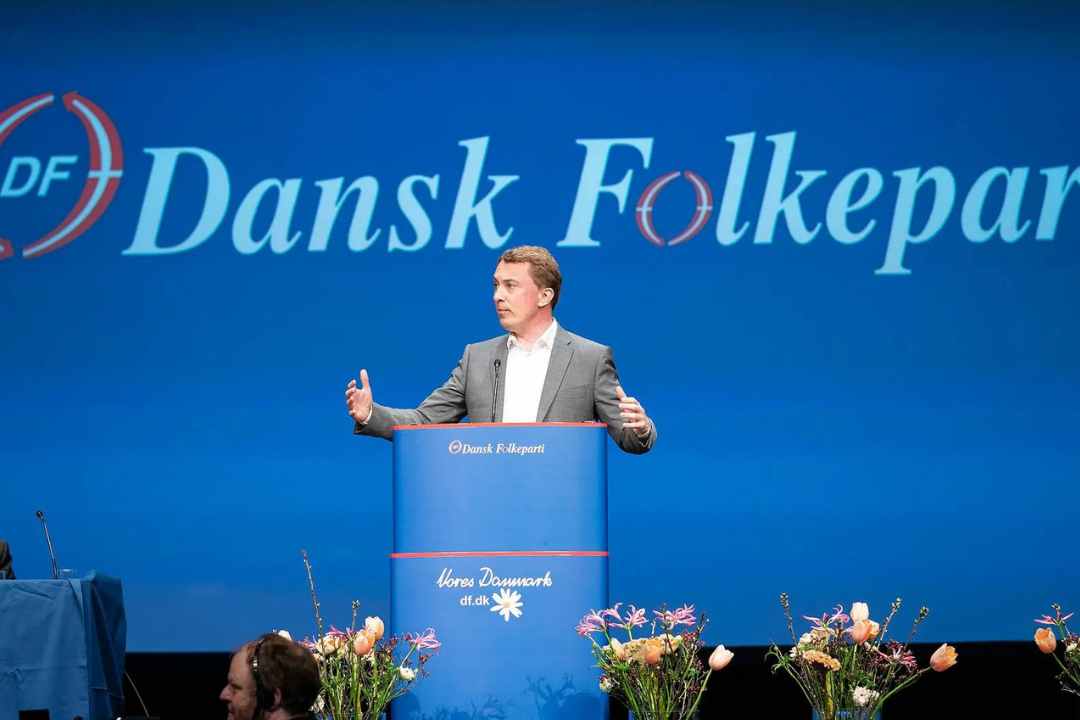
What was actually going on? The Danish People’s Party (Dansk Folkeparti – DF)—which is clearly on the rise following its crisis—kept itself far removed from government power. But not only that. The DF actively prevented the weakened traditional bourgeois parties from gaining power. The DF used its influx of voters to create an effective roadblock to the traditional bourgeois center-right parties’ formation of a government. In doing so, the DF exposed the traditional right’s staggering weakness. What interest does the DF have in this? Weakening the traditional conservative right is a crucial part of the Danish People’s Party’s preparation to take power itself, perhaps as early as the next parliamentary election. The DF is paving its way to power by first weakening—and then sweeping its main opponent, the traditional right-wing parties, completely off the field. This is how the far right is capitalizing on the crisis of capitalism, the crisis of bourgeois democracy, the incipient collapse of the parliamentary system, and the resulting polarization of society.
The parliamentary left’s strategy
Why doesn’t the parliamentary left—the Red-Green Alliance, SF, and the Alternative—do the same, namely prepare for a genuine strengthening of the left in this polarization with the prospect of a red workers’ government on the path to a genuine socialist society?
The three parliamentary left-wing parties—the Red-Green Alliance, the Alternative, and the Socialist People’s Party (Socialistisk Folkeparti – SF) — have a completely different strategy: They see their goal as improving the climate/environment and the living conditions of the population through a step-by-step process in the parliament (Folketinget). Therefore, on the question of government, they pursue what is called “the lesser evil.” The idea is only seemingly logical: by securing a “centrist” government, the three-party leaderships believe they can achieve improvements while simultaneously preventing what is worse—namely, the rise of a radical right-wing government. The problem is that both assumptions are wrong. The three parties can neither achieve significant improvements nor stop right-wing polarization. On the contrary, with their “lesser evil” policy, the three parliamentary left-wing parties are paving the way for popular disappointment and disillusionment, which is the very foundation for the growth of the far right.
What will the new government mean?
The three parties’ “lesser evil”—the new “centrist” government—has come to look like this: SF constitutes its de facto social democratic, i.e., not particularly left-leaning, center. The policies for which SF, through its participation in the government, will be responsible will nonetheless lie miles to the right of SF’s own policies.
When we put “center” in quotation marks, it is because this is not a center/left government, but rather a center/right government. The Social Democrats, the Moderates, and the Radical Left will continue their consistent pro-capitalist economic policies of the past. When it comes to the new government’s major attacks on the working class and young people, it will always be able to find the necessary majority among the bourgeois “opposition.”
- State racism will not be challenged by the new government constellation, and the smear campaign against Muslims in particular will intensify.
- The existence of the Zionist genocidal state of Israel will continue to be supported, among other things, through the Danish contribution to arms shipments.
- Greenland’s indigenous Inuit people will continue to be blackmailed with the threat of losing their necessary and far too meager economic subsidies as punishment for any real independence from the colonial power Denmark.
- Military buildup will continue at full speed.
- Oil and gas extraction in the North Sea will continue to be expanded; among other things, with the opening of the new “Hejre-Field”.
- Major infrastructure projects will continue, resulting in further environmental destruction.
- Only a fraction of the groundwater will be protected by an upcoming ban on spraying, while nitrogen emissions will otherwise be allowed to continue.
- The standard of living for the working class, including the value of transfer payments, will continue to decline.
- Exploitation will increase in the form of fewer workers performing the same tasks and a higher retirement age.
- The acute housing crisis facing young people, the completely unrealistic housing prices in major cities, and the dreadful public schools, where large segments of the youth are struggling, will remain largely unchanged.
- The new government will, for the most part, continue the previous government’s policies of tax cuts for the wealthy, etc.
One of the government’s first actions will be to pass a budget. The balance of power will already be clear at this stage.
This, then, is the kind of government that the Red-Green Alliance and the Alternative have pledged to guarantee—not just its formation, but its continued existence. The Red-Green Alliance and the Alternative are, in fact, guaranteeing that the opposition will not form a majority AGAINST this minority government. Regardless of whatever “guarantees” the three party-leaderships receive regarding their “conditions”—such as “no increase in inequality” or “ensuring animal welfare and drinking water,” etc.—there is absolutely no, and we mean NO, possibility that these demands will actually be met to any significant degree.
The only prospect remains that of climate and environmental stopgap measures, and as before, paid for in full by the working class. Inequality may be reduced slightly—through manipulation of calculation methods, or by trading a major attack for a small concession—a horse-trading deal.
When the four party leaders presented the government platform, it sounded absolutely fantastic and “balanced”—too good to be true. And it is—too good to be true.
A calculation from Cepos (a bourgeois think-tank!) https://www.dr.dk/nyheder/politik/regeringens-skatteplan-direktoerfamilier-faar-markant-flere-penge-i-skattelettelser-end shows how much more a “CEO family” receives compared to a “working-class family.” It becomes even more glaring when one of the things supposed to create balance is the reduction in food VAT—which, however, benefits everyone and therefore in no way creates any balance whatsoever.
The big deal about “free dental care” is sitting in a commission and won’t be fully phased in for another 10 years—by which time there will have been at least two parliamentary elections.
The restructuring of pig production is being put on hold in a four-party pig commission, so it’s hard to say how it will turn out.
Instead of continuing to support bourgeois class politics and spreading the illusion of capitalism with a human face, the parliamentary left should let the crisis-stricken bourgeois parties stew in their own juice, expose the cause of their crisis, and present their own political alternative. But now the three parliamentary left-wing parties are becoming jointly responsible. The SF, in particular, as a member of the government, will be held politically accountable regardless of its own wishes.
The Consequences for the “Left-Wing Parties”
The Social Democratic Party leadership’s view is apparently that the party is best suited to ensure that capitalism continues to function without drastic changes. Amid capitalism’s swarm of systemic crises, the party therefore moves as far to the right—or tactically to the left—as required to retain power. For the Social Democrats, maintaining government power is, in fact, the absolute priority. The consequence is that the connection to the working class has been radically weakened over the years. When the party leadership accepts a government with such an apparently significant presence of the far-left wing of the Folketing, it can easily be misinterpreted as if the party has actually shifted to the left. But that is not the case.
Under the Social Democrat’s sharp rightward course, SF has become the Social Democrat’s fiercest competitor on the left. SF has “stolen” key working-class voters from a rapidly shrinking and dwindling right-leaning Social Democratic Party. Just as under the Social Democratic Thorning government, the Social Democratic leadership’s goal is now to bring SF into the fold with the aim of weakening and, ideally, completely crushing SF. The most effective means is for the SF to fundamentally compromise itself. What better serves this purpose than involving the SF in a center-right government? Given the SF’s Parliament-obsessed eagerness to gain “influence,” this goal has the best prospects. The Red-Green Alliance and the Alternative are likely, at best, to demonstrate total powerlessness and irrelevance, or more likely to become deeply politically compromised as left-wing parties. But this predictable weakening of the left does not mean that the Social Democrats will be strengthened. On the contrary, the party will likely lose even more voters in the major cities and among young and younger voters—especially female voters.
The lesser evil—a flawed strategy
All in all, the choice of the “Lesser Evil” strategy will result solely in the serious weakening of the parliamentary left in the test of reality—while the working class and the youth look on. The Danish People’s Party and the rest of the radical right can simply wait for the left and the weakened traditional bourgeois parties (R, M, and now also SD) to do the work for them—revealing themselves as powerless in the face of the swarm of social crises. Popular disillusionment and disappointment are growing. The far-right pole and its parties are gaining strength. Dissatisfied voters will be unable to find anywhere else to voice their protest.
The process described is not a figment of these authors’ imagination, but a historically and, not least, currently well-known phenomenon. In most of the European imperialist states and in the U.S., traditional bourgeois governments have preceded the far right either taking power or coming close to doing so. The same phenomenon has been observable for several years in Latin America, where the “pink tide” governments end up disappointing the people’s hopes and must give way to the right wing. Everywhere, popular frustration and disappointment that the traditional bourgeois or “pink” parties have only worsened the living conditions of the working class and the lower middle class have severely weakened these parties and paved the way for the far right.
The “Social Democratization” of the Red-Green Alliance
The Red-Green Alliance has been the most left-wing of the three parliamentary left-wing parties. Consequently, many people likely had higher socialist hopes for the Red-Green Alliance than for the Socialist People’s Party (SF) and the Alternative. While the Red-Green Alliance’s leadership has led the party into this dead-end of government support, the explicit “social democratic transformation” of the Red-Green Alliance continues. Even as capitalism’s inability to solve any of its problems is demonstrated daily, the Red-Green Alliance’s parliamentary group continues to fix its gaze firmly on the Folketing as the path to social change, and in an attempt to forge ties with parts of the trade union bureaucracy, the party leadership now expresses itself in “social democratic” terms. Talk of welfare for “the people” and “affordability of pork chops” was on the Red-Green Alliance’s campaign platform. All the major international social problems, from military buildup to racist international policy, were passed over in silence by the Red-Green Alliance during the election campaign.
At the party’s annual meeting, there was minimal time for real political debate and input from the delegates. Much of the time was spent on group work and speeches by guests, and there was only 1½ minutes of speaking time during the debates—far too little time to present and argue for alternative viewpoints. The party’s annual meeting statement was adopted against a large minority. The statement shows no new signs of ability or willingness to play a leading role in the class struggle and in the movements.
The Red-Green Alliance’s social-democratic profile is and remains a false mask. There is a reason why even the historic mass workers’ party, the bourgeois reformist Social Democracy, has thrown in the towel on reformist class collaboration and has become the most pro-system of all the old bourgeois parties—in defense of a deeply crisis-ridden, all-destructive capitalism. Incidentally, the SF has long since picked up the pieces left behind by the Social Democrats’ reformism. That is why they are now being cooked in the government pot.
An alternative to the Red-Green Alliance’s “social democratic” course of defeat
If the choice of “the lesser evil” and the “social democratization” of the Red-Green Alliance leads to nothing but the weakening of the left and thus the strengthening of the far right in the long run, how can the rise of the far right be stopped and the polarization reversed? Every single one of the following program points stands in stark contrast—not just to the far right, but to an equal degree to every single one of the bourgeois parties, both inside and outside the government.
The first and decisive condition for constituting a real political alternative is therefore to break with all the bourgeois parties—including the Social Democrats—and offer a program for a genuine red government alternative. Capital, not the working class, must pay for the recovery from the systemic crises that capital has caused—not just in the form of stopgap measures, but real solutions to the crises.
- Implementation of an emergency climate and environmental plan to address and counter the climate crisis and the destruction of the environment—for the benefit of people, animals, and the rest of nature on land and in the water.
- For a break with agricultural capital and traditional industrial agriculture—for a radical land reform and a radical transformation of the way the land is cultivated.
- Against all parties’ support for military buildup and for NATO. No to NATO and all military buildup—and no to Europe as a strengthened imperialist bloc. Against all imperialist countries, from the U.S. and Europe to Russia and China.
- Against the racism of the far right—and the Social Democrats. Against all state racism—for equal rights for all citizens in Denmark in all areas and protection of refugees from wars, ethnic cleansing, and environmental disasters.
- Liberation for all particularly oppressed groups, e.g., women, LGBTQ+, ethnic minorities, and people with disabilities.
- Against the bourgeoisie’s economic exploitation of the Inuit people. For full compensation to the Greenlandic people for the losses, they have historically suffered at the hands of Danish colonial power, which have hindered their historical economic and educational development—a loss that today confronts the Inuit people in the form of a lack of economic development in their struggle to achieve the desired independence.
- Against all bourgeois talk of “fiscal responsibility,” which merely serves as a cover for making the working class pay. Everything financed through increased taxes on the very rich. When this results in threats of and attempts at capital flight, it must be met immediately with the expropriation of the capital in question without compensation. The same applies to banks that seek to facilitate capital flight.
The bourgeoisie relies on the atomization of the working class as voters and on maintaining the illusion that lasting improvements must be won through the Danish Parliament. A genuine red government will be based on the working class and its allies organized in democratic workers’ councils in workplaces, educational institutions, residential neighborhoods, etc., where elected leaderships can be recalled at any time and new ones elected.
But isn’t this perspective totally unrealistic? We have just had to conclude that the “lesser evil” as well as the Red-Green Alliance’s “social democratization” are not only unrealistic but are a path to directly strengthening the radical right.
An example from Argentina
To answer the question of whether the struggle for a genuine red government is completely unrealistic or not, it is relevant to look at a current development in Argentina. This concerns the Argentine FITU, a front of four organizations, all of which are avowedly revolutionary in the Trotskyist tradition. The four stand against the far-right President Milei, who came to power 2½ years ago following a bitter popular disillusionment with Peronism. Milei immediately launched a series of attacks on all fronts. In response, the FITU is putting forward a program calling for the nationalization under workers’ control of key sectors of the economy and for a government of workers and the masses, achieved through the mobilization of the exploited and oppressed. Support for this program has risen from 2.7% in the last presidential election to between 10-15% in recent national polls. In the working-class neighborhoods of Buenos Aires’ suburbs and among young people, support is likely over 25%.
For decades, these organizations have worked from a socialist perspective to build and organize the strength of the working class in trade unions and movements. This has meant that the possibility of revolution is viewed with sympathy by a segment of society—a segment that is no longer so small.
Well, some might object—conditions in Denmark are not at all the same. That is true enough. Nor is that the point here. At a deeper level, the TREND is the same. This means that the METHOD must be the same. The Argentine revolutionary force was not built in a short time either.
Don’t wait for the government to fail—start the resistance now
Patient, dynamic building is everywhere—including in Denmark—the watchwords for building such a revolutionary socialist international alternative. It requires political regrouping and organizing those in the movements and parties who agree to fight for this perspective.
The current starting point is the understanding that the government will not fulfill its promises. The only way to achieve real improvements—genuine reforms—is through the mass mobilizations of the movements. The working-class members of the labor movement, in particular, hold the greatest collective power.
It is THIS perspective that we must unite around and fight for throughout the movements and in the parties.
June 11, 2026, Jette Kromann, Lars Hansen, Poul Bjørn Berg
[*] Explanatory note:
Background to this article: On March 24, elections were held for the Danish parliament, the Folketing. The subsequent government negotiations took a full 69 days—a new record. Along the way, an attempt to form a government consisting of the historic, traditional bourgeois parties together with the far right failed, as the Danish People’s Party refused to cooperate with one of the more liberal center-right parties, the Moderates. Eventually, a government was formed consisting of the Social Democrats, the Moderates, and the Radical Left, and what made this possible was that the Red-Green Alliance and the Alternative promised not to vote against the government.
The many parties represented in the election are:
- Enhedslisten – Red-Green Alliance: A left-wing reformist party.
- Alternativet – The Alternative: A green party that emphasizes climate and the environment, but has an unclear economic policy and is a petty-bourgeois, reformist party with no orientation toward the working class.
- Socialistisk Folkeparti – Socialist People’s Party: A left-wing social democratic party that has seen a significant increase in voter support over the past four years, during which the Social Democrats have been in government with two bourgeois parties, the Moderates and the Liberals
- Socialdemokratiet – The Social Democrats: The old reformist workers’ party, which now pursues anti-worker neoliberal policies and attempts to compete with the far right on issues of racism.
- Det Radikale Venstre – The Radical Left: The name is an anachronism and stems from the struggle between small and large farmers in the 1800s, when the party represented the small farmers and broke with the Liberal Party, which represented the large farmers. The party is neither left-wing nor radical. They promote “green capitalism” and oppose racist policies, but pursue neoliberal economic policies.
- Moderaterne – The Moderates: A splinter group from one of the old bourgeois parties, Venstre. Emphasizes bourgeois economic policies; e.g., tax cuts for the wealthy, but regarding racism, they are to the left of the Social Democrats; especially when racism hinders the exploitation of foreign workers.
- Venstre – The Left: An old bourgeois party; historically the farmers’ party against the landowners. Today, the greatly weakened party of big agricultural capital. The name is misleading. It is not a left-wing party.
- Det Konservative Folkeparti – The Conservative People’s Party: Also, an old bourgeois party, traditionally linked to big business.
- Danmarksdemokraterne – The Democrats of Denmark: A splinter group from the Liberal Party with right-wing populist and petty-bourgeois policies, appealing primarily to the rural population and with a strong racist profile.
- Liberal Alliance: An ultra-liberal party, also with a strong racist profile. Enjoys some popularity, especially among younger men.
- Dansk Folkeparti – Danish People’s Party: A far-right, strongly racist, and national-conservative party. Promoted remigration as an election campaign theme.
- Borgernes Parti – Citizens’ Party: A personality-centered, far-right party that won 4 seats in the election and immediately thereafter completely disintegrated.