By Sergio García
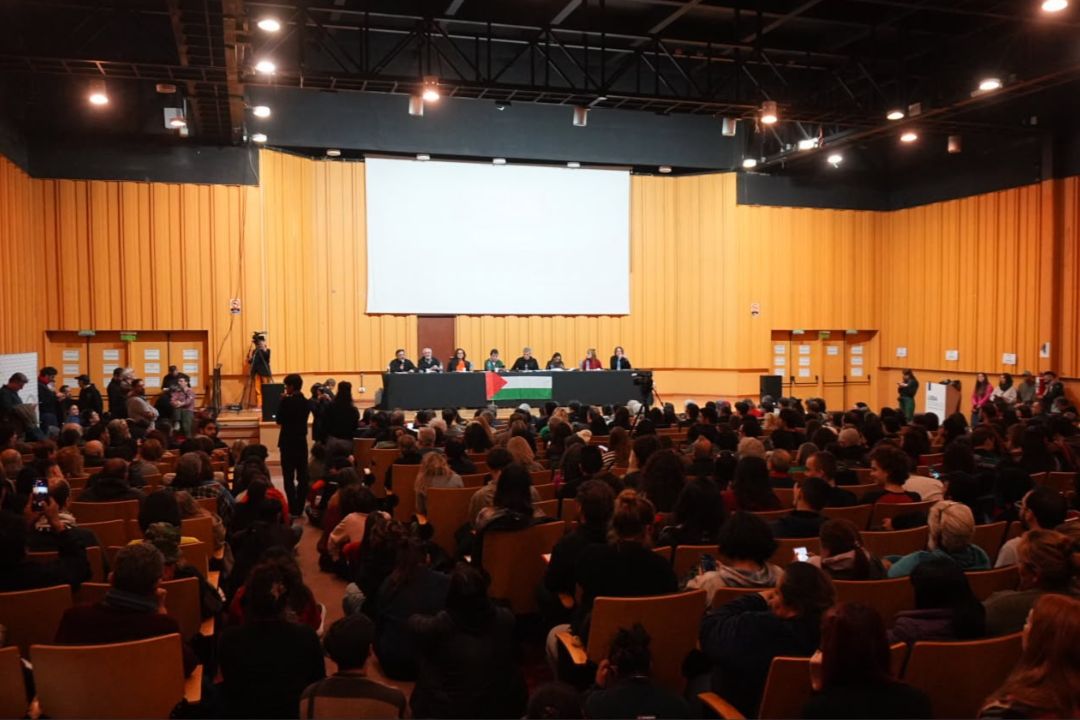
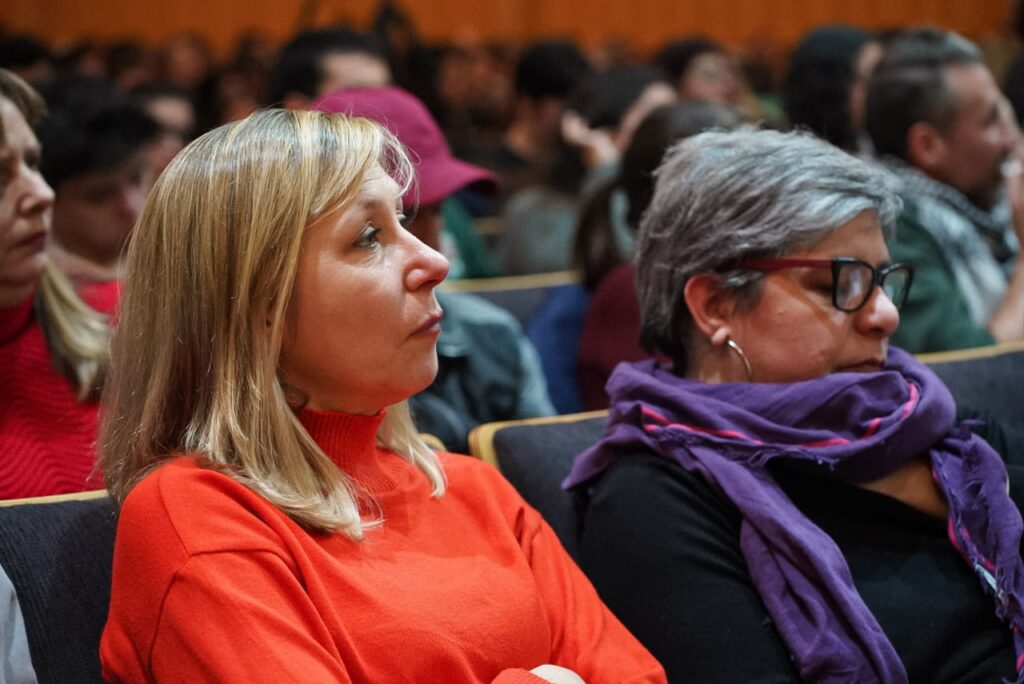
In the last several months the left’s remarkable political progress has become increasingly evident, as expressed in every media outlet, opinion poll, and survey. More importantly, at the grassroots level—in workplaces, schools, and working-class neighborhoods. This is no longer just a matter of discussing the situation; we need to delve deeper into what to do to take advantage of this open political opportunity in order to take much more qualitative and strategic steps. Therein lies the fundamental debate that all the parties of the Left Front-Unity (FIT-U), together with intellectuals, social leaders, and thousands of activists and supporters, must engage in. The launch of the FIT-U Forums and their development over the coming days is an important opportunity to share and bring this entire debate into the public sphere. The first session, held on Monday, June 29, revealed points of agreement, points of disagreement, and—in our opinion—a certain lack of understanding of the opportunity at hand and what is needed to capitalize on it, as well as ambiguities and some misinterpretations concerning what we at the MST are proposing. That is why, in this article, we want to delve deeper into several elements that we consider decisive and strategic for the development of a bold and revolutionary politics for the coming period.
New Situation, New Tasks and Proposals
A first and essential step is to begin by properly assessing the changes taking place in the country and their potential implications in the medium and long term. This is because there may be organizations or comrades who tend to view what is happening as more of the same, or merely as an electoral issue or a series of favorable poll results. This is not the case—we are experiencing something much more significant, unusual, highly positive, and exciting. Delving deeper into this analysis is an essential first step.
We are facing an unprecedented process, a shift to the left in which the revolutionary left— Comrade Myriam Bregman in particular, and the Left Front Unity in general—is capitalizing on this advance and drawing on this growing support, which has not yet reached its peak and is likely still far from any point that might limit us. All of this presents us with a historic challenge: that in the long term, a real possibility may open up that—through a combination of a deep leap in class struggle, a sharp turn in the situation, and the development of this shift to the left—levels of social support for the left could grow much further, turning real the unprecedented possibility of contending for political power in the country.
If this is the case, it implies understanding that no proposal for a situation as extraordinary as the one we are currently experiencing and shaping can be correct if it is, broadly speaking, the same or very similar to the one that existed before these changes took place. No one can successfully tackle the necessary tasks by repeating, as if nothing had happened, the same political formulas used before these momentous changes took place. The changes in the situation and the prospects for further change are at odds with a political conservatism that tends to resist altering the previous status quo within the left or our coalition. If reality changes, we must keep an open mind and change whatever is necessary, without falling into routine or formalism.
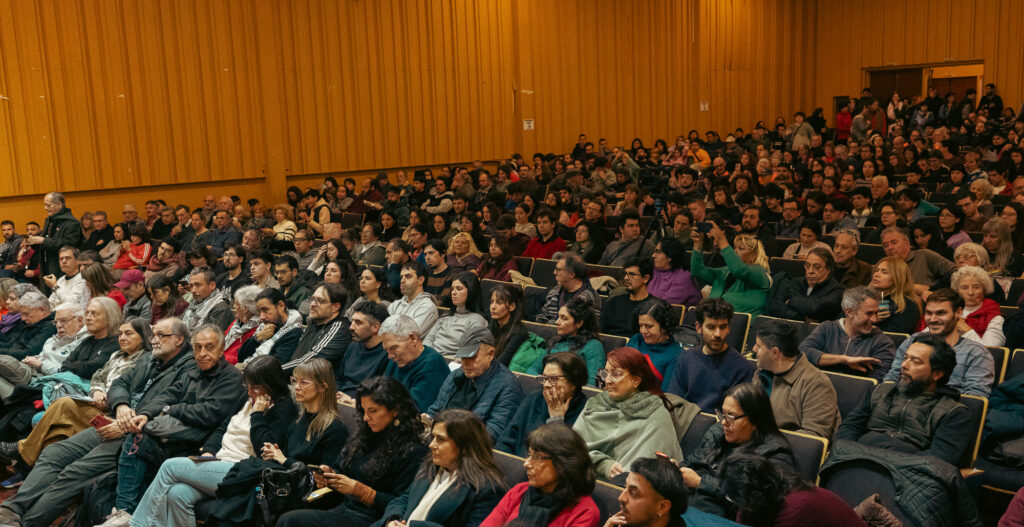
In order to change reality—let the Left Front change
The situation of the Left Front Unity serves as a clear and tangible example. This is the front we have built, value, and defend—and which current state we must assess, without falling into the trap of treating it as an abstract, static entity. On the contrary, we must take the risk to develop a dynamic proposal so that our front can evolve and rise to the challenge of the situation we are facing. We must start by understanding that, as it stands today, it is not enough to contain, channel, and organize all the political possibilities that lie ahead. Much more is needed—something new and superior—to answer to the present and, above all, to what may lie ahead.
This is very clear and necessary, given the inseparable relationship between the positive momentum of a shift to the left, the need for bold changes and politics, and the FITU’s position of acknowledging its limitations in order to fight for its transformation from that vantage point. In this regard, the first panel of the Forum organized by the Left Front Unity on Monday, June 29, showed that—in the cases of PO and Izquierda Socialista—there is no real understanding or grasp of the exceptional situation we are experiencing and the new tasks it presents to us. This manifests as a political problem, leading them to mechanically propose merely more of the same, without considering any changes to the most backward and criticizable aspects of our front. And while it is always necessary to be self-critical, it is even more so when there are major changes that require new political and organizational responses.
In their remarks, our comrades state that if current FIT-U were to convene joint committees—or a national assembly, as PO adds—that would be fine and would solve the problems raised. Unfortunately, however, that is not the case. It is the fact that it is merely an electoral front—lacking a real day-to-day existence, ongoing political debates, or substantive functioning as a joint political tool—that prevents us from acting collectively or truly discussing everything, including the issues of committees, parties, assemblies, ongoing struggles, or any other initiative.
In this regard, we continue to believe that if, even before, all the positive aspects of the Left Front–Unity were accompanied by limitations that prevented it from advancing further, it is even more evident when viewed from the current situation. And the debate at this first forum made it clear that our comrades in IS and PO have yet to fully grasp the true magnitude of the changes underway, and therefore do not see the need to revolutionize our front and live up to what is needed. That is why, in general, their proposals tend to be more of what we’ve already heard, based on a model of the Left Front that they do not question, despite its obvious limitations.
We are also in favor of promoting joint committees everywhere; as we even decided in our Congress, so we consider it a mistake not to try to take them forward. However, for this to happen, we believe it is important to reach an agreement on the strategy and objectives of these committees, so that they do not result in unnecessary disputes. And in this regard, for us, the debate and strategy for moving toward a large joint party is a central issue for its creation and unified steps forward.
The Strategy, the Party, and the MST’s True Proposal
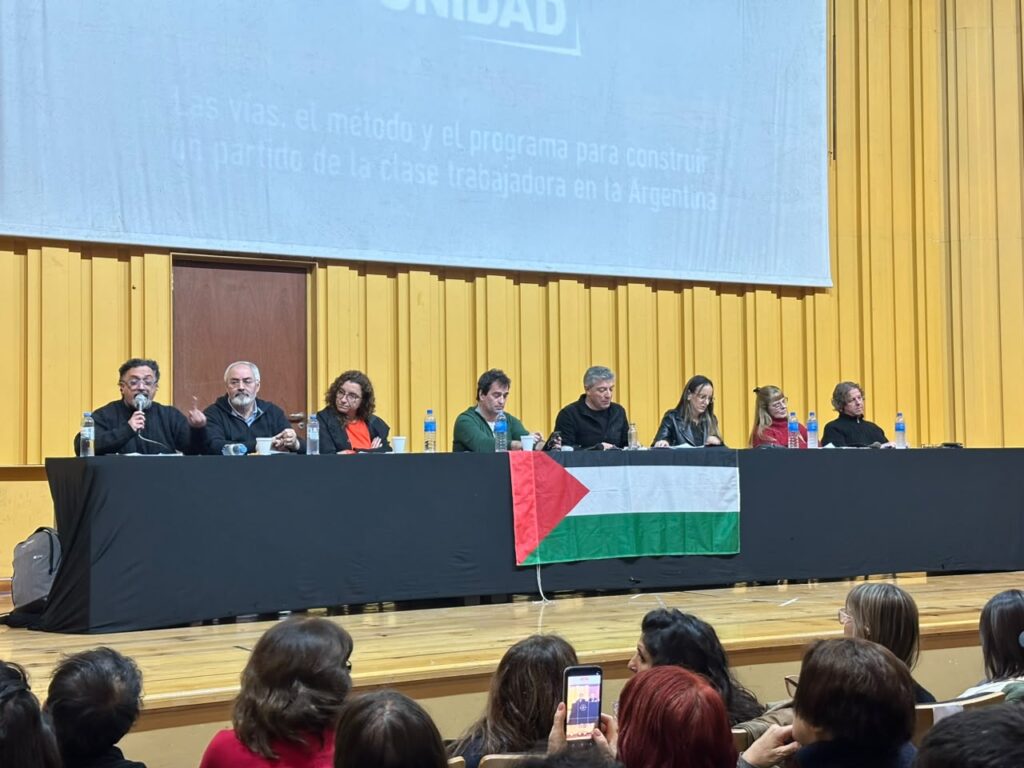
With a thorough understanding of the magnitude of the changes we are undergoing and of the historic opportunity and challenge that lie ahead, we propose moving towards the construction of a great, unified revolutionary party of the left—or whatever name is chosen. On this path, one specific possibility would be to move toward a unified party involving the entire FIT-U, based on its anti-capitalist and socialist program, prioritizing the important agreements reached and maintaining the existence of tendencies to reflect the reality of coming from different organizations and experiences, and calmly working through differences and nuances without anyone losing their identity or pre-existing opinions. This proposal, of course, can only move forward if all the parties in the front have the political will to advance either with this or some other proposal along the those lines. As we’ve said, we’re starting from the premise that at least two of the forces within the front do not consider it necessary to address these issues as current and pressing. In the case of PO, it stated at the Forum that it is indeed willing to debate the building of a party, but so far this has been nothing more than a passing remark, one that bears no relation to or is inconsistent with any of the proposals it raised at the forum—none of which addressed this issue— while it prioritized—just like IS—focusing primarily on highlighting the existing differences… not a positive contribution.
At the same time, PTS comrades have been proposing to build a movement for a party of the new working class. This is a general, unfinished definition that needs to be clarified and grounded in reality. In fact, at the first FIT-U Forum, they made very little mention of the issue, choosing instead to prioritize a narrative about the details of their own political development and other general topics. In our case, we start from the premise that we agree with PTS that it is necessary to advance the discussion towards building something new—whether it be a movement toward a party or some other form that leads to the creation of a powerful political tool for the working class—while taking steps to recruit thousands of new members.
On this issue, and despite the fact that we have already written articles, produced videos, and given explanations outlining our entire proposal, PTS continue to express critical views—but based on a misinterpretation, since they are debating a proposal that we do not put forward. Comrade Christian Castillo mentioned in his remarks that the “tendency party” referred to by the MST has had poor results in other countries. And in the report on the Forum published on June 30 in La Izquierda Diario, they write the following: “For its part, the MST, within the framework of the political opportunities presented by the situation, began by agreeing that the FITU is no longer sufficient and proposed building a new type of organization—a broad-based party— though it proposed operating as a ‘party of tendencies’—a model that poses problems for conceiving a democratically centralized party for the class struggle if debates are not resolved, as demonstrated by various recent international experiences.” 1
To foster a better debate, it would be important to start by discussing what the MST proposes, rather than things we do not propose. After all, at no point during this open debate within the left in our country have we proposed a broad party encompassing various tendencies. In fact, to be precise, we have essentially been proposing the opposite, and we have explained that our proposal had nothing to do with other international experiences to which our comrades refer.
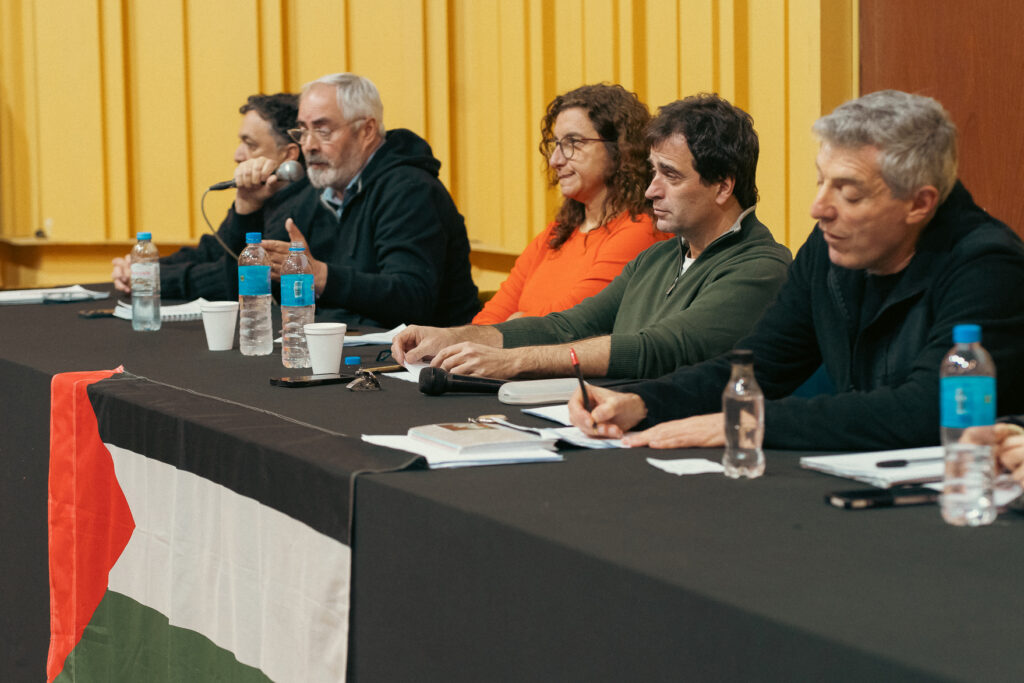
At the Forum, our comrade Alejandro Bodart expressed the following on this topic:“Mind you, we’re not talking about a “Broad Party” like those that have emerged since 2001—since the turn of the century—because those parties have been organized essentially around reformist forces, they have not had an insurrectionary program to resolve the question of power, but have instead been mere electoral variables that, when they entered an electoral crisis, ended up retreating—and they lacked a revolutionary method as well. We are talking about something new, because it is unprecedented in this country for the revolutionary left to be the one making headway. Therefore, it has the potential to organize a great force with a revolutionary program, a revolutionary method, and an insurrectionary strategy—the strategy of workers’ government—something that is unprecedented worldwide and could be a tremendous blow, not only for the Argentine ruling classes, but also a beacon of hope for other movements worldwide if we were to succeed.” 2 This proposal has nothing to do with broad-based initiatives, neither electorally or in any other way.
Similarly, in an article we published a few days ago in Periodismo de Izquierda, we expressed the following on this topic:“As for the possibility of moving toward a united party, there are naturally debates about the best way to go about it. First and foremost, in our opinion, we must agree on what we want to build. In this regard, we believe and propose taking steps toward the formation of a new and large revolutionary party that brings together—for political struggle and the class struggle—thousands of new activists and the members of the parties that are willing to take this step together. We are not talking about a tactical front, nor a broad-based party, nor an electoral organization. We are talking about building a revolutionary party, with a revolutionary and socialist program, with the strategy of the working class seizing power and establishing its own government, and operating under the method of democratic centralism.” 3
I expressed something along these lines this Monday, June 29, in my remarks at the Left Front Forum, when I pointed out that even the Bolshevik Party (that is, a revolutionary party—neither broad-based nor electoral) had a common strategy and a substantive program for a workers’ government, and within that framework, it engaged in ongoing debates, reached agreements, and resolved differences internally. We quoted this example precisely because we are debating how best to build a revolutionary party—not any other kind. And we want to point out that there is no contradiction between building a large revolutionary party of thousands and knowing how to coexist with agreements, nuances, and differences. In reality, it is utopian to believe that a large party with mass influence will always reach complete agreement on everything.
The Party, Tendencies, and Internal Factions: What Is Up for Debate?
For these reasons, we urge PTS comrades to focus on debating the actual proposals put forward by the MST and to set aside proposals that are not our own, so as not to distort the debate and draw mistaken conclusions that can only serve to justify a supposed lack of agreement. We reiterate this once again: when we speak of moving toward a large party, we mean a revolutionary party with a substantive program for workers’ government and socialism. We are not talking about an electoral-style organizational variant, nor about a broad-based party, nor about a copy of other experiences such as France’s NPA or any similar model from another country. We are talking about a party that serves to play a leading role in the political and class struggle, and within that framework, one that is also useful for the electoral political struggle, without this being its strategic priority.
A party like this must, from the outset, operate under the principle of democratic centralism, with the democratic wing taking the lead to facilitate the inclusion of new members and the development of opinions and collective debate. At the same time, if we are to compose it out of different organizations that are uniting with thousands of new activists. We must also allow—at least temporarily—the existence of internal tendencies that reflect the previous stage of our development, with their positions, experiences, and activist work throughout the country. This does not prevent the functioning of a democratic-centralist party that debates internally and collectively, votes, and decides on a specific political line in response to each real-world situation, by majority vote, with minorities respecting that reality.
We want to continue debating all these issues in a spirit of comradeship, making every effort to truly listen to one another (a necessary approach if we are to explore the possibility of reaching strategic agreements between our organizations) with the PTS comrades who have been promoting a proposal for a party and committees to discuss its formation. As part of these debates and exchanges, we believe our comrades can take a necessary step forward toward this goal by opening up the current committees to all workers and young people who share the political task of participating in and contributing to the building of a new and great political organization—which would strengthen the entire process of militant organization currently underway and create better conditions for further progress. Or at the very least, we could experiment with joint committees in some places and then draw conclusions from those experiences. At the same time, we believe it is a good idea to jointly promote regional coordination efforts to advance the class struggle and support the processes underway in each region. This is a very important task that does not conflict with—nor does it replace—the need to move forward with substantive political debate and agreements, which is the primary goal we must strive to achieve.
The Importance of Debate on the Party and Moving Forward in Unity
The debate over these necessary steps is based on the agreements that already exist in order to carry them out, as well as on a fundamental vision that we believe is very important in light of the possible prospect of a combination of a significant shift to the left, an intensification of the class struggle, and a major crisis. In this dynamic combination—which will give rise to social tensions, political confrontations with our class enemies, and opportunities for the revolutionary left to advance—we believe that any single party among those that currently make up the Left Front Unity by itself will not be able to answer adequately and in full measure to such a challenge. The main political mistake that could be made, if any of the existing forces believes the opposite, is for each party to develop their own political orientation based on the belief that—through its own evolution and on its own—it will achieve enormous leaps toward organic mass influence.
In our opinion, to achieve the vision of a great revolutionary party that competes for mass influence, we will need the political and strategic unity of leaders, cadres, and members who are willing to work together thoroughly, knowing how to prioritize all the important agreements we have while also coexisting with any remaining differences or nuances. Because throughout our country there are disparities in organizational development and experiences, and no single organization holds a specific hegemony over the others. For this reason, we must prioritize bringing together the best elements of the left within a single organization and strategy. At least among those organizations that are indeed willing to take on this complex challenge—one that is, at the same time, absolutely essential in light of everything that lies ahead. On this issue, we cannot help but turn our eyes to our own history and that of the entire revolutionary movement. And above all, we must remember how, according to the historian and Marxist activist Pierre Broue, Lenin’s party was strengthened in the months leading up to the October Revolution:“The Bolshevik Party of 1917 emerged from the convergence within the Bolshevik current of the independent revolutionary currents constituted both by the Interdistrict Organization and by the numerous internationalist Social Democratic organizations, which had until then remained on the margins of Lenin’s party… The strength of the unified party stems from the complete fusion of the different currents—at least to the same extent as the diversity of paths that led them, through a series of years of ideological struggle, to the common struggle for the proletarian revolution.” 4
So far, this entire debate surrounding the building of a major party has been unfolding, and it will surely continue. There may also be comrades who wonder or have doubts about why there is so much debate surrounding the possibility of building a large party, or who prefer to focus solely on the debate about committees and their usefulness, or on promoting other types of organizations in which to participate and be active. For our part, we are in favor of promoting every sphere of struggle, organization and self-organization, as well as political exchange and militant activism. However, at the same time, we are convinced—and in our view, historical experience confirms this—that the most essential and strategic political task is to build a revolutionary party and leadership.
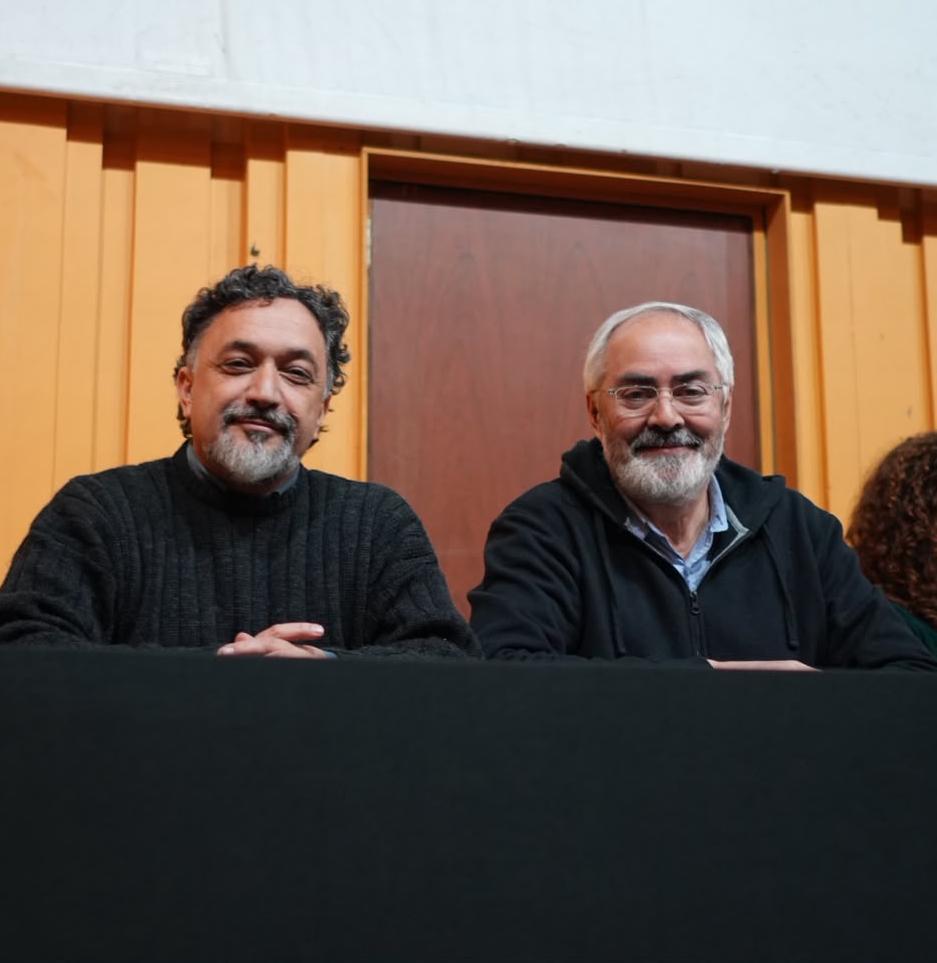
A party that fights for leadership in workers’ and youth organizations, that promotes genuine processes of self-organization, and that is committed to developing dual power bodies. These bodies are essential to any revolutionary process, yet they do not replace the need for a strong and solid revolutionary party, among other things, to act within those organizations against the misguided policies of other reformist, bureaucratic, vacillating, or opportunist leaderships, which generally work to ultimately dismantle these much-needed genuine organizations.
Let’s engage in this and all other in-depth discussions at the next four forums of the Left Front for Unity, whose development and continuity are crucial for continuing and deepening all these debates—including those on international solidarity, forms of unity of action and the united front, the building of revolutionary parties, and the necessary program. We should also promote other joint initiatives that may arise, in meetings, assemblies of activists, and in every democratic and collective space that exists—where the political leadership of the front, cadres, activists, supporters, intellectuals, labor and social leaders, and anyone who wishes to contribute their ideas to this decisive moment for the anti-capitalist and socialist left can participate.
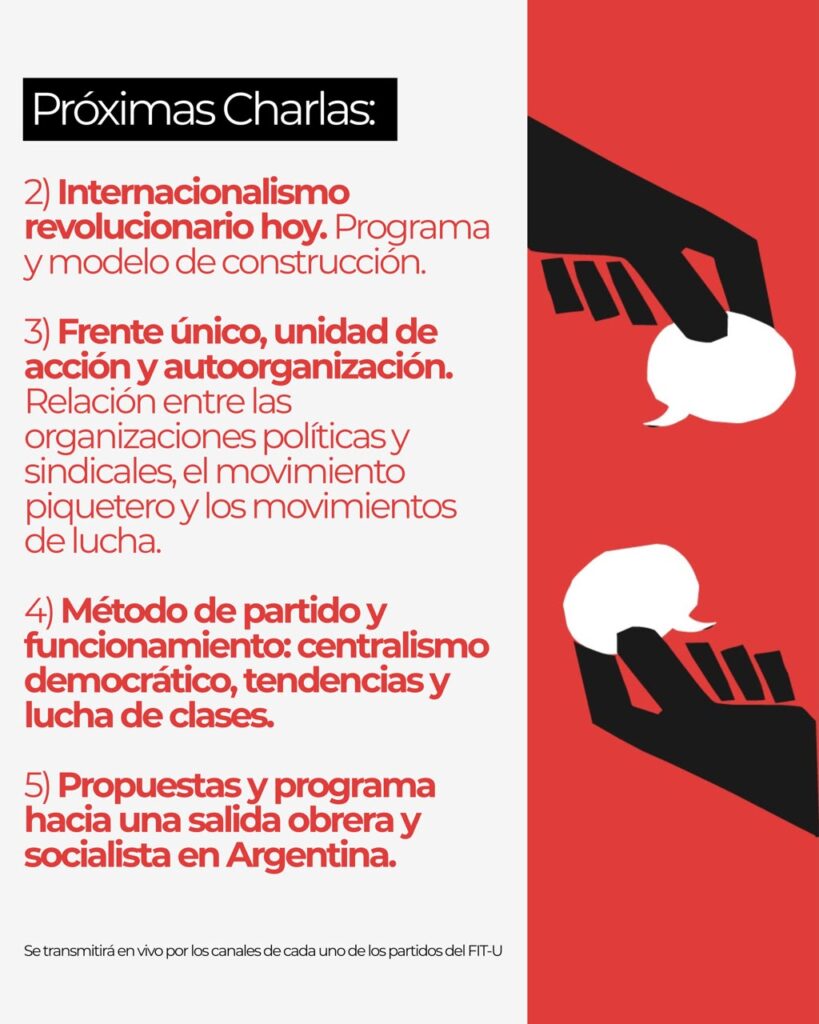
UPCOMING PANELS AT THE LEFT FRONT FORUM
“The Paths, Method, and Program for Building a Political Tool for the Working Class in Argentina and the Role of the Left”
- Revolutionary Internationalism Today: Program and Model for Building Internationally.
- United Front, Unity of Action, and Self-Organization. The Relationship Between Political and Labor Organizations, the Piquetero Movement, and Grassroots Movements.
- Party Method and Functioning: Democratic Centralism, Factions, and Class Struggle.
- Proposals and a program for a workers’ and socialist solution in Argentina.
The date and place are to be confirmed and will be announced later; we invite you to attend in person or watch the event live online via the Periodismo de Izquierda YouTube channel.
- First forum of the Left Front. Before a packed auditorium: a major debate on the challenges facing the left and the working class (Published in LID). ↩︎
- Argentina. Left Front Debate Forum: Remarks by Alejandro Bodart ↩︎
- Sergio García: The Left, Committees, the Party, and Strategy—We Can Make Much More Progress (Published in PDI). ↩︎
- The Bolshevik Party, by Pierre Broue. ↩︎