Automatically translatede by AI.
The CIA director’s visit to Moscow once again reveals a recurring pattern: the U.S. and Russia combine negotiation, pressure, and conflict. Ukraine isn’t even the uninvited guest here, which puts it at risk of being left out in the cold, sidelined while the imperialist powers negotiate over its territory and its future. We do not trust the imperialists’ peace. We advocate for a just peace, based on sovereignty and Ukraine’s right to self-determination.
By Rubén Tzanoff and Oleg Vernyk
An open secret
In November 2021, then-CIA Director William Burns traveled to Moscow. He met with Putin and other Russian officials. The visit took place amid evidence that Russia was preparing an offensive against Ukraine. It was just a few months before the full-scale invasion.
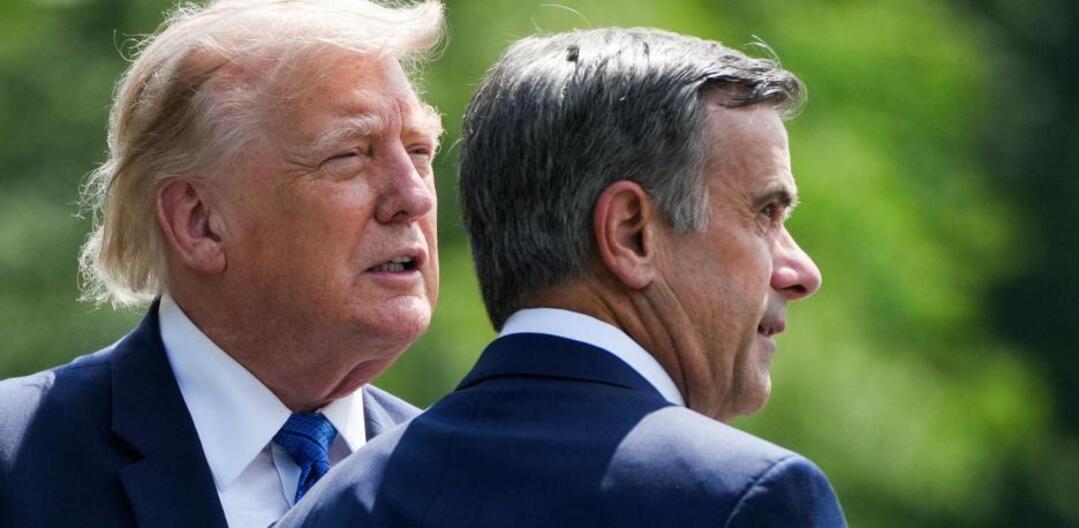
On Tuesday, August 25, 2026, John Ratcliffe, the current head of U.S. intelligence, traveled to Moscow. The trip became an open secret. Now the situation is different. The war has been going on for more than four years, and negotiations have failed to stop it. Against this backdrop, U.S. imperialism maintains direct channels of communication with Russian imperialism.
What was it all about? The trip and the speculation
The trip was not announced in advance. The first reports came from U.S. media outlets. The initial lack of official explanations fueled various speculations.
What was Ratcliffe’s purpose? Was it to warn the Kremlin against a possible attack on a NATO country? Was it to discuss a possible resumption of negotiations on Ukraine? Were Russia’s relations with Iran also discussed?
The Kremlin confirmed that “working meetings” took place between the intelligence chiefs of both countries and that there was no meeting with Putin. Trump described the trip as “semi-routine” and downplayed reports of a specific mission.
The statements are vague. And, given who is making them, rather than confirming anything, they make one think: “When wolves negotiate, the sheep pay.”
There is no evidence to suggest that the meetings resulted in a secret agreement, but their political significance cannot be ignored either.
Surely nothing positive for Ukraine
There is one conclusion that does not depend on knowing the secret details of the meeting: no negotiations regarding Ukraine’s future should take place behind the backs of the Ukrainian people. However, this has been the central theme of U.S. and Russian imperialism.
Both are defending their own strategic interests. The U.S. seeks to rebuild its weakened but sustained global hegemony. Russia seeks to expand its influence, consolidate its gains, and break out of the isolation caused by the invasion.
The fact that the U.S. is briefing Zelensky on the meetings held in Moscow does not mean that Ukraine is participating in the negotiations or making decisions about them.
All of this is happening behind the backs of the Ukrainian people—a people who are fighting for their very existence, their territory, and their right to freely determine their future.
Trump and Putin: Rapprochement and Dispute
The relationship between Trump and Putin is not, for the time being, a stable alliance. Nor is it a permanent confrontation.
Trump established direct channels of communication with Putin from the start of his second term. In 2025, there were direct telephone conversations, following which delegations from both countries met in Riyadh. In August 2025, Trump and Putin met in Alaska, but they did not reach a final agreement there either. Now, in August 2026, Moscow is once again the setting for high-level talks.
It is a contradictory, pragmatic, and ever-changing relationship. They negotiate while vying for spheres of influence, primarily in Eastern Europe.
But there is one common thread: major decisions are discussed with Ukraine relegated to a secondary role.
Imperialist powers do not negotiate a just peace for the peoples
We reject the Russian invasion and occupation. We reject any political justification for Putin’s imperialism.
And we denounce the expansionist and domineering role of Trump, the U.S., the EU, NATO, and any other imperialist power.
It is not in the people’s best interest for Ukraine to replace one imperialist power with another. The U.S. and Russia may clash over their interests, but they can also negotiate when they find common ground.
When they negotiate, each side defends its own power interests. In both cases, they treat Ukraine as a semi-colony.
That is why we are skeptical of any “peace” based on the division of territories, spheres of influence, or the economic interests of the major powers. A just peace must be based on a different principle: the right of the Ukrainian people to determine their own destiny.
That means calling for an end to Russian aggression; the withdrawal of occupation troops; the recovery of the occupied territories; and guarantees that Ukraine can exercise its right to self-determination.
Standing with the Ukrainian people as they resist
Together with our comrades in the Ukrainian Socialist League (LSU), the International Socialist League (LIS) maintains a position independent of the Zelensky government, of all governments, and of all imperialist blocs.
We support the Ukrainian people’s resistance to the Russian invasion. We defend their right to freely determine their future.
Our solidarity is active. It is with the workers, the young people, and the civilian population who are suffering from a war they did not start.
The LIS participates in concrete acts of workers’ and internationalist solidarity. We do so in unity, setting aside our differences. One such initiative is the International Solidarity Convoy for Ukraine, which aims to bring humanitarian and political aid to the people who are resisting and surviving in the midst of the war.