Automatically translated by AI.
The agreement to flood international markets with millions of metric tons of Russian fuel lays bare the economic and geopolitical interests of the U.S. and Russia. While Trump prioritizes energy prices and his electoral needs, Putin secures resources to sustain his war machine. We cannot expect a just peace from either of these imperialist powers. The Ukrainian resistance is facing Russian bombardments and defending its right to self-determination. No trust in the imperialist powers—solidarity with the Ukrainian people.
By Rubén Tzanoff and Oleg Vernyk (Ukrainian Socialist League—LSU)
An Inter-Imperialist and Anti-Ukrainian Agreement
On October 9, Trump announced an agreement with Putin to supply millions of metric tons of Russian diesel to the U.S. and global markets. Russia would initially deliver more than 300,000 metric tons, another 500,000 in November, and an additional million thereafter. Another three million could be added, depending on the situation at Russian refineries.
Trump presented the agreement as a measure to lower diesel prices. Rising energy costs—exacerbated by his military adventures in the Middle East—and social unrest in the U.S. are putting pressure on his administration just a few weeks before the November 3 midterm elections. His stated priority is to lower costs for farmers, ranchers, truckers, and consumers. But behind the propaganda lie economic and political interests.
Just a month earlier, Trump had signed a law granting him the authority to impose trade sanctions on Russia and Iran. Now he is facilitating Russian exports in accordance with his economic and electoral needs.
This move reveals the true nature of U.S. foreign policy. Sanctions, diplomatic pressure, and rhetoric about security demonstrate that the “carrot-and-stick” approach is a tool that the U.S. employs, adapts, or abandons depending on its interests.
A business that favors aggressors
For Putin, the agreement offers the chance to recoup revenue and alleviate energy-related setbacks. Ukrainian attacks on refineries have disrupted Russian supplies and caused long lines at gas stations, leading to social unrest. Expanding exports provides economic relief for the invaders.
That revenue cannot be separated from the war. It strengthens Russia’s ability to sustain its militarized economy and prolong the invasion. While Russian forces bomb Ukrainian cities, homes, and infrastructure, Trump is opening up a trade route that benefits the aggressors.
The agreement also highlights the self-interested nature of the relationship between the two governments. Trump seeks to keep energy prices in check and address domestic discontent; Putin needs revenue, markets, and leeway to continue his invasion. Their disputes do not prevent them from negotiating when they find common ground.
This is not a strategic alliance without contradictions, but rather a convergence of interests, with no regard for the suffering of the Ukrainian people.
Anindisputable concession to Putin, and the war continues
Even Zelensky described the agreement reached by his “protector” Trump as a “gift” to Putin and denounced the fact that allowing Russia to sell more petroleum products means prolonging the war. The facts show that diplomatic statements calling for peace are nothing more than posturing. The invaded people cannot be subjected to negotiations that prioritize imperialist interests.
Events following the announcement dispelled any expectations that the energy “agreement” would reduce hostilities.
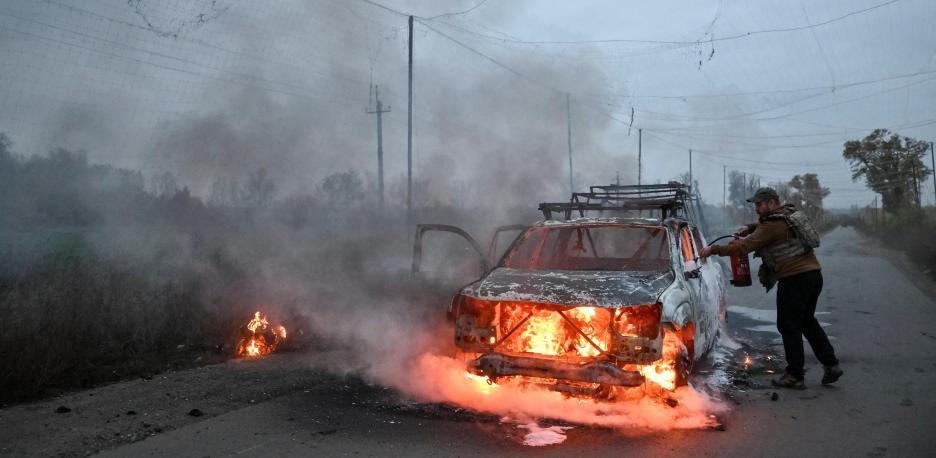
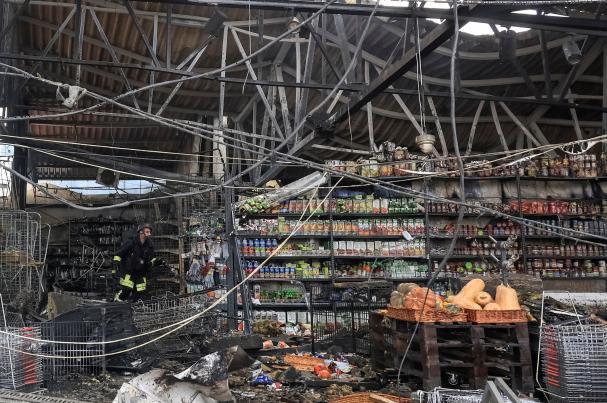
On October 10, Russia attacked thirteen Ukrainian regions, targeting homes, infrastructure, and railway facilities. In Zaporizhzhia, five bombs struck residential buildings, killing 17 people, including three children.
Despite being at a military disadvantage, Ukraine continues its attacks on Russian energy and logistics facilities. That same night, Ukrainian drones struck an oil terminal in Rostov. Damage was also reported to a railroad bridge, and attacks were carried out against ships in the Sea of Azov.
The agreement between Trump and Putin does not stop the war. Both sides are continuing their military operations, but one fundamental difference must not be overlooked: Russia is the invading power, and Ukraine is exercising its right to defend itself with all means at its disposal.
Supporting that resistance does not mean placing trust in Zelensky or endorsing his economic and social policies. It means defending a people under attack and their right to freely determine their future.
The European Union: Self-Interest and Insufficient Solidarity
Nor is European imperialism pursuing a selfless policy of “defending” Ukraine. In the four and a half years since the start of the full-scale invasion (from February 2022 to October 2026), the EU paid Russia more for oil and gas than it allocated to Ukraine in military aid. During this period, EU governments imported a total of 238,000 million euros worth of fossil fuels (crude oil, petroleum products, LNG, and pipeline gas) from Russia. In other words, this amount financed the budget for the military aggression against Ukraine.
At the same time, total military aid to Ukraine from EU institutions and member states amounted to just 97,300 million euros. This means that, throughout the war, the EU paid Russia 140,700 million euros more for energy resources than it spent on weapons for Ukraine. Therefore, the EU’s spending on Russian hydrocarbons is nearly 2.5 times greater than its military investments in Ukraine’s defense.
These figures speak for themselves and refute all the demagoguery from the Brussels bureaucracy regarding its supposed “support for Ukraine.” The EU is not a progressive alternative to U.S. imperialism, nor does it selflessly guarantee Ukrainian sovereignty. Its governments defend the interests of the European bourgeoisie, its markets, resources, and strategic positions. Its military, financial, and diplomatic “support” is conditioned by those interests and by the fear of Russian expansion.
That is why denouncing the maneuvers of Trump and Putin requires maintaining an independent stance toward European governments and rejecting their rearmament for the inter-imperialist wars for which they are preparing. Defending Ukraine requires material and political solidarity with its people and their resistance, without subordinating it to NATO, the U.S., and the EU.
Threats Between Russia and NATO
The Kremlin portrays the Alliance’s expansion as a threat to its security. Western governments justify rearmament and military buildup in the face of a potential Russian aggression.
This verbal confrontation, which has been going on for some time and does not cross the “red lines” of direct conflict, does not make Russia a defensive power or NATO a progressive alliance. Both represent imperialist blocs with their own strategic interests. Opposing Russia’s expansionist ambitions does not imply supporting the expansionist ambitions of Western imperialism; that is why the dissolution of both the CSTO and NATO is necessary.
The danger of a wider war calls for an internationalist policy that defends peoples against aggression and rejects the use of their rights as a bargaining chip among the great powers.
The Campers’ Disaster
Campism divides the world into the Western imperialist bloc on one side and Russia and China on the other, portrayed as either irreconcilable enemies or as the “lesser evil.” The facts once again disprove this view, which subordinates Ukrainian independence to an invading power and undermines the need for an independent foreign policy.
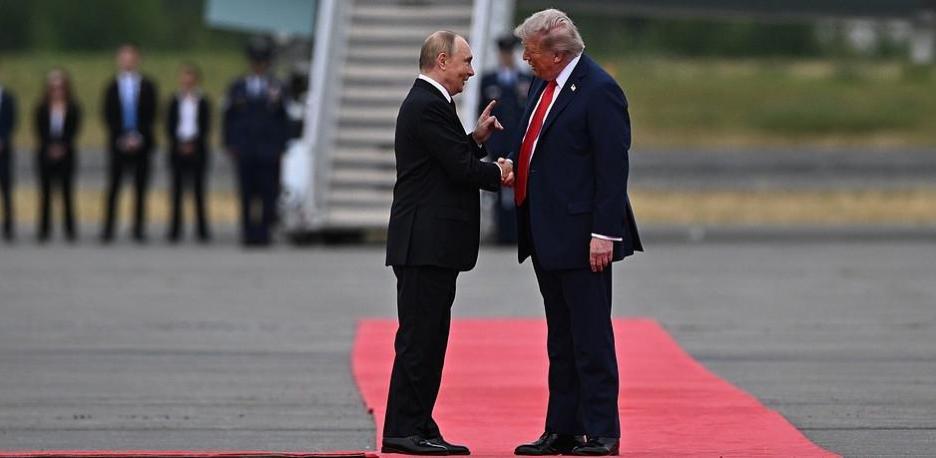
On August 15, 2025, Trump and Putin met in Anchorage, Alaska, to discuss the war and their bilateral relations. They failed to reach an agreement that would guarantee a Russian withdrawal. Afterward, Washington pushed for negotiations that included territorial concessions and conditions for Ukraine, while Moscow maintained its demands. In November 2025, discussions on a U.S. peace plan once again brought unfavorable conditions for Kyiv to the table, as the Russian offensive continued.
The current energy agreement and the demand that Ukraine halt its attacks on Russian refineries are in line with that policy. Trump seeks to avoid a direct confrontation with Putin, even when that means putting pressure on the invaded country. On October 10, he even suggested that Ukraine should replace its president in order to reach an agreement with Russia.
Where do the camp members see the supposed irreconcilable divide between these two forms of imperialism? Trump and Putin compete for their own interests, but they negotiate when they find common ground, subordinating the rights of the country under attack.
We accept neither subordination to U.S. imperialism nor capitulation to Russian or Chinese imperialism. The resistance of the Ukrainian working people deserves solidarity because they are facing an invasion and defending their self-determination, not because their neoliberal, pro-Western government represents an emancipatory alternative. That solidarity must be independent of NATO, the U.S., the EU, and Zelensky.
Now more than ever: Let’s support the Ukrainian resistance
We defend the peoples against all powers, without justifying the crimes of one in the name of another. The solution will not come from agreements among the most powerful imperialist powers, but from supporting the Ukrainian resistance and international solidarity among the working class against all forms of imperialism. Always with an internationalist, working-class orientation, independent of all imperialist powers, governments, and their institutional regimes.
With this policy, which we have upheld since the start of the war, the International Socialist League (ISL) and its parties in Ukraine (LSU), Europe, and across all continents support the International Solidarity Convoy, which will depart from various locations in Europe for Kyiv in November and will deliver concrete aid ahead of the coming winter of war, with a single message of solidarity and political support: the Ukrainian working people who are heroically resisting.