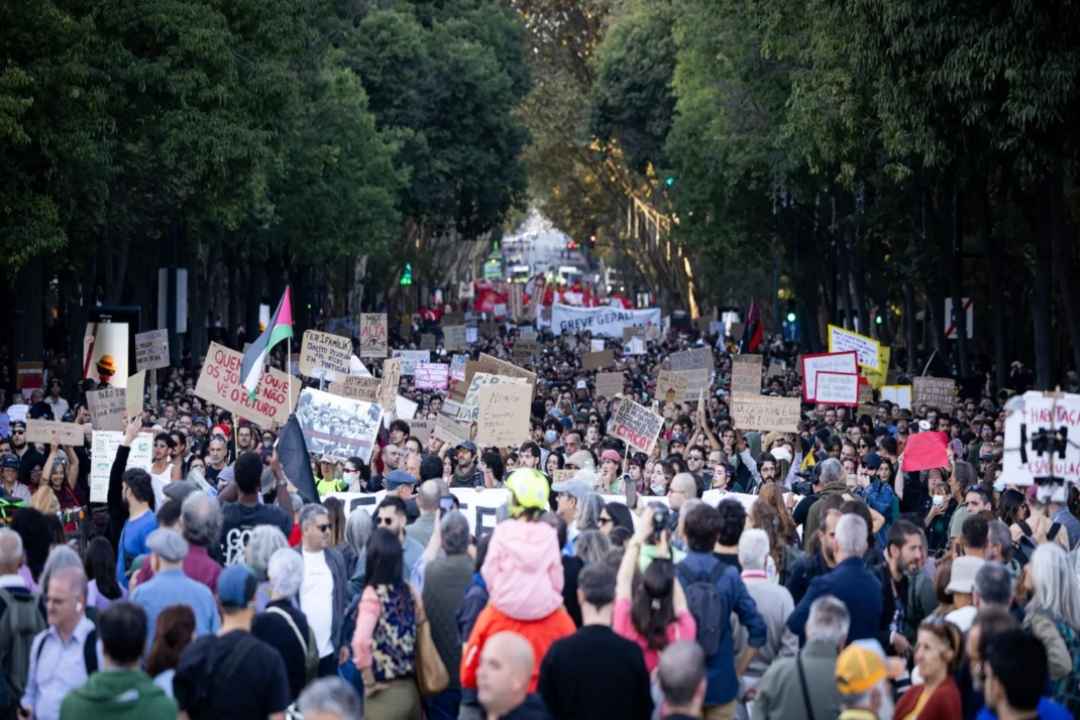
Housing protests in Portugal were inspired by the struggles in Spain following Maricarmen’s eviction and death, and they join the wave of demonstrations sweeping across Europe in response to unmet social rights. The MAS, the Portuguese section of the LIS, is participating in the movement, as are various labor organizations, notably S.TO.P., which is calling for a general strike.
By Rubén Tzanoff
A Productive Conference
On Saturday, October 24, a conference of the Socialist Alternative Movement (MAS) was held. The comrades discussed the documents presented regarding the MAS’s responses to the political situation in Europe and Portugal, as well as matters pertaining to the organization. The conference featured a democratic political debate that proved very productive, serving as a prelude to the MAS Congress to be held in early 2027.
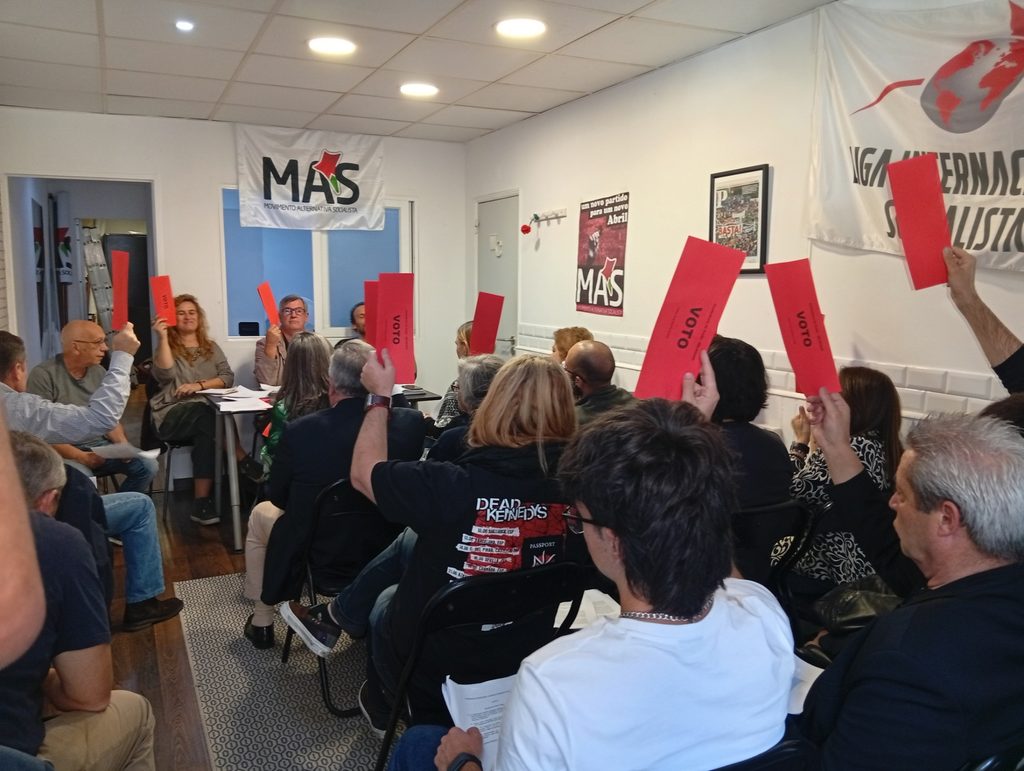
The Conference paid particular attention to the changes taking place as a result of the protests and strikes in France, Spain, Portugal, Germany, Belgium, Albania, Serbia, and other countries—a continent-wide process that transcends their differences. Furthermore, it decided to mobilize on the same day in support of the struggle for housing.
You may also be interested in: “Europe in Flames: Youth Rise Up and the Class Struggle Returns to Center Stage”
Large-scale mobilization
The march wound through the center of the Portuguese capital under the slogan that housing is a right, not a business. The demonstration protested rising rents, the difficulties in accessing decent housing, and police repression against protest camps.
Thousands of people from different generations took to the streets of Lisbon to demand urgent solutions to the housing crisis plaguing the country. The march, organized by the Acampada de Lisboa movement, began at Marquês de Pombal Square, proceeded along Avenida da Liberdade, and ended at Rossio Square.
“Housing is a right; homes are for living in” was one of the main slogans of a demonstration that brought together young people, working families, retirees, social organizations, tenant groups, and representatives of left-wing political parties.
The Right to Housing: A Continental Demand with an Iberian Focus
The protest took place amid a deep crisis in housing access. Rising real estate prices and rents, combined with a shortage of affordable housing, are hitting young people and low-income communities particularly hard, as they face increasing difficulties in becoming independent and staying in the cities.
The protesters demanded rent caps, the reversal of legislative reforms that make evictions easier, and an end to speculative home purchases by vulture funds. They also called for expanding the public housing stock, repurposing vacant properties for residential use, and ensuring alternatives for people at risk of losing their homes.
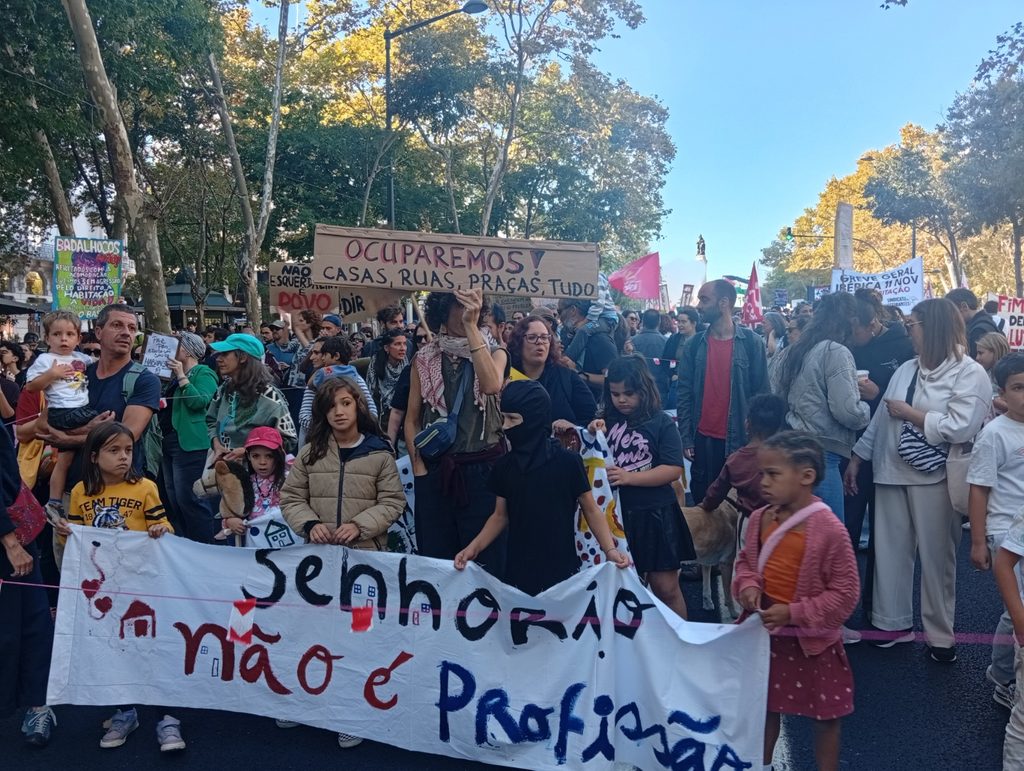
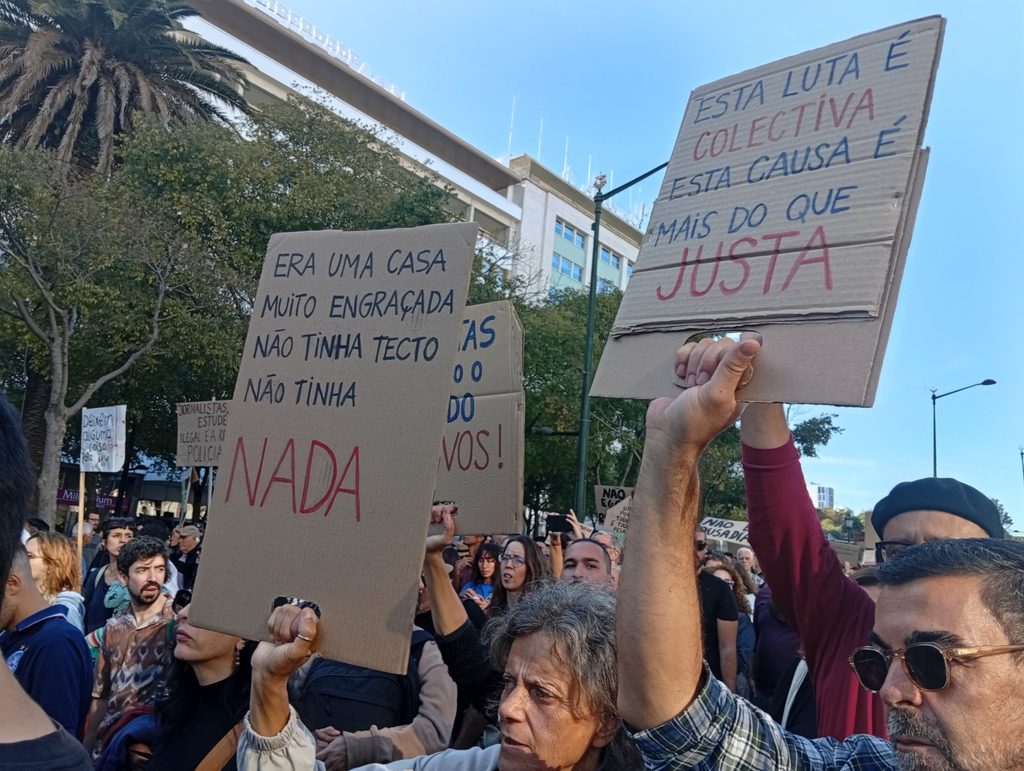

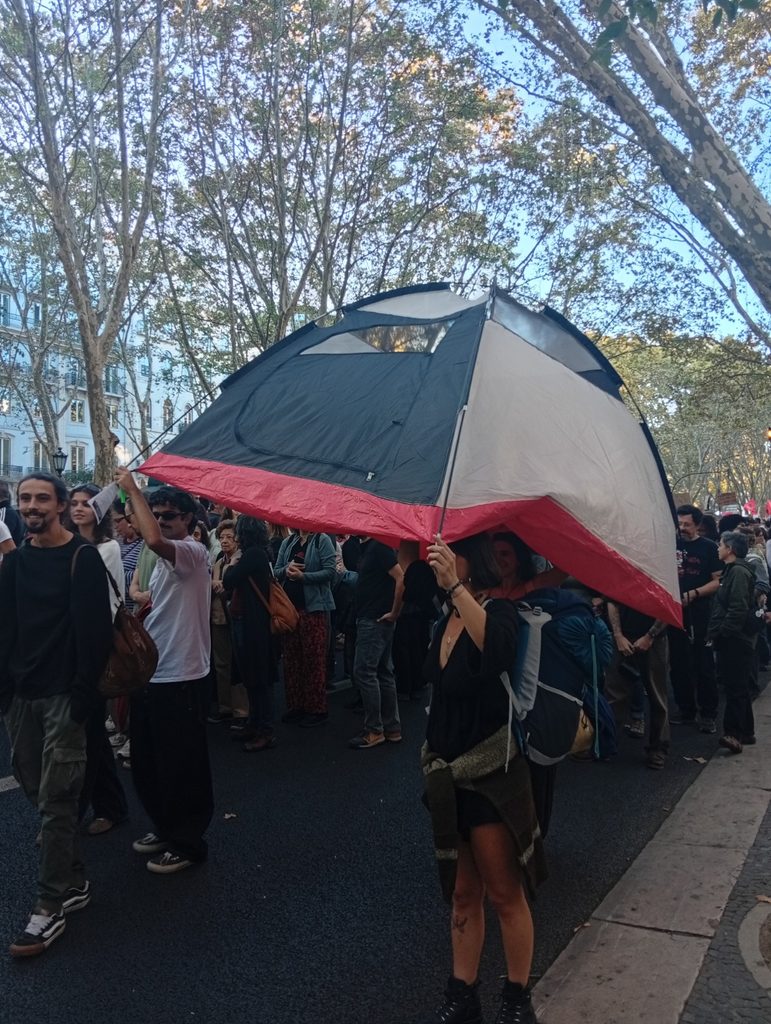
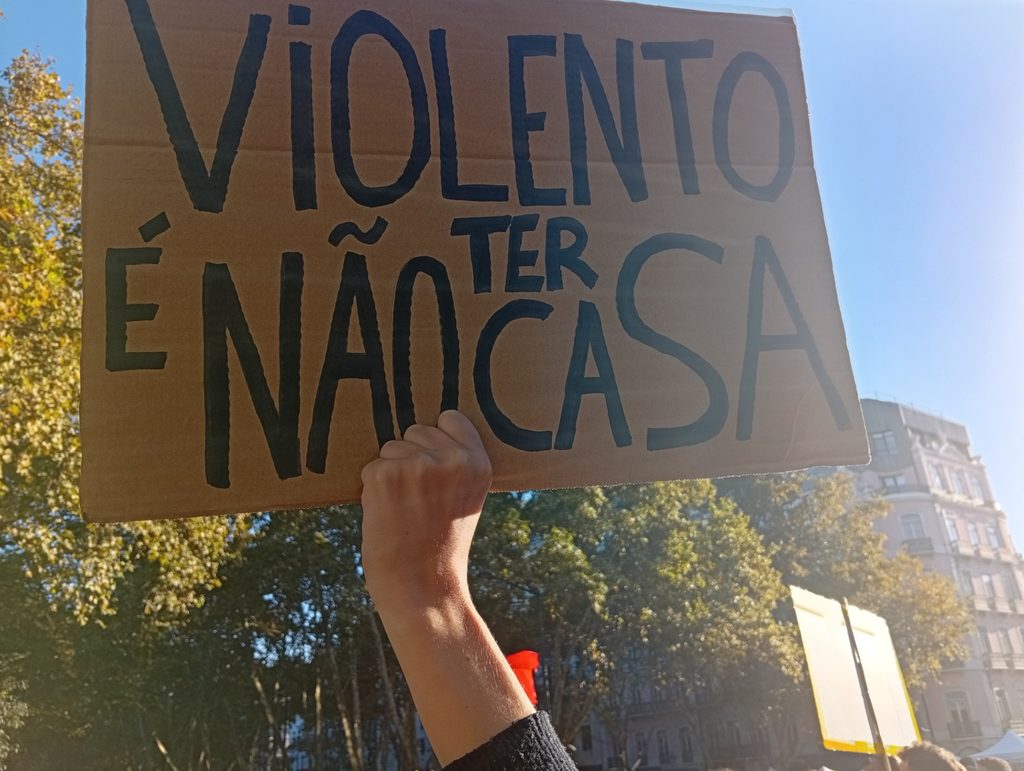
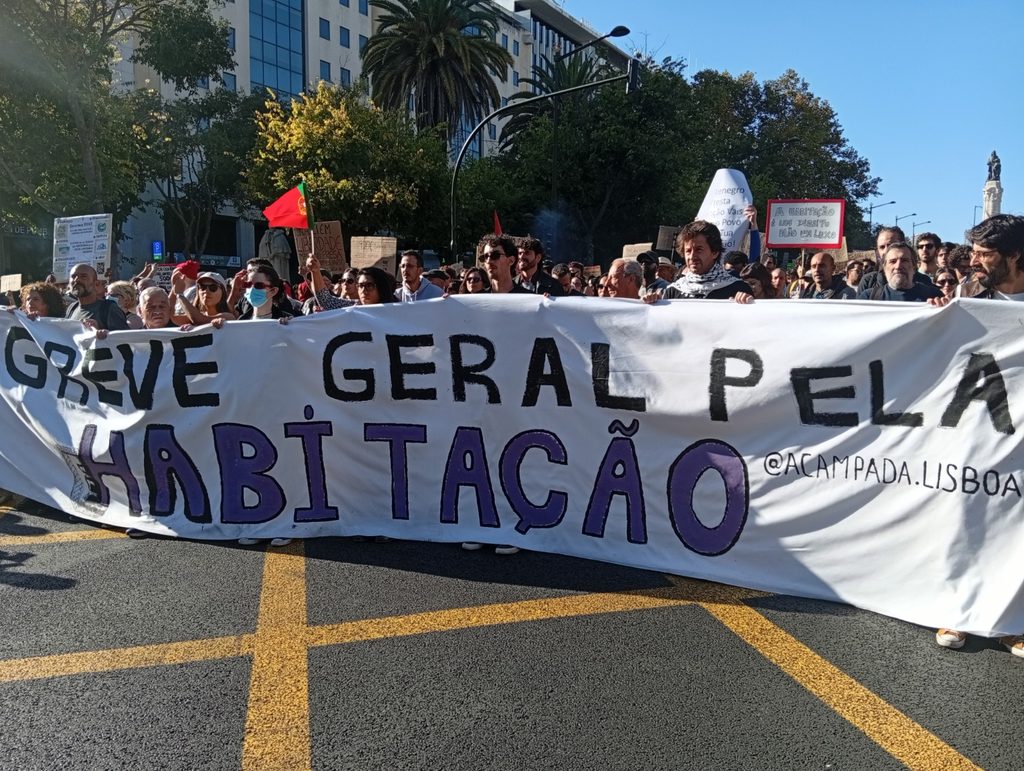
The demonstrations are part of a wave of protests that began in Porto on October 10 and spread to Lisbon and other Portuguese cities. The encampments and popular assemblies became spaces for organization and collective deliberation in the face of a crisis that protesters view as a consequence of policies that subordinate access to housing to market profitability.
The protests and sit-ins were inspired by events in Spain following the eviction and subsequent death of the elderly woman Maricarmen, which led to the call for a general strike on November 11 and the calling of early elections for November 29.
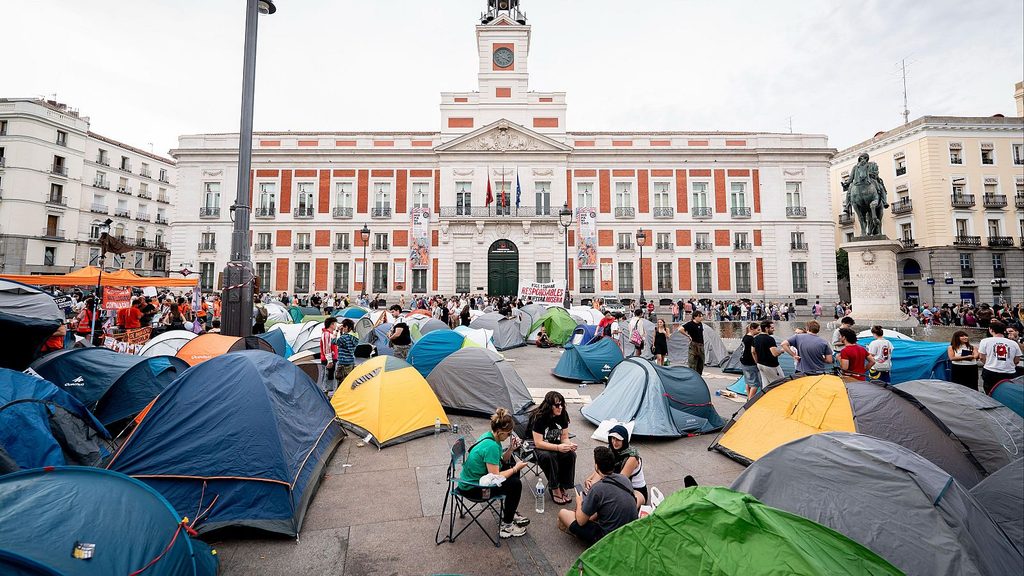
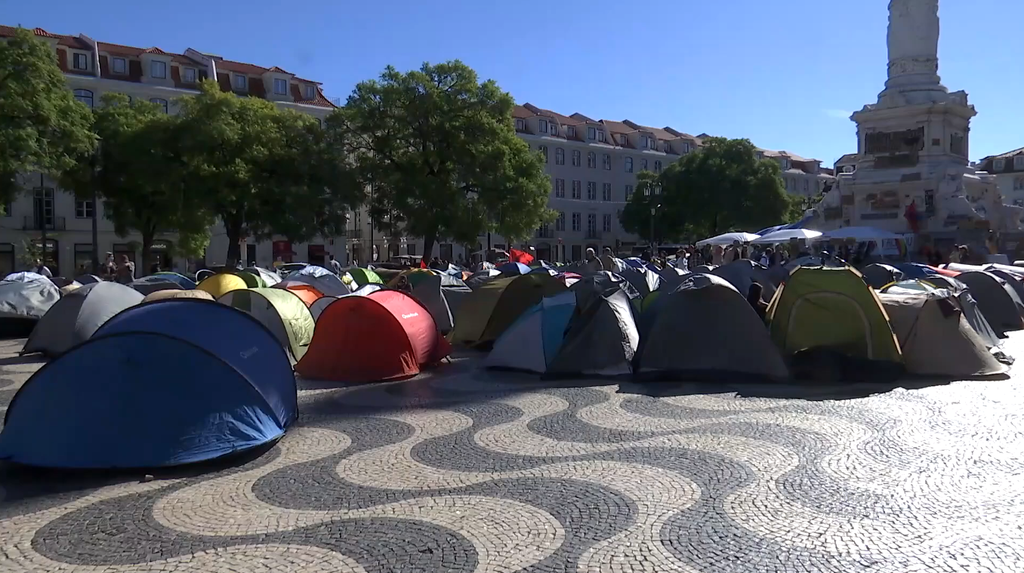
The movement for unmet social rights is a continent-wide phenomenon, and there was a particularly strong ripple effect on the Iberian Peninsula, which is why there are many similarities between the protests in Spain—which led to the encampment in Puerta del Sol—and those in Portugal—such as the encampment in Rossio Square in Porto and others.
You might also be interested in: “Not Another Maricarmen”
Police Repression and the Continuing Struggle
The day was marked by reports of repression against the encampments set up in Lisbon and Porto. In the capital, a previous police operation had resulted in 55 arrests and the dismantling of the tents in Rossio Square. In Porto, the police operation on October 15 had also left dozens injured.
At the end of Saturday’s march, activists once again set up more than a hundred tents in Rossio. In the early hours of Sunday, the 25th, the police intervened again to dismantle the encampment and arrested 25 protesters.
Far from being limited to a sector-specific demand, the protest brought to the forefront a central issue affecting the living conditions of the working class: who has access to housing and according to whose interests the city is organized. The participants demanded that the Portuguese government, led by President António José Seguro of the Socialist Party (PS) and Prime Minister Luis Montenegro of the Social Democratic Party (PSD), abandon measures that favor landlords and speculators and address the housing crisis.
André Pestana speaking in Rossio Square.
The demonstrations in Lisbon reflect growing social unrest over the rising cost of living and the lack of prospects for large segments of the population. The ongoing encampments, assemblies, and protests demonstrate a determination to maintain collective organization until concrete solutions to the housing crisis are achieved.
For a general strike, a growing demand
Europe is experiencing a surge in youth protests and class struggle, and Portugal is no exception, as two general strikes have recently taken place there—the latest of which was decisive in defeating Montenegro’s labor package—and now there are large-scale mobilizations. To that end, the need for an Iberian general strike is beginning to be raised, both on posters and through the slogan “Spain and Portugal, general strike.”
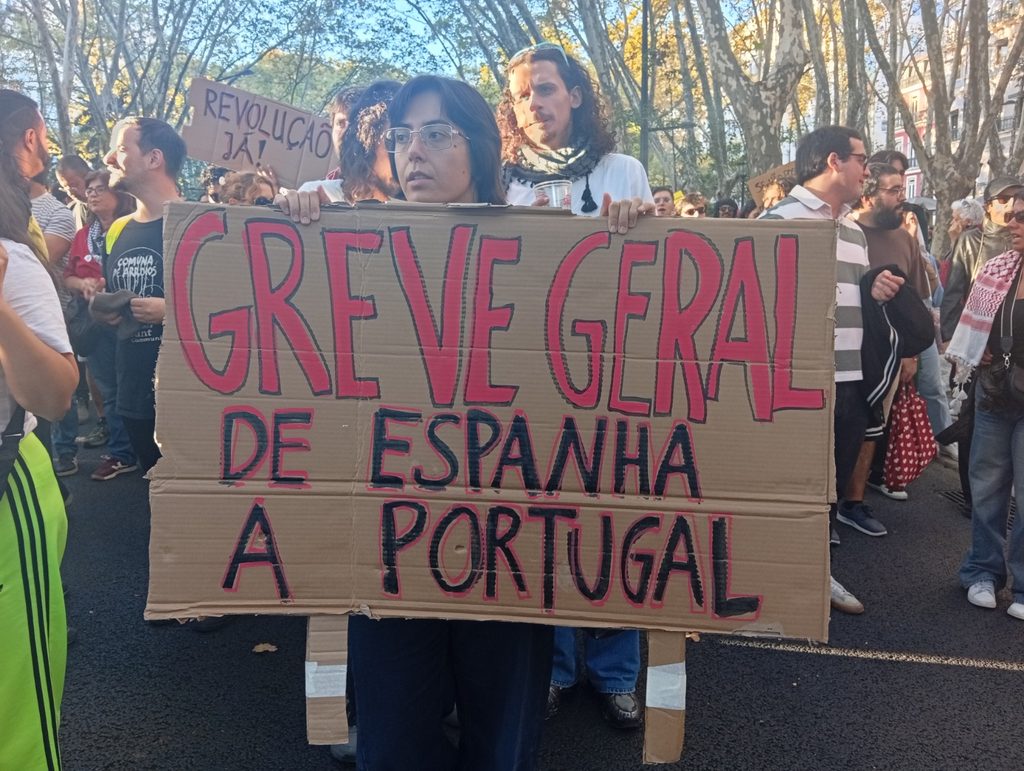
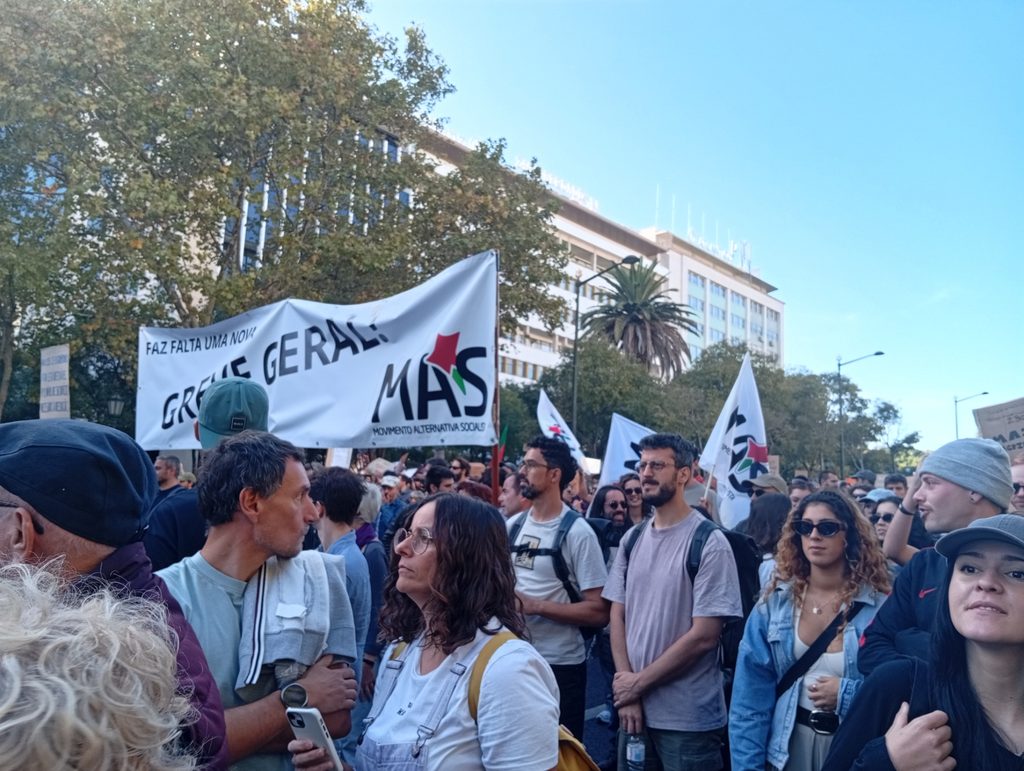
One of the flyers distributed at the demonstration called for “A General Strike, ” included a list of immediate demands, and was signed by S.TO.P. and several other militant unions.
Struggles are once again paving the way to confront governments, the far right, the reformists, and the austerity measures imposed from above to advance rearmament for imperialist wars instead of meeting the social and democratic needs of working people.
André Pestana on TV discussing the general strike.
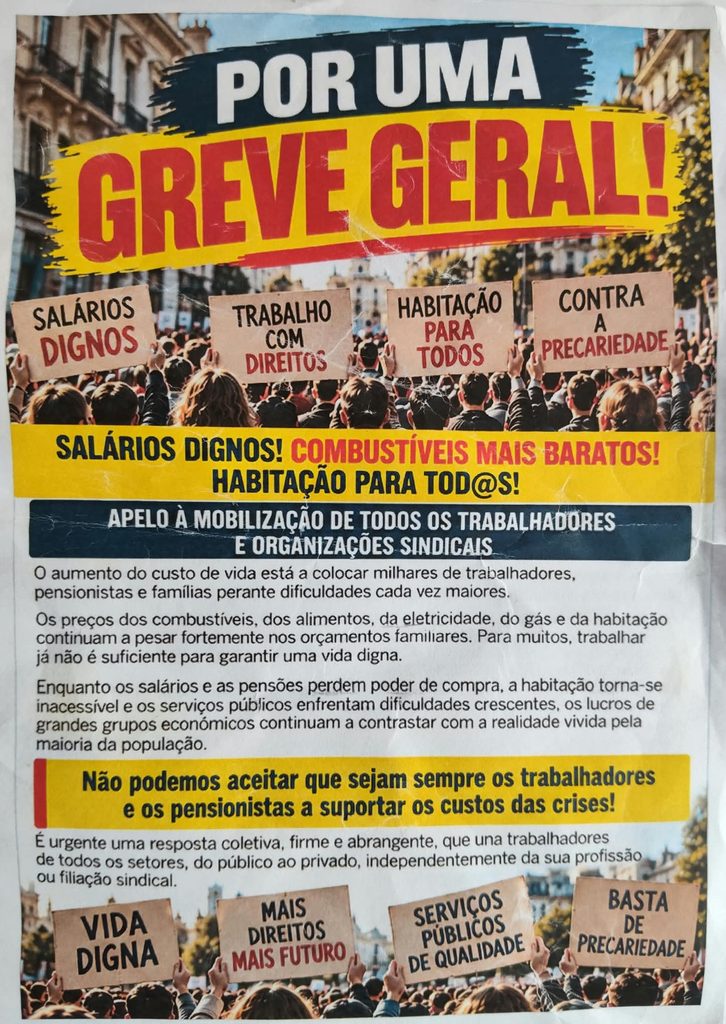
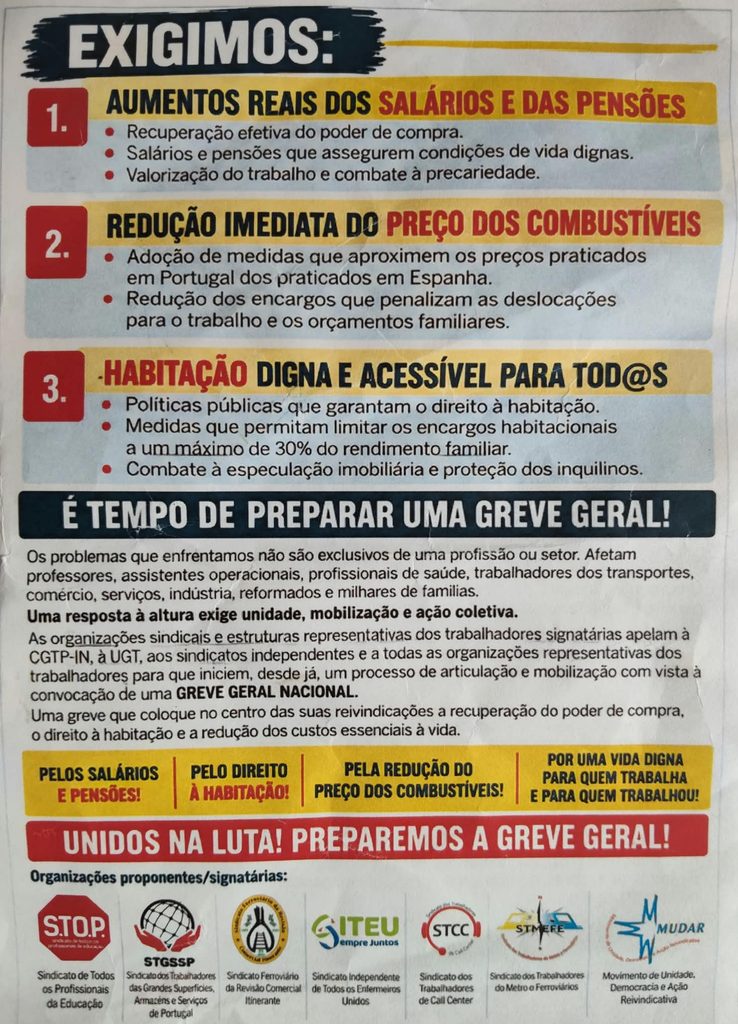
Unified union flyer calling for a general strike.