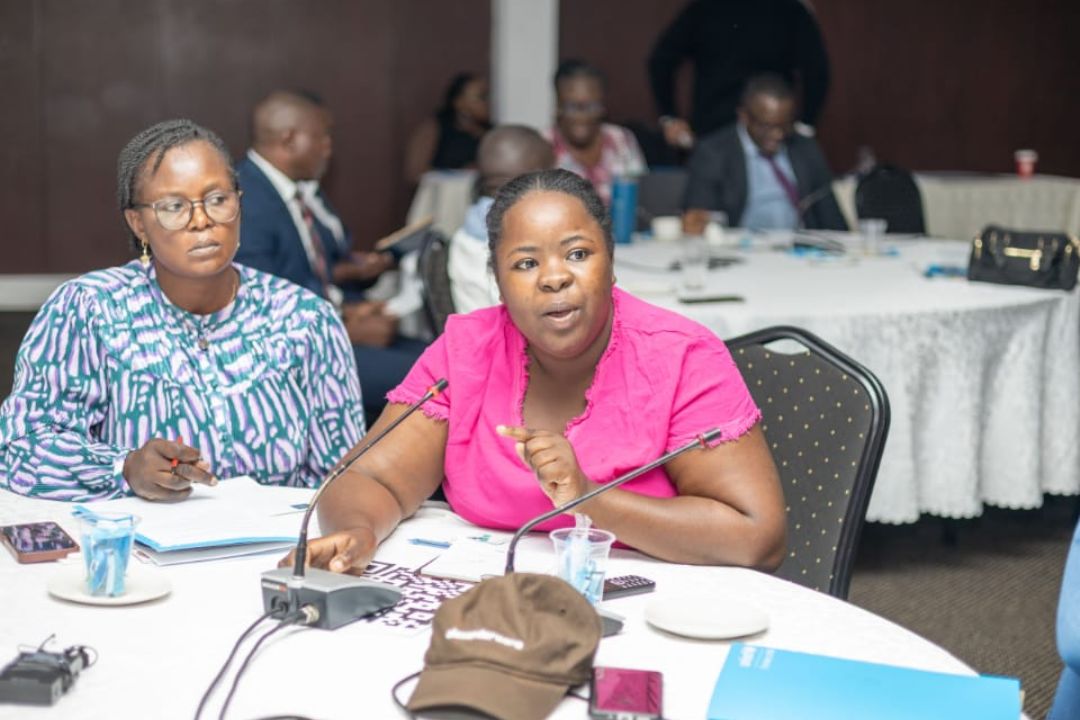
Nancy Busiku Mpongo is a 26-year-old socialist activist and candidate for councillor in Lusaka, Zambia, representing the Socialist Party. Having joined the party in 2017, she has become a prominent advocate for youth participation, women’s emancipation, and community development. She is one of the youngest candidates and the only woman contesting her seat. In this interview with the International Socialist League (ISL), she discusses the political situation ahead of Zambia’s August elections, her campaign, the fight against patriarchy, and the importance of building a stronger socialist movement across Africa.
How would you describe the current situation in Zambia?
We are already in an election year, so it is a critical year where people have to make decisions about who should be their leader, depending on how the previous leaders have performed. Zambia is in a situation where I would say we are in a dilemma.
We are a country with a lot of minerals that could develop the country, but they have not been used for our benefit. The question is: who should we elect to represent the entire country? Is this person really going to speak to the problems that we are facing as Zambians, or is this person going to come in with the same selfish desires that other governments have shown?
The current situation is that we do not know where to go because the leaders we have had have not shown us a true interest in the people, and they have not shown us the direction we should take. We are now waiting for polling day to see what choice the Zambian people will make and who they will choose to lead them.
What is at stake in this election? What is the current electoral climate like?
Our current electoral climate reflects the fact that Zambia has always been a capitalist nation. We have never chosen a leader from the left. It would be good if people looked in our direction and said, “Let’s choose somebody who is a leftist,” because leftists speak to the vulnerable, and they speak to solutions to the problems the country is facing.
We are in a country where the political climate speaks mainly to those who have money. People’s mindsets need to be liberated so that they can see the good even in those who do not have money, and recognize that these are people who are standing for the conscience of the people and for the good of the people.
What we are facing today in Zambia is a situation where we have changed leaders, but we have maintained the same system. That is the political climate we are living under right now.
You are one of the youngest candidates in the country. Tell us about yourself and how your candidacy came about. Who is Nancy Busiku Mpongo?
I am Nancy Busiku Mpongo, a leader who is passionate about change—not the kind of change that is only written on paper, but actual change.
I am a proud youth activist, a proud activist for women’s inclusion, and a proud activist for development in the community.
I started my political journey at a very young age. I am only 26 now, and I joined the Socialist Party in 2017. It spoke to me because of its values and principles. The party stands for justice, equity, and peace. It stands for honesty, solidarity, humanity, and many other values that speak to humanity itself.
I have been in the political space from an early age because I wanted to spearhead the change that I want to see—the change that everybody deserves, the change that my community deserves. I want to see less privileged communities able to afford three meals a day, good education, quality healthcare, and better living conditions in the communities they come from.
Nancy is somebody who is very passionate about change. Nancy is somebody who is very passionate about driving the change that the people deserve.
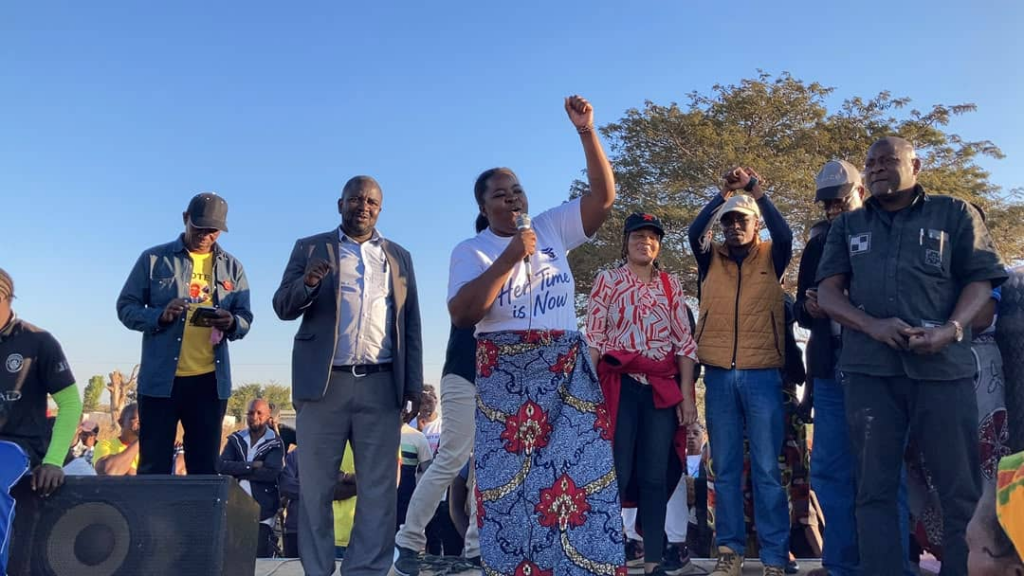
Women’s representation in Parliament and access to land are key parts of your platform. Why are these issues so important, and do you find support for these ideas?
As you know, I come from a very patriarchal society. In Africa, in Zambia, and in the community where I come from, many people still believe that women are meant for the kitchen. Women are not expected to be the heads of programmes or to lead; they are expected to be led.
When it comes to land ownership, you will find that most of the people who own land are men. Women are capable of owning land, but they are often not given that opportunity simply because they are women.
That is why we are fighting against this patriarchal culture. I also run a Popular Library in Zambia, whose main purpose is to change people’s mindsets. We work with young people because these ideas are taught from childhood. When a girl and a boy are born into the same family, the girl is taught to work in the kitchen while the boy is allowed to play. We come from a society where women have been made vulnerable and have not been given equal opportunities to contribute or to become leaders.
When we speak about women owning land, we are speaking about liberating women.
When a woman owns land, the entire community benefits. A woman knows what to do with that land. It is not simply about owning property; it is about creating opportunities. A woman may choose to engage in agriculture, and Africa is well known for cultivation. As a mother in the home and as a mother in the community, she knows how to use that land to improve people’s lives.
Who feeds the family? It is a woman.
Who cooks for the family? It is a woman.
Then why should a woman not own land?
These are the things we are fighting against. We want to emancipate the power and the strength of being a woman.
Women have been sidelined for a very long time, and this is something we must fight against tooth and nail so that women are acknowledged and can occupy positions of leadership.
It is also important that women emancipate themselves and make the choice to stand. If Nancy can contest as a councillor, if Nancy can contest for public office, then other women can do the same.
I want to be an inspiration to other women so that they can stand strong and raise their voices. I want them to believe that women deserve key representative positions—not only because of issues like land ownership, but because only then will women’s issues truly be addressed.
If, as a woman, I am not there to represent my fellow women, then who will deal with the problems women face? We are the ones who carry many burdens. We are the ones who bear children. We are the ones who experience these realities.
If a man is addressing my issues, I do not believe he will address them in the same way I would, because I feel the pain of being a woman.
That is why I am standing. That is why I am here—to be a role model, to be a leader, and to inspire women who may feel vulnerable or think they cannot make a difference, so they know that they can stand up and change the problems they face.
My organizing committee is full of strong women who are ready to take up the mantle and go into the communities to explain why people should vote for me.
Women have come out in large numbers to support this campaign. In fact, I was on a radio programme this morning, and women whom I have never even met were calling in to encourage me. They were saying, “We want to meet you. We are organizing people in our area so that you can come and speak to us, because we want to vote for you.”
They tell me that they understand the burden I am carrying. They know it is not only my burden—it is the burden of the whole society.
So yes, women are very much in support of my candidacy. They are on track, and they are standing with me.
How did you first connect with the International Socialist League? How do you think the regroupment of revolutionaries in Africa can be further developed?
I first connected with the International Socialist League through the Youth Congress we held in Kenya.
The discussions we had there, and the resolutions we adopted, spoke directly to the problems we face in our daily lives as Africans—and, I would say, as human beings.
The work of the International Socialist League, and the work we are doing back home in Zambia and in other African countries, speaks to humanity. It speaks to the conscience of the people. It speaks against the problems people continue to face because the wrong people have been placed in positions of power.
To keep pushing our agenda forward, even if we are limited in terms of resources, we need to continue speaking to one another about the different challenges we face and the solutions we are building in our respective countries.
We need to regroup, reorganize, and make a plan for how many more people we can reach. Whether it is through virtual meetings, physical meetings, phone calls, or any other means, every opportunity to connect is important.
I look forward to seeing the International Socialist League continue to grow across Africa. We may still be present in only a limited number of countries, but the entire continent deserves to know the work of the International Socialist League.
The ISL resonates with the grassroots. It resonates with the basic needs of people in our communities and our societies.
The International Socialist League is helping to liberate the mindsets of Africans. It encourages us to think critically about how we can help one another develop our countries, our communities, and Africa as a whole.
If the ISL grows stronger across the continent, I believe there will be mass liberation. There will be mass change—change that speaks to the betterment of the people.
We should continue connecting with comrades in other countries, learning how they organize, sharing experiences, sharing ideas, sharing ideology, and building a common agenda. That really helps us grow stronger together.
Is there anything else you would like to add?
Yes. I believe it is high time for African minds to be liberated.
Let us come together. Let us hold hands. Let us say no to capitalism. Let us say no to exploitation. Let us say no to imperialism.
It is only then that we will be able to find the proper solutions for Africa—the solutions that are meant for us as Africans, and the solutions that are meant for everyone in this world.
Only through socialism, only through liberation and revolution, can we build that future.
Let us associate ourselves with the International Socialist League for the betterment of our future, for the betterment of our countries, for the betterment of our continent, and for the betterment of humanity.
And to everyone who is reading this in Zambia, I ask you to vote for me on the 13th of August.
I may contest for the presidency in the future. Right now, I am building step by step, and I believe I will get there.
Power to socialism.
Power to the International Socialist League.
Thank you so much for the solidarity you have shown us. Thank you so much for all the support I have received from the International Socialist League and the entire team.
I am truly, truly grateful.