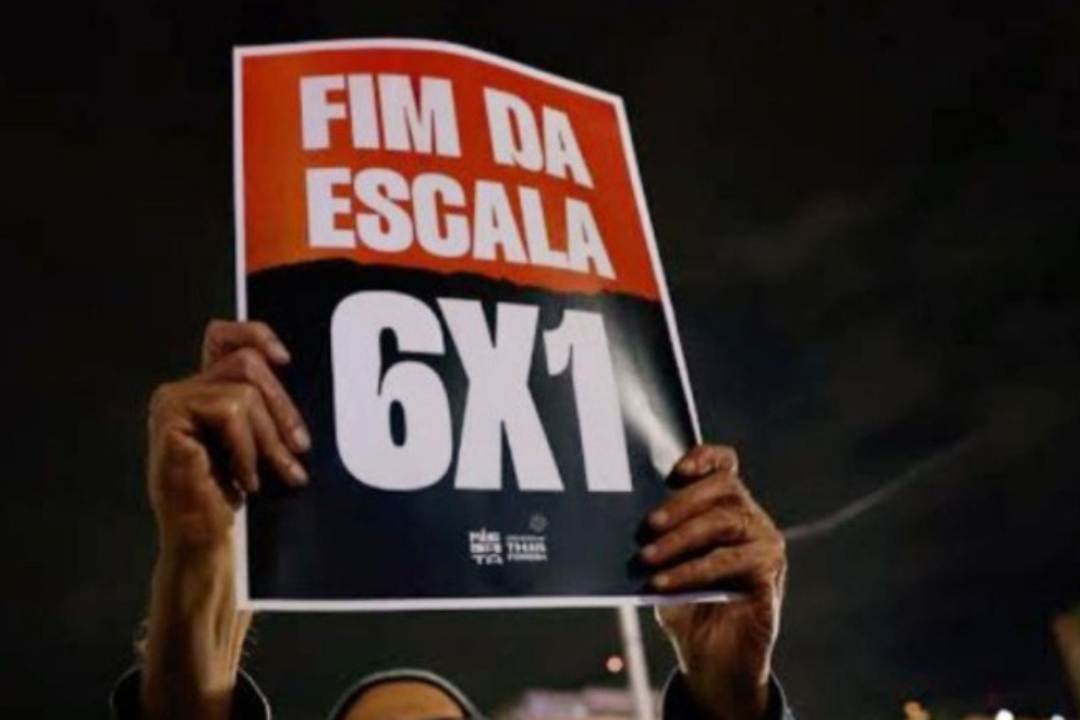
In Brazil, the struggle for the reduction of working hours, without reduction of wages, has been growing and consolidating itself as a banner of struggle of large sectors of the working class. Today, May 27, this mobilization won an important battle by aerning a first round of approval in the Congress in favor of limiting the working week to 40 hours, advancing in putting an end to the regime of 6 days worked for 1 day off (6×1) and legalizing a regime of 5 days worked for 2 days off (5×2).
By Veronica O’Kelly
The approval of the PEC (Constitutional Amendment Proposal) which reduces the 6×1 workweek regime in the special commission and which is already being debated in Congress represents an important partial victory of the Brazilian working class. After years of extreme precariousness of working conditions, millions of working men and women succeeded in placing at the center of the national debate a historic demand: the reduction of working hours without reduction of wages.
The text approved by the committee limits the number of hours per week to 40 (currently 44) and goes against a brutal regime that condemns the majority of the working class to live to work, with no time for rest, leisure, study, family life or political organization. Even so, the road to the concretion of the measure continues. The PEC still needs to be approved in two votes in the Chamber of Deputies and in the Senate, with a qualified quorum, before it can be enacted and become a concrete reality.
History teaches: rights are won through struggle
Historical experience shows that no conquest of the workers came from the good will of the institutions of bourgeois democracy. Everything that has been advanced so far was the product of social pressure, of accumulated indignation and the mobilization of millions who began to question one of the central pillars of capitalist exploitation.
The struggle for the reduction of the working day without a reduction in wages has always been a historic slogan of the workers movement because it directly touches the fundamental mechanism of the functioning of capitalism: the appropriation of surplus value. Every hour of work wrested from the workers without corresponding remuneration is a source of profit for the bosses. For this reason, every reduction of the working day represents a concrete dispute against the logic of permanent exploitation imposed by capital.
It is precisely for this reason that the demand has gained so much strength among the working youth, the precarious sectors and those subjected to the strenuous working hours of commerce, services, telemarketing, applications, logistics and industry. The 6×1 weekly work scale destroys physically and mentally millions of people to guarantee the profits of banks, big companies and multinationals.
After a brutal defeat, the far right “recalculates” and tries to recover political initiative
Another element that became evident during the processing of the PEC was the opportunism of the extreme right. Faced with a demand that became a true banner of the masses in the country, sectors of the right and the extreme right tried to “jump on the bandwagon” of the popular mobilization to avoid the political wear and tear of appearing frontally against a demand deeply felt by the working class. After all, to vote openly in defense of the 6×1 weekly scale would have an enormous political and electoral cost.
That is why some of them, like the nefarious Nikolas Ferreira, demagogically raised the proposal of the 4×3 workday (4 days worked and 3 days off), a demand which they also oppose in practice, since they directly represent the interests of the bosses and have always been on the side of the attacks on labor rights. It was a calculated maneuver: to defend a proposal which they knew would not be voted at that moment, just to try to capitalize on the enormous popular support for the reduction of the working day, without breaking in any way with the interests of the bosses and the big exploiters of labor.
Let’s continue to mobilize for our rights!
The progress achieved now is important and deserves to be celebrated. But we cannot put our trust in the institutions or in the parties of order. Lula’s own government and the PT lowered the initial demand presented in the streets and in the workplaces. The banner of the 4×3 workday, which expressed a deeper and more necessary reduction, was replaced by a more limited proposal, the result of the permanent logic of negotiation and conciliation with the employers’ right wing organized in the so-called “centrão”.
Here appears, once again, a fundamental strategic difference. While we defend that workers’ rights advance through the independent mobilization of the class, Lula and the PT continue to bet on conciliation with sectors responsible for the historic attacks on social rights. And every time that logic prevails, our banners are reduced, adapted and moderated to fit in with the regime’s agreements.
Therefore, this first step must serve not to demobilize, but to push the struggle forward even more. Today we celebrate this partial conquest wrested by the force of popular mobilization. But we continue to struggle until it is fully realized and until we achieve the real reduction of the working day that we defend: the 4×3 working day, so that we work less, we all work and we can live with dignity.