Aventina Holzer
The EU Commissioner for Migration and ÖVP politician Magnus Brunner is jubilant. On 12 June, the time will finally have come for the ‘Common European Asylum System’ (also known as the CEAS) to be reformed through 10 EU legislative acts – or, to be more precise, to be further tightened in a racist manner and made more sweeping. After all, they had to “regain control” – meaning that the sealing off of the EU’s borders to migrants and refugees had been called into question in recent years. But there can never be enough “control”, so Brunner threatens in the Rheinische Post: “This package is not the end of this process, but the beginning.”
Yet the changes as a whole constitute a fierce attack on refugees and migrants, forming part of a racist shift to the right across Europe that takes its toll on migrants in order to have a scapegoat at home and a geopolitical justification for wars and interventions abroad, whilst steering migration according to the demands of capital.
What does the GEAS reform consist of?
All the recent drafts are couched in terms such as “solidarity”, “justice”, “improvement” and “efficiency”, but can fundamentally be described above all as “violence”.
For example, the problem of Dublin III, whereby asylum seekers must be admitted to the country they first entered, is to be solved through “solidarity”. This supposed solidarity is then, however, implemented primarily through border security (potential murder), rapid deportation, pre-selection and reception centres. Where the word “solidarity” is supposed to be relevant here defies all logic.
The key changes include the following aspects:
1. A so-called screening procedure is being introduced, whereby decisions on who is allowed to proceed and who is not are to be made at the external borders. Here, a pre-selection is made as to who will undergo a so-called “border procedure” and who will be permitted to enter the country to undergo the asylum procedure.
2. In the border procedures, decisions regarding the refugees are made at the external border. Three groups are always to be subject to this procedure: where the EU-wide recognition rate is below 20 per cent (as is the case, for example, with Lebanon despite the war), persons who provide false information, and those deemed to pose a concrete and significant threat to internal security. People subject to this border procedure are effectively detained and, in some cases, even imprisoned.
3. To justify this approach, significant changes have also been made regarding legal protection and so-called fast-track procedures. Decisions are to be made within a few weeks, which offers little opportunity to defend oneself, especially if one is detained during the proceedings. In theory, there is an obligation to expand legal advice as a result, but the question remains as to who is to provide this and how it will be funded. In reality, this is nothing more than a non-binding declaration of intent.
Let us be under no illusion: the asylum system is, in principle, oppressive and racist. However, these changes massively exacerbate the undermining of the most basic rights of refugees.
The strategy explicitly aims to reduce asylum rates. In what world, then, will these fast-track procedures lead to greater transparency, when we already know that there is an extreme amount of racist arbitrariness in the procedures currently taking place?
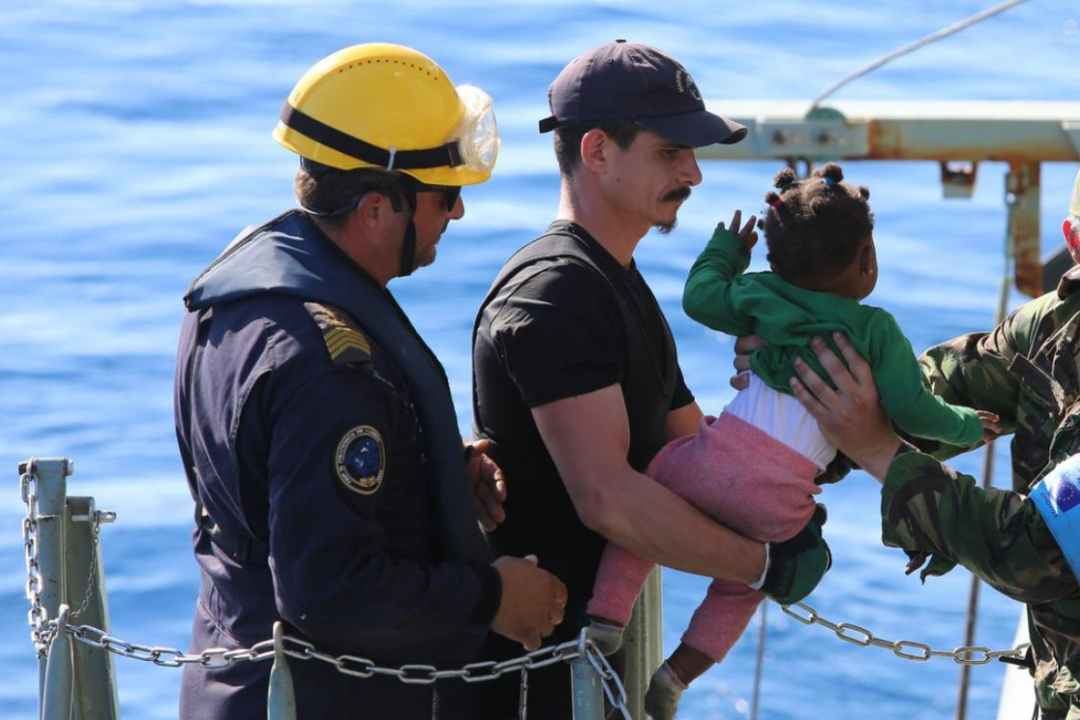
Deprivation of liberty is one of the most severe infringements of a person’s individual rights. Not only that, it also makes transparency, monitoring by non-state institutions and networking to obtain support impossible. This amounts to surrendering oneself to the arbitrariness of the bourgeois state, which does not even shy away from murdering people to prevent them from crossing the border into Europe. By March alone, 660 people had lost their lives in the Mediterranean – people who should have been rescued and provided with safe escape routes.
In the bourgeois state, the granting of asylum is conditional upon proof of personal persecution. War alone is not enough. The racist narratives and geopolitical interests of EU states have an extreme impact on what is accepted as a legitimate reason for fleeing and which experiences of personal persecution are deemed sufficient (which, incidentally, are also limited to specific, personal characteristics such as political views, sexuality, gender, ethnicity, etc.).
Transferring this already extremely restrictive procedure even further into uncontrollable fast-track procedures in asylum detention centres automatically leads to a drastic worsening of the situation.
What does the reform mean for Austria and Germany?
National interpretation and extension are necessary despite the regulatory nature of the so-called reform.
In Austria, for example, this means that sanctions for misconduct by asylum seekers and prolonged detention at Schwechat Airport will become possible. The government has announced that it is considering setting up deportation hubs where people are to be detained to facilitate their expulsion. Refugees must also sign a so-called ‘Charter of Values’, which is intended to guarantee that they agree with Austrian fundamental values. Quite apart from this racist general suspicion that asylum seekers do not possess good values, the question also arises as to what these values of the Austrian government actually are. Racism, the legacy of fascism and misogyny?
In addition to the measures justified under the GEAS, the Austrian government also has its own ideas on how to stir up racist sentiment against refugees and actively harm them. Whilst the complete suspension of family reunification is fortunately coming to an end (even if the measure has already caused enough damage), the exclusion of beneficiaries of subsidiary protection from the minimum income scheme in Vienna continues to have lasting consequences. In the meantime, agreements are also being struck with states to facilitate deportations there – in some cases even with the very institutions from which people were forced to flee in the first place. Negotiations with the Taliban are merely the most obvious offence committed by the Austrian government in this regard.
Germany intends to supplement these measures directly with secondary migration centres. These are intended to detain and isolate people who are already undergoing an asylum procedure in another country and have submitted a further application in Germany. In Greece, there is no longer any basic income support for asylum seekers; nevertheless, Germany is now returning people there, on the grounds that they can keep their heads above water through unregistered work anyway. These detention centres have already been trialled in Eisenhüttenstadt and Hamburg, where asylum seekers were generally denied leave to leave the premises. Under the GEAS, people can now also be deprived of their liberty in regular reception centres. Under the GEAS, it is easier to detain people legally and place them in custody. Detention pending examination and during the asylum procedure is a central element of this.
For some time now, Germany has been concluding agreements with other states to facilitate deportations. Thus, for years – not just under the Merz government – the number of ‘safe third countries’ to which people can be legally deported has been increasing. Parts of Afghanistan, too, have long been considered ‘safe’, and deportations have been taking place for several months now.
However, there are differences with other EU countries, as well as within the coalition, regarding border controls with neighbouring EU states. Whilst Migration Commissioner Brunner and the SPD are pushing for the controls to be lifted as quickly as possible, CSU Interior Minister Dobrindt wants nothing to do with it. He argues that we must first wait and see whether Italy and Greece actually adhere to the racist tightening of measures.
With EURODAC (the fingerprint identification system), the storage of data is envisaged, which is now intended to allow for cross-border registration and comparison of individuals. The massive restriction of personal rights and privacy apparently does not concern anyone in the European Commission.
It is absurd that many conflicts and the systematic exploitation by the West are forcing people to flee, only for them not even to be granted the right to a safe life. Who is responsible for the unstable situation in the SWANA region (South-West Asia and North Africa)? Who is exploiting the raw materials of the Global South? Which countries sell weapons to all sides of a conflict without caring about the consequences? The EU is an accomplice in almost all the humanitarian crises and wars we are currently witnessing – yet at the same time it blames refugees rather than its own policies and greed for profit. This is also a strategy to better justify future military intervention abroad. When people from different countries and cultures are demonised and dehumanised, it is perhaps no longer so surprising when they are subsequently exploited further or even subjected to military action. Domestic racist policies (such as the headscarf ban) are also justified by the illusion of dangerous refugees, which normalises them for many sections of the population. As communists, we must vehemently oppose these policies, which not only threaten human lives but can actually destroy people’s livelihoods.
What can we do?
We need clear demands against these racist attacks:
- Open borders and the right to stay for all. No to all deportations.
- No cuts to social spending. Social benefits, work and democratic rights for all people who have come to Europe. Full citizenship rights for all migrants and refugees.
- Guarantee safe escape routes. Abolish Frontex. No funding for Frontex and no border police.
- Abolish the camp system and the residence requirement. Free choice of country and place of residence within the EU.
- Stop all arms deliveries to imperialist and reactionary forces! No to all foreign military missions – whether under NATO, the EU or the UN! Cancel the debts of semi-colonial countries!
The new wave of racist legislation aimed at strengthening Fortress Europe can only be stopped through mass action by the working class, the youth and the racially oppressed in the various countries and at an international level.
This also means waging a determined struggle against social-chauvinism within the workers’ movement, above all against the Social Democrats’ endorsement of the racist tightening of laws, as well as against the more or less open complicity of the reformist trade unions with these laws.
To this end, we must fight within the trade unions for a clear change of course, away from class collaboration and economic nationalism. Within the social democratic parties, we must support oppositional, anti-racist members who openly oppose their chauvinist leadership. The left-wing parties, the radical left, militant trade unionists, migrant and youth organisations must join forces to mobilise against the racist laws and for the rights of refugees – on the streets, in the workplace and in residential areas, in schools and universities.