By Verónica O’Kelly
Israel Dutra’s article, “Brazilian August, ” raises important questions about the current national and international situation and the challenges facing the PSOL. There is, without a doubt, one key point worth highlighting: the need to confront the far right, combat the agenda of Bolsonaro and his allies, defend hard-won rights, and strengthen social struggles against the attacks by the PT-led broad front government.
We have agreements with our comrades in the MES on various issues, and on many occasions we have found ourselves campaigning and taking action together. That is why I am writing this text: to open a fraternal dialogue that can contribute to this debate. However, our disagreement is far from minor. It concerns the policy that should guide the independent left ahead of the first round of the 2026 elections, because that is the debate at hand today. The second round is a separate discussion.
In his article, Israel argues that the immediate task is to “build a bulwark by re-electing Lula” and, at the same time, to build an independent alternative from within the PSOL that paves the way for mobilization and for a program that goes beyond Lulism. Herein lies the main problem: it is not possible to build an independent political alternative while, in the country’s main electoral contest, the fight for the PSOL to field its own presidential candidate is abandoned.
Lula is not a bulwark against the far right
The central question is whether Lula’s government and the broad coalition truly serve as a barrier against the rise of the far right. My answer is no.
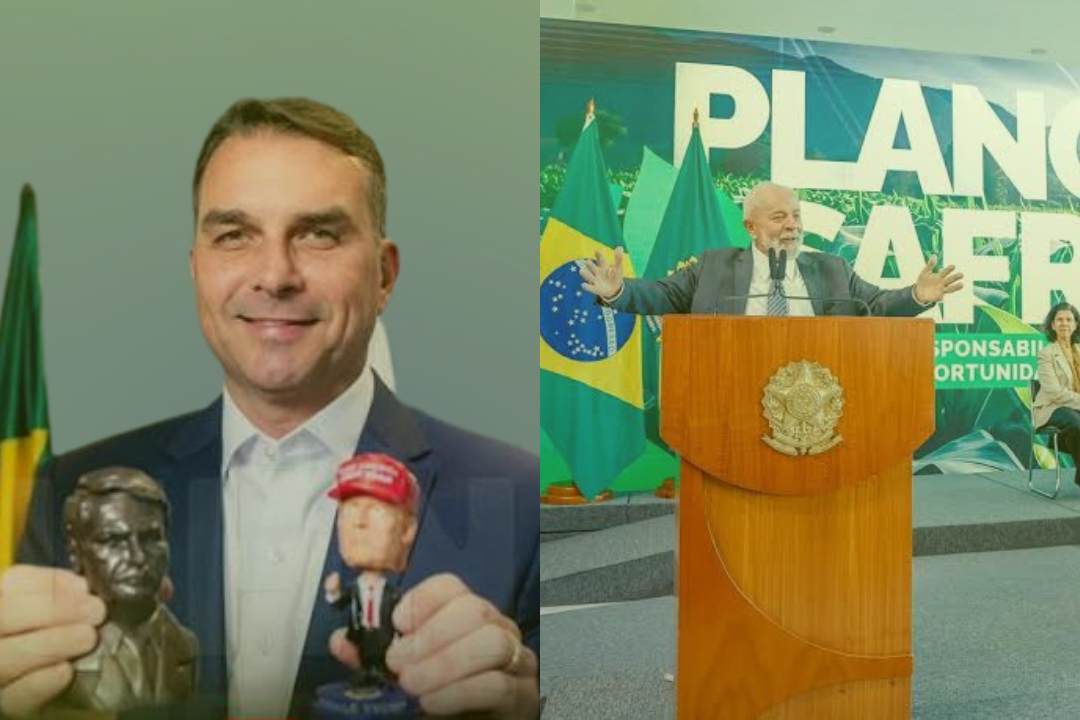
That does not mean ignoring the differences between Lula and Flávio Bolsonaro (Jair’s son and current presidential candidate while his father is in prison), or between the Broad Front and Bolsonarism. Those differences exist and are significant. The far right represents a brutal assault on the democratic, social, and economic rights won by the working class and oppressed sectors. The experience of governments like those of Trump and Milei demonstrates just how far that assault can go.
But recognizing that difference does not oblige us to turn Lula’s government into a supposed bulwark against Bolsonarism. On the contrary: it is precisely the policies of the neoliberal broad front—with its program of economic adjustment, austerity, and class conciliation with the ruling classes—that contribute to expanding the political space occupied by the far right.
While Lula’s government protects the interests of the financial system, agribusiness, and large corporate groups, millions of workers continue to face job insecurity, low wages, debt, the loss of rights, and the deterioration of public services. The argument that there is no alternative to fiscal austerity and market interests does not disappear simply because the government is led by the PT under the promise of “defending democracy.”
The Marxist tradition did not teach us to confuse the United Front against reaction with political subordination to those who govern in the name of the bourgeois order. Trotsky, in fighting fascism in Germany, insisted precisely on the need for a United Front of the working class against reaction, without this implying handing over the political leadership of the workers’ movement to social democracy. Unity to fight a common enemy cannot mean renouncing political independence; on the contrary, it is that independence that allows the working class to contest the leadership of the class struggle.
This is precisely where we differ today from the approach proposed by the MES. In our view, if the far right is presented as a sufficient reason for the left to abandon its own candidacy and support Lula prematurely, we cease to build a front to fight against the far right and instead build a policy of electoral subordination to the neoliberal broad front government.
When the regime’s left wing manages the crisis without breaking with those who benefit from it, the far right finds fertile ground to present itself as a false political alternative. In that sense, Lula does not function as a “barrier,” but quite the opposite. The absence of a left-wing alternative—one that is independent of the government and capable of politically articulating the discontent of the exploited and oppressed majorities—is precisely one of the factors that leaves that space open to the far right.
Two bourgeois projects, different functions
The text also describes Flávio Bolsonaro as the preferred candidate of Trump, Netanyahu, and Milei, and argues that he is seeking the support of sectors of the bourgeoisie to further entrench the agro-export and rentier model and make Brazil even more subordinate to U.S. interests. There are elements of truth in this characterization, but it poses a problem when it suggests that these sectors of the bourgeoisie are essentially waiting for Flávio to take office to begin profiting. It is precisely the big banks, agribusiness, mining companies, and large business conglomerates that continue to accumulate profits under the current economic model. In fact, they are the ones who have profited the most in recent years—precisely during Lula’s administration. There is no need to wait for the far right to come to power for those interests to be served.
That does not eliminate the differences between the two projects. On the contrary, it is necessary to understand them. The far right represents a brutal, authoritarian offensive against hard-won democratic and social rights, while the Lula-led broad front seeks to manage the interests of capital within the confines of bourgeois democracy and class conciliation. A bourgeois commitment to the broad front therefore means not breaking with the model, but rather managing it while seeking to preserve a certain degree of political and social stability so that business can continue as usual.
That difference is real and should not be downplayed. But neither should it lead us to conclude that one project serves as a “bulwark” against the other, when the past four years have shown exactly the opposite.
There is a contradiction in Trump’s own characterization
Another aspect of Israel’s argument catches my attention. The article rightly seeks to put into perspective the idea that Trump is an omnipotent and invincible force. The text itself speaks of “Trump’s quagmire in the Middle East” and the difficulties facing imperialism. That characterization is important. But if we acknowledge that Trump faces limits, contradictions, and defeats, we must also avoid turning the Brazilian election into a kind of referendum between Trump and Lula.
We must fight U.S. imperialism. We must defeat the far right. But the best way to do so is not to subordinate the left to Lula’s government, but to build an alternative capable of politically challenging those sectors that are dissatisfied with the far right but are also suffering the consequences of the current government’s neoliberal policies.
The far right gains ground wherever the left leaves a vacuum
Some argue that the problem is that Lula lacks a parliamentary majority and that, as a result, the far-right Bolsonarists are imposing their agenda. But that argument falls apart when we look at the government’s actual policies. One need only mention the economic policy set forth in the Fiscal Framework or the environmental policy, with the authorization of oil drilling at the mouth of the Amazon River and the attempt to privatize the Tapajós River. We could cite many other examples that show that the problem lies precisely in the defense of a neoliberal agenda that undermines the interests of the popular majority and ultimately leads to growing alienation from the government as a result of that political frustration.
The problem runs much deeper: there is no political alternative capable of challenging the underlying causes of that discontent. When a worker is forced to work a 6×1 shift, when a family cannot afford to pay rent, when public services deteriorate, when utility rates rise, when wages fail to keep pace with the cost of living, when young people see no prospects for the future, when women and marginalized communities are abandoned by the state, or when Black and peripheral communities suffer structural violence on a daily basis, there is enormous room for an independent left-wing political movement. But that space will not be filled if, among other things, the PSOL limits itself to defending Lula and, in doing so, abandons the political battle for its own candidacy right from the start. The vacuum exists. The question is who will fill it. If the independent left does not present a political alternative, the far right will continue to try to present itself as an opposition to the system, when, in reality, it represents exactly the opposite.
In this analysis, we are in broad agreement with our comrades in the MES. Where we differ is on the policy that should be pursued at this critical juncture in the election. In our view, the PSOL’s campaign for its own candidate cannot be treated as a secondary task, intended solely to “build strength for the future.” The electoral contest is also a contest for the political consciousness of the masses. That is where we must present a program capable of making it clear that we refuse to accept workers paying for the crisis while the same old people continue to accumulate wealth.
The PSOL’s task is to present an alternative
Israel also correctly points out that the PSOL needs to overcome its internal contradictions and confront those sectors that advocated for the party’s integration into the government of reconciliation and a rapprochement with the PT. But here an even greater contradiction arises. If we want to politically overcome the PSOL’s integration into the broad Lulaist front, we cannot adopt an electoral tactic that keeps the party subordinate to Lula’s candidacy.
It is not enough to simply state that we need to go “beyond Lula and Lulism.” We must create the concrete conditions to do so. From my perspective, those conditions, in this election cycle, involve putting forward our own presidential candidate. A candidacy centered on a program that breaks with fiscal austerity, taxes the super-rich, confronts the financial system and agribusiness, renationalizes privatized public services, repeals all counter-reforms, defends workers’ rights, combats racism, sexism, and LGBTphobia, and a transition toward an economic model guided by the needs of the majority and the preservation of the environment.
We cannot put off until tomorrow the task of building the political alternative we need today
There is an important issue that we need to discuss in a spirit of comradeship with Israel and with our comrades in the MES. If we agree that the PSOL needs to move beyond a policy of adapting to the government and class conciliation, then we must ask ourselves whether the proposed tactic truly breaks with that orientation. In our view, it does not.
By advocating for Lula’s reelection as our central task and, at the same time, calling for the building of an independent alternative “for the future,” we end up perpetuating precisely the political frameworks we claim to want to overcome. The alternative cannot be built after the elections. It must be presented in the elections. It is now that we need to reach out to the millions of workers who do not want the return of the far right, but who also do not feel represented by the neoliberal policies of Lula’s government. Now is the time to demonstrate that a third alternative exists: an independent, socialist, democratic, and militant left that refuses to choose between different bourgeois projects as if that were the only possible option.
The challenge facing the PSOL is not merely to survive the electoral threshold, expand its representation in Congress, or participate institutionally in national politics. It is to reclaim its founding vision as a tool for building a political alternative for working women, working men, and the working classes. Do we want a left that helps manage the status quo, or a left that presents itself as an alternative to transform the reality of the working majority?
But beyond this tactical discussion, this debate brings us back to a strategic problem: the need to build a revolutionary leadership and, in doing so, to advance a historic task that remains unfulfilled. In Brazil, we still face the challenge of regrouping the revolutionary forces operating both within and outside the PSOL.
The International Socialist League, our international organization, has been promoting this debate and calling for the regrouping of revolutionaries—both nationally and internationally—as a priority task. It does so because it understands that the differences and debates existing among organizations that combat reformism and defend the strategy of revolution can be channeled through democratic mechanisms of collective decision-making, based on a fraternal and constructive approach. A method that allows us to move toward common positions and overcome the divisions that today weaken the task of building a revolutionary leadership.
In my view, our comrades in the MES can make an important contribution to this process by putting their militant strength—and their presence among the youth, in the labor movement, in social movements, and also in parliament—at the service of this effort. This effort is aimed at overcoming the fragmentation of revolutionary forces and presenting the masses with a political alternative capable of breaking with this false polarization between evil and the “lesser evil.”
My disagreement with Israel is fraternal, but also profound, and I hope these lines have contributed to this debate. I am convinced that, in the face of the failure of the broad Lulaist front and the rise of the far right, the worst course of action would be to give up on building a working-class political alternative. The challenge facing the socialist left is exactly the opposite: to regroup its forces, strengthen a revolutionary strategy, and present to the masses an independent, class-based, anti-capitalist, and socialist political project capable of breaking through the limits of class conciliation and opening up a perspective for the radical transformation of society.