The Ukrainian left is beginning to emerge from the crisis it has been in since the 2014 Maidan, a crisis that deepened significantly with the start of Russia’s imperialist invasion. Political life is reviving throughout Ukraine, and the LSU is actively participating in it alongside other organizations such as the Social Movement.
By the Ukrainian Socialist League (LSU)
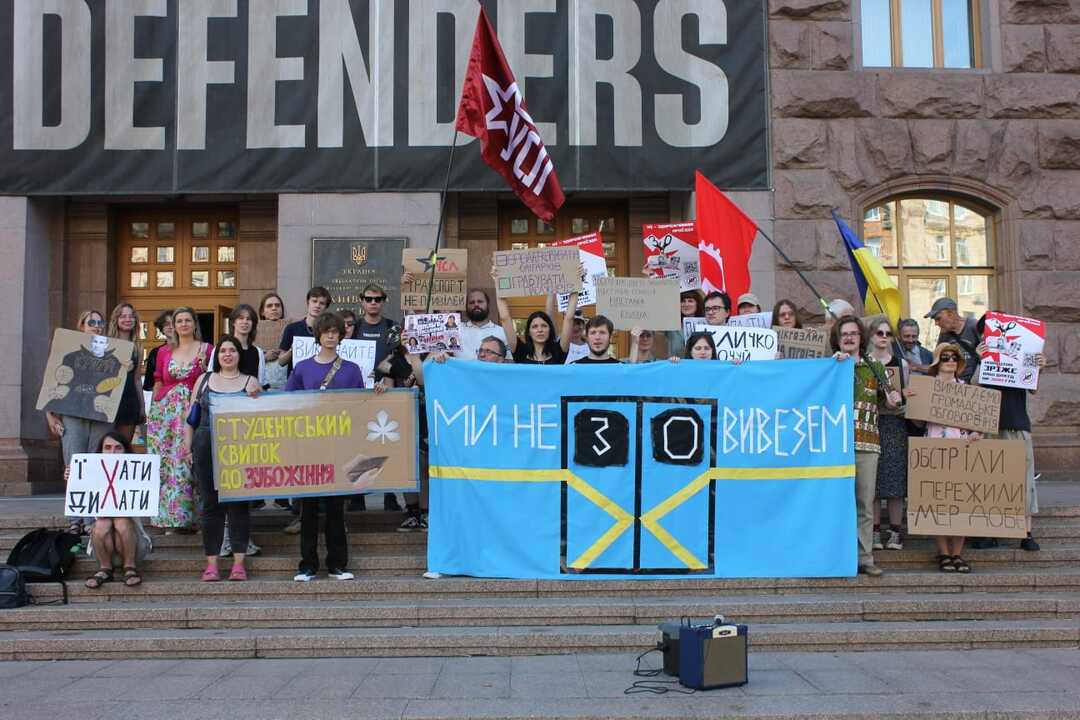
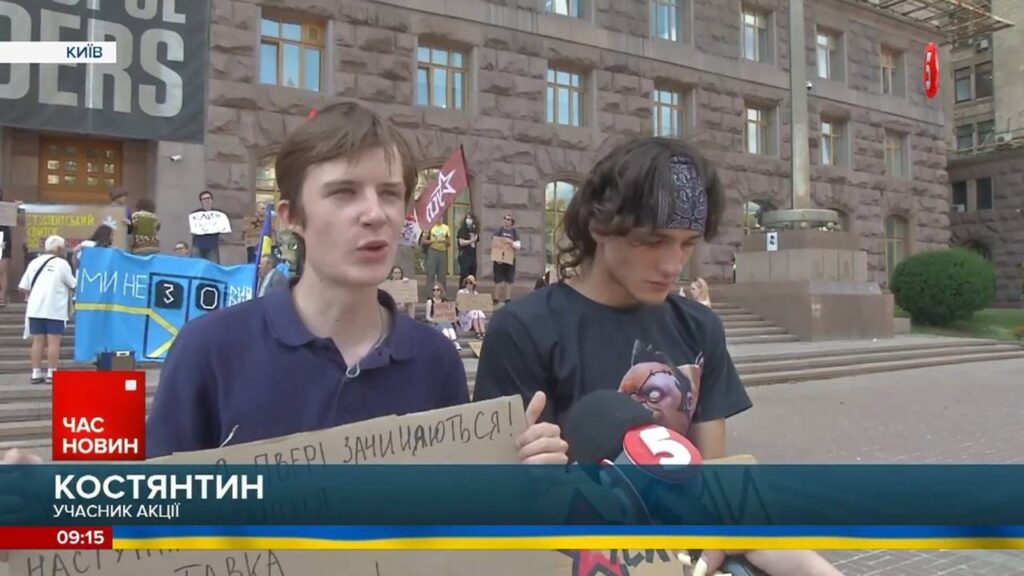
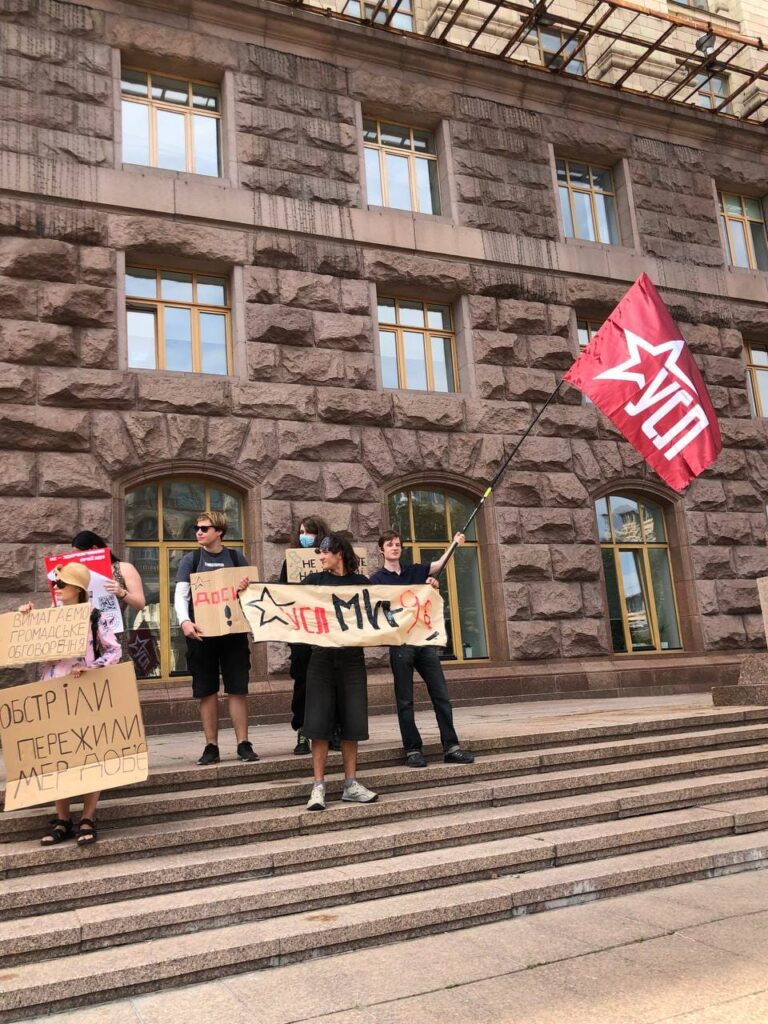
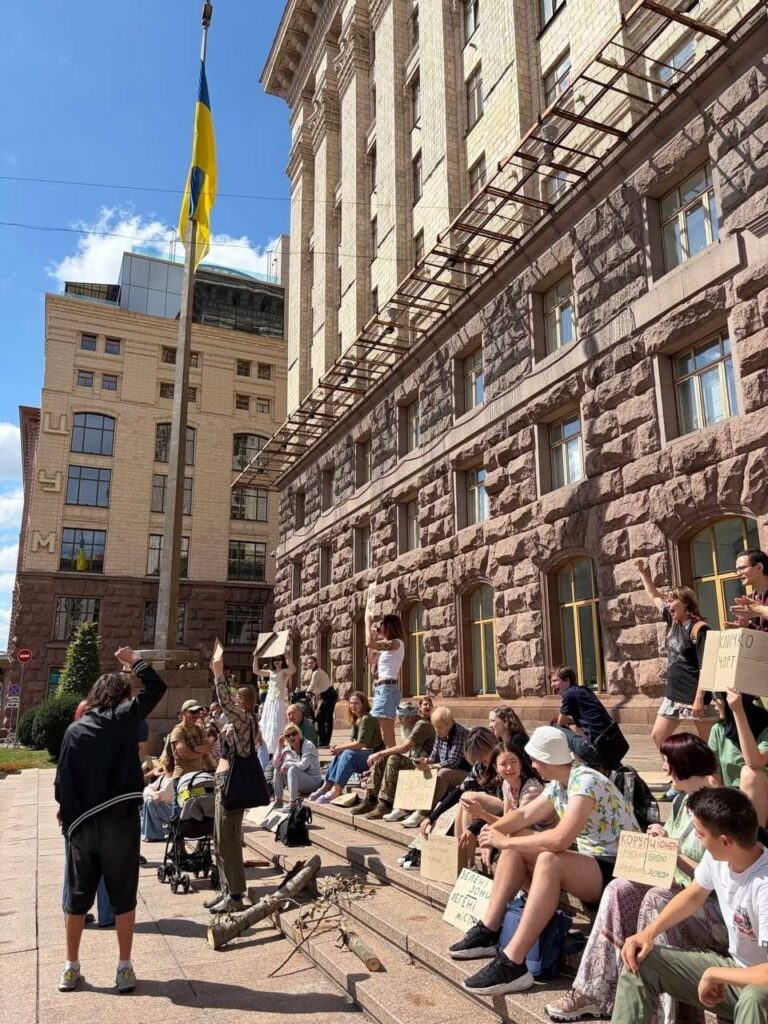
On August 9, a protest against the clearing of the Teremky green space took place in front of the Kyiv City State Administration (KMDA) building. Activists brought branches from felled oak trees to the building; these, along with cardboard signs, served as a powerful call to the Kyiv City Council to stop the illegal destruction of vegetation.
The day before, the protesters had succeeded in getting the work suspended until the 11th, when a public debate on the issue would take place. Activists point out that there was an alternative plan for the heating network construction project, which had received 6 million hryvnias in funding. Where did that money go? Authorities remain silent.
It should be noted that the community never received the permits for tree removal or the project documentation. According to residents, along with the installation of the heating system, there are plans to build another parking lot on the site where the park is currently located.
At the protest, residents expressed their dissatisfaction with the city’s public service problems. In particular, LSU activist Tyler pointed out that, like transportation, nature is not a commodity but a common good.
As for transportation, on August 11, the fifth protest this summer against the increase in public transportation fares took place. Activists demanded that the mayor of Kyiv immediately consider the Public Council’s resolution to restore the fare to 8 hryvnias.
They pointed out that issues such as rates, the condition of urban infrastructure, public transportation, and the preservation of green spaces cannot be addressed solely from the perspective of economic benefit. The city belongs to its residents, and decisions regarding its development must be made transparently and with due consideration for the community’s views.
The destruction of green spaces, problems with public transportation, rising prices, and the lack of transparency in municipal decision-making all stem from a common cause: the community’s lack of a genuine ability to influence the way its city is developed.
The fight for green spaces, accessible transportation, socially fair fares, and transparent use of public funds is a shared struggle for a city where the interests of its residents take precedence over commercial profit.
The protest against the KMDA showed that the discontent among Kyiv residents goes far beyond isolated local issues. The LSU demands concrete answers, public documents, and a real opportunity to influence the decisions that determine Kyiv’s future. It continues to advocate for a city where decisions are made in the interest of the people and by the people themselves, rather than by officials; where green spaces are preserved, transportation remains accessible, and public services do not become an unbearable burden on its residents.
The aforementioned actions were initiated and carried out through a joint effort between the LSU and the Social Movement.
The Ukrainian people are also facing an extremely difficult situation due to the imperialist invasion by the Russian Federation, and the left must not limit itself to condemning it in words but must help Ukraine in practice.
The International Solidarity Convoy for Ukraine has been launched. This initiative by the European Network of Solidarity with Ukraine (ENSU) originated with the Network of Catalonia and has since spread to various countries in Europe and some countries in Latin America, such as Argentina and Brazil.
In addition to transporting material, technical, and humanitarian aid, the convoy aims to serve as a visible political action that strengthens grassroots international solidarity, coordinates initiatives—many of which have already taken on significant momentum of their own—and encourages broader participation by grassroots organizations from different countries.
The LSU, as part of the International Socialist League (ISL), plans to actively participate in this humanitarian mission by organizing activities designed to draw attention to the Convoy and by helping to organize it and deliver the aid.