Much has been written about the nature of Salvador Allende’s Popular Unity government and the Chilean right-wing civil-military dictatorship, led by Pinochet and driven by the intelligence apparatuses of imperialism, during the twilight years of the Cold War; therefore, 53 years after the fateful September 11, 1973, I believe it is necessary to examine other aspects of a reactionary upheaval that radically altered Chile’s political landscape and foundation; In this regard, I find it interesting to draw some parallels between the orchestration of the coup and the current far-right government, represented by President José Antonio Kast.
By Camilo Parada Ortíz
The Starting 11 with the Far Right in Power: Ties to the Dictatorship
For the first time since the return to democracy, September 11 is being commemorated under a far-right government, with a president who called for a “Yes” vote in the 1988 plebiscite, supporting the explicit continuation of Pinochet and the dictatorship, with all its accompanying systematic human rights violations; this stands in contrast to the previous administration, during which even Sebastián Piñera—who served twice as president for the right-wing coalition—expressed his support for the “No” vote in that referendum. In other words, there is a clear, evident thread—unmasked by the so-called “transition to democracy” to which we have become accustomed—that links the current government to the dictatorship. In this context, to fully understand the asymmetrical polarization we have already discussed in various articles and pieces, it is important to highlight the connections between the political project of José Antonio Kast’s far-right and Pinochetism, These connections span ideological, programmatic, and discursive—that is, political—dimensions. Kast leads a movement that positions itself as a revival of latent Pinochetism, combining historical elements with new currents of the global alt-right and the New Right—inspired by this corner of the globe, by Spain’s VOX, and by the former Orbán government in Hungary. This link to Pinochetism and the imposition—through the monopoly on force and barbarism—of the extreme neoliberal model, which persists to this day at the very foundations of the Chilean political regime, is even acknowledged by the socially liberal editorial line of *The Guardian*[i], which published an article when Kast won the last election titled: “José Antonio Kast, the Pinochet fan about to swerve Chile to the far right.”
Kast’s first connection is biographical: the current president’s brother played an active role in the dictatorship. Michael Kast was a key figure in the social engineering imposed on the working class, serving as Minister of Labor and President of the Central Bank during a period when there was no separation of powers or democratic mechanisms—not even from a liberal and/or progressive perspective—and when we counted our dead day by day. At the same time, in his youth, José Antonio Kast was mentored by Jaime Guzmán, the dictatorship’s chief ideologue, architect of the 1980 Constitution, and founder of the Independent Democratic Union (UDI)—a party in which Kast was active for two decades. For years, this party served as the ideological continuation of the Pinochetist project, even as it took special care to polish its image to project a “democratic” right-wing or center-right facade, and thus become a more presentable political machine for the 1990s and the establishment of Chilean democracy “to the extent possible.” José Antonio Kast broke away from the UDI to the right in 2016, citing irreconcilable differences with the party leadership at the time regarding the party’s direction, internal renewal, and ideological stance, which led to the nickname “cowardly little right-winger” used to disparage his former party colleagues—a nickname copied verbatim from Santiago Abascal of VOX to describe the Spanish PP. Following his stint as an “independent” in his first presidential election in 2017—where he finished in fourth place—he founded the far-right party, the Republican Party of Chile, in 2019. According to its founder, the party was created according to its founder, with the aim of bringing together a “right wing without complexes,” drawing in both independent factions and disgruntled members of the UDI and National Renewal[ii].
It is important to note, in this biographical account, that the Kast family arrived in Chile in 1950, at the end of World War II; their father, Michael Kast Shindele, served in the Nazi German army, the Wehrmacht, between 1942 and 1945, and held a membership card for the NSDAP. Furthermore, there are several testimonies from survivors of the dictatorship’s repression who identify the Nazi father and one of his sons, Christian Kast, as accomplices in the crimes against humanity committed in Paine, an agricultural area in the Metropolitan Region—a Chilean municipality that holds the grim record for the highest number of executions and disappeared detainees during that period, with at least 70 victims, most of whom were peasants linked to the Agrarian Reform[iii].
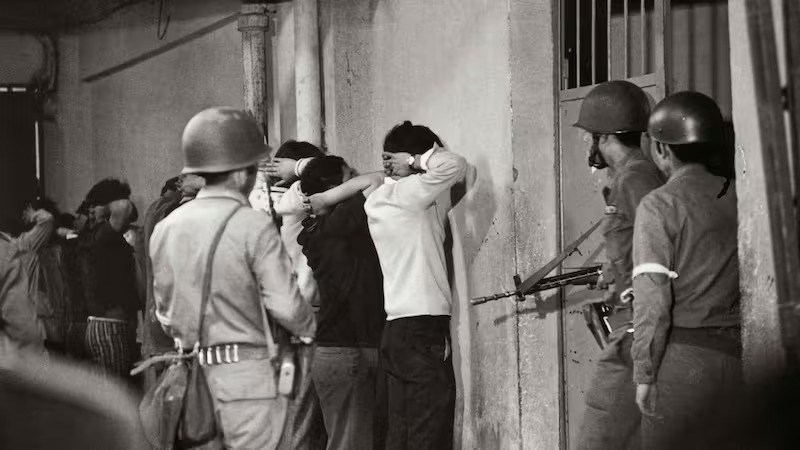
Returning to the connection with Pinochet’s bloody dictatorship, it is undeniable that Kast’s agenda maintains an unconditional commitment to the free-market neoliberalism established during the dictatorship by the Chicago Boys, a group of technocrat economists, the vast majority of whom were from the Catholic University, who pursued graduate studies in the Department of Economics at the University of Chicago under the tutelage of Milton Friedman and Arnold Harberger, and many of whom, during the dictatorship, assumed positions to implement the neoliberal plan with an ultraliberal ideological bias; This hallmark is being revived today, with this entire neoconservative restoration taking hold in the region; it must be stated, however, that all governments since the return to democracy—beyond grand declarations, especially during election seasons—have been stewards of the neoliberal model, glossing over a few issues here, or masking some structural inequality there, but none of these initiatives has made clear progress toward the actual overthrow of the model or a systemic alternative—beyond conferences, tiresome self-affirmation, and empty rhetoric. That said, we cannot characterize all political projects in the same way; that would be intellectual fraud and do a disservice to a proper analysis of reality. In this sense, the Republican Party’s platform more openly promotes a minimal state, tax cuts, and the defense of private property and individual capitalization as its core principles; All these points have been present since the return to democracy; they are part of the neoliberal pillars of Pinochetism, but they have been adopted de facto by all governments, in one way or another. We can say that there is an acceleration of neoliberalism and austerity as a method of “reverse trickle-down” under this government. It is worth noting that the Chilean “laboratory” served as a test case for later applying the same policies in the United Kingdom under Margaret Thatcher—an admirer of Pinochet—and the Austrian economist Friedrich Hayek[iv], who visited Chile during the dictatorship, to observe the neoliberal experiment, which could only be implemented through the violence of Pinochet’s tyranny, the counterinsurgency techniques of the School of the Americas, and the CIA.
However, this neoliberal-capitalist acceleration—in its specific phase in Chile—combines elements of moral conservatism with neoliberal austerity policies, and aligns with the original framework of Catholic nationalism and corporatism under the Pinochet regime. Kast advocates a reactionary, pro-life, traditionalist agenda that opposes progressive reforms in these areas (such as same-sex marriage or legal abortion). To carry out these austerity measures, he needs a whole apparatus that restricts democratic rights as much as possible and criminalizes social protest. It must be noted that the legal groundwork for this criminalization was laid during Gabriel Boric’s administration.
Another trait inherited directly from the dictatorship is a pathological, primal, and fundamental anti-communism. Just as in the national security doctrine of the 1970s and 1980s, the Republican discourse uses anti-communism—and, more broadly, anti-leftism—as essential drivers of political cohesion within its own camp and as a tool to fuel polarization against the left, labeling any policy that places democratic and social rights at the center as communist, lumping together liberals, social liberals, social democrats, and the revolutionary left without making distinctions or characterizations, all based on a simplification that fails to account for the insurmountable differences between reformism—which has limited itself to administering Chile’s neoliberal-capitalist model—and the anti-capitalist left, which seeks to defeat that very same model. This is an extreme form of simplified neo-McCarthyism, reviving these tactics in the 21st century and adapting them to discredit not only communism but any social, progressive, or critical left-wing movement.
A model that lasts
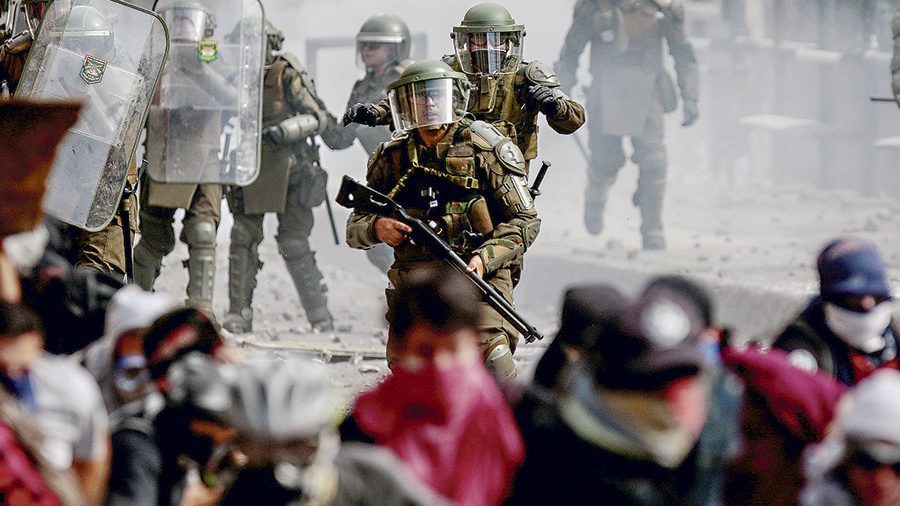
We could draw up an extensive list of this ideological continuum, but the important thing is to emphasize that Pinochet’s civil-military dictatorship did not end with the 1988 plebiscite or with the Christian Democrat Patricio Aylwin’s rise to power in 1990, with the never-ending promises of “happiness is on the way” and its stopgap measures—a mere band-aid for the wound—of “justice to the extent possible,” at least in its essence and economic machinery.
Although Kas leads a far-right, Holocaust-denying government, he continues along the path of an agreed-upon and supervised transition, in which the dictatorship that murdered, tortured, exiled, forcibly disappeared, and imprisoned thousands of leftist activists and leaders, managed to shield its economic, political, and social model through a series of institutional “safeguards,” negotiated with the sectors that would govern Chile for the long 30 years to come. The center-left, grouped within the Concertación, as well as the Nueva Mayoría and later the FA–PC pact, ended up managing that legacy rather than dismantling it, which perpetuated the alienation of the working class. Perhaps here we can speak of a new connection—this time between that progressive movement and Salvador Allende’s project—in the sense of a lack of understanding and confusion between winning the election and effectively seizing power.
At its core, the Kast administration is reviving the old manipulation tactics of the Pinochetist right, which 36 years ago, in the early 1990s, promoted a narrative that called for “looking toward the future” and avoiding becoming “anchored in the past,” and today this denialist rhetoric is resounding once again. This was evident in the absence of institutional events marking the anniversary of the September 11 coup, breaking with the consensus maintained by previous administrations.
What is becoming clear, 53 years after the coup, is that the neoliberal-capitalist model imposed during the dictatorship represented a profound defeat for our working class. The damage was not only economic, but also social and psychological, as well as in terms of human lives and the organizations of the revolutionary left. It was a plan directed against the working class and its organizations—a plan that has not yet been defeated, that has continued under every government since the return to democracy, and that is being accelerated under the Kast administration. The dictatorship dismantled the industrial and public service sectors where union organization was concentrated. The new labor legislation eliminated collective rights, made employment more flexible, and fragmented the workforce, hindering union action; in addition, basic rights were privatized, such as a decent, public retirement pension and water rights; each of these pillars of the Pinochetist model was subsequently refined by the transitional governments, whether center-left, right-wing, or far-right. Today, the same logic continues to prevail, in an even more stark form—a model that to this day promotes individualism, exploitation, plunder, and ecocide. With the return to democracy, massive indebtedness (consumer and mortgage loans) became the primary mechanism of domination, binding working families to years of overexploitation to pay off their debts—debts often incurred to secure education, food, and healthcare.
The age-old mistake of relying on institutions
One of the critical assessments of the government and the UP’s project—which was overthrown by the coup—was that Allende placed too much trust in the institutional framework; this central, strategic critique takes on a new dimension today, with Chilean reformism floundering in those same murky waters of blind and somewhat naive trust in an institutional framework tailored to the needs of big capital.
Allende believed that Chile possessed exceptional characteristics: a relatively stable democratic tradition, an organized labor movement, institutions with social legitimacy, and armed forces that had historically maintained a certain degree of autonomy from partisan politics—all of which must be viewed within their historical context and the circumstances of the time. Allende and the Popular Unity coalition sought to use these conditions to move peacefully toward socialism. We have discussed these historical points regarding Chilean social democracy year after year on our various platforms, explaining precisely how Allende conceived of democratic institutions as a possible path to transforming the state in stages; history has shown us, in the most brutal way possible, that this exceptionalism was a dangerous illusion.
What role will the Left play in this new phase?
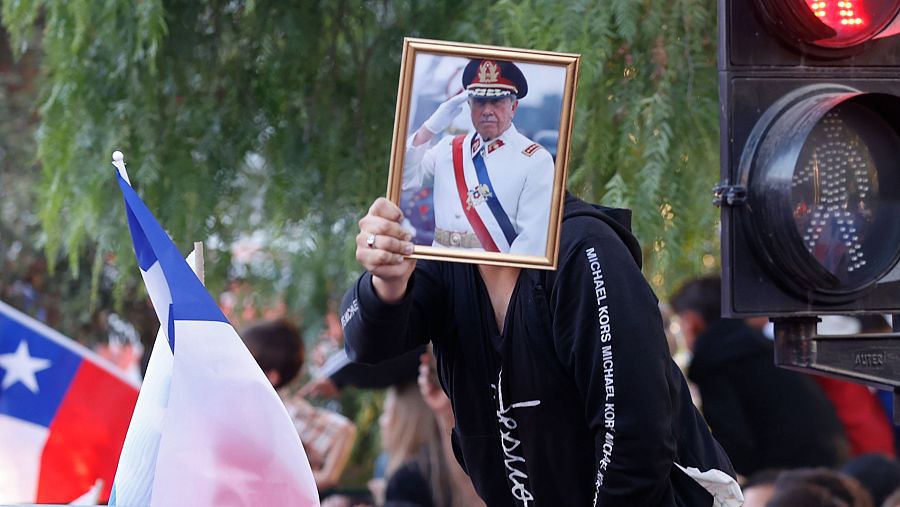
Facing a former Concertación coalition that did not seek a real alternative to neoliberal capitalism, but rather adapted it and gave it democratic credentials—its goal being to manage the inherited model by introducing targeted social policies to alleviate poverty, yet without altering the logic of the market; Faced with a FA that sought an institutional solution to defuse the 2019 Rebellion, and which, once in power, gradually toned down its original criticisms of the model until it became indistinguishable from the former Concertación—which it had so strongly criticized in its early days—in order to present itself as a a certain postmodern alternative to “Concertaciónism”; in the face of continuity, adaptation, and unfulfilled promises—which, step by step, paved the way for the resurgence of Pinochetism and Kast’s far right, which bows down before Trump and the decaying U.S. empire— we need an anti-capitalist, revolutionary, and determined left that breaks once and for all with that entire nauseating legacy, one that does not prioritize continuity (for the sake of power bases and cushy positions) over radical rupture; we need to work patiently but tirelessly to regroup revolutionaries, to fight against social demobilization and the criminalization of protest, to create organizations where decisions are made by the working class, and never again by the political and business elites in the pay of imperialism, who put up barriers to prevent us from debating the economic model.
In the conclusions, it should be stated time and again that the Chilean transition was not a break with the dictatorship, but rather a negotiation that preserved the essence of its legacy. Institutional ties, the harm inflicted on workers, and the center-left’s adaptation to neoliberalism explain why, decades later, social demands for profound change—the demands that sparked the uprising—remain as relevant as ever in Chile, despite the consensus reached at the top, criminalization, and the media blackout by the mass media serving the interests of capital.
To break with the neoliberal-capitalist model inherited from the dictatorship and counter the rise of Kast’s far-right movement, we cannot continue to repeat the same approaches that have brought us to this point; the fundamental tasks of our sector should be structured around the following strategic priorities:
- The Rallying of the Revolutionaries.
- A plan of action to dismantle the welfare state. To defeat the logic that the state should intervene only when the private sector fails to turn a profit, and to establish in its place a model in which social rights are universally guaranteed by the state.
- Decommodify critical sectors such as health care, education, and pensions, transforming them into fundamental rights managed according to principles of solidarity rather than profit, and placed under the control of workers and users.
- To build a new paradigm of meaning, based on solidarity, community, and the collective, from the bottom up, counteracting the atomized individualism and consumer culture promoted by the current model.
- For the nationalization and public ownership of public services and transportation, to be directly managed and controlled by their workers and users, completely eliminating private concessions.
- For an internationalist and anti-imperialist program that champions the refusal to pay the foreign debt, an immediate break with the IMF, and the nationalization of the banking system and foreign trade to prevent capital flight.
- While Chilean progressivism seeks to perfect representative liberal democracy through participatory mechanisms, without effectively breaking with the neoliberal-capitalist model, let us promote the creation of self-organized bodies and dual power in neighborhoods and workplaces, replacing bourgeois state and institutional bureaucracy with popular deliberation. For a real democracy—one that is not limited to the repetitive ritual of voting to change a president every four years—but rather one in which we all decide our own destiny, including our economic and productive resources.
- In the face of the union bureaucracy’s passivity, let us fight for the internal democratization of labor unions and student councils. For a plan of action and a national strike against the far-right’s austerity measures. For a reconnection with the people, let’s organize social protest independently of the traditional reformist parties.
- Against the conservative right, let us put forward a program that unambiguously demands the separation of church and state, the unrestricted application of legal abortion without restrictions, and comprehensive sex education (ESI) that is anti-patriarchal and dissident, arguing that gender liberation is inseparable from the struggle against the capitalist system.
As a second conclusion, as long as there is a progressive left that calls itself anti-neoliberal—one that continues to promise change without breaking any ties to neoliberalism in Chile, and at most seeks to regulate the market and strengthen the public role of the state—we urgently need something new: a new left that takes up these same anti-neoliberal demands, but without fear of advancing anti-capitalist policies of radical change and with a socialist horizon, as a revolutionary springboard. Let’s be honest: you cannot put an end to the economic legacy of the dictatorships without dismantling the very foundations of the capitalist system itself.
[i] https://www-theguardian-com.translate.goog/world/2025/dec/19/chile-jose-antonio-kast-pinochet?_x_tr_sl=en&_x_tr_tl=es&_x_tr_hl=es&_x_tr_pto=sge
[ii] https://en.wikipedia.org/wiki/Republican_Party_of_Chile
[iii] https://interferencia.cl/articulos/javier-rebolledo-por-matanza-de-paine-jose-antonio-kast-no-puede-decir-que-su-familia-no
[iv] https://www.bbc.com/mundo/noticias/2013/04/130409_relacion_thatcher_pinochet_lf_nm