As part of the Campaign Against the Criminalization of Protest and Labor Organizations, we interviewed comrade Vidal Aragonés, a labor lawyer and professor of labor law. He has spent much of his professional career working alongside workers and labor unions. He served as a CUP representative in the Parliament of Catalonia from 2018 to 2020. He is the author of various works on precarious employment, labor rights, and socialism. In 2025, he published the book “Pobretariat. Labor Precariousness and Other Debates on Class and Work.”
Automatically translated by AI.
By Flor Salgueiro
What are the causes of the increasing repression?
The bourgeoisie knows that, on the one hand, social cuts will increase and, on the other, levels of exploitation will rise. Faced with this prospect—and knowing that there will inevitably be a response—they have decided to step up repression. In some countries around the world, they also observe that the social response will not take the form of consensus-building but will instead involve realities that will go beyond the usual dynamics of negotiation. And finally, in other historical periods—such as the cycle that began after the end of World War II—states and the bourgeoisie were able to make significant concessions; now, however, economic realities make even that a genuine challenge for them.
In *Pobretariat*, you argue that the working class has been criminalized. How and why does this process occur?
It is not due to a single cause but to a combination of factors. First, the extension of the neoliberal model to labor relations—reducing business costs to a minimum—has led to the exclusion of workers from the labor force, temporary contracts, wage cuts, the facilitation of labor deregulation and layoffs, and reduced severance pay. Second, changes in the organization of work and production have led to a reduction in large workplaces, an increase in outsourcing, and the emergence of employment arrangements in which labor rights are not recognized. Third, the privatization and deregulation of productive sectors, which have led to the reduction of public enterprises and the elimination of guarantees and rights. And finally, none of this can be fully understood without acknowledging the abandonment of class-based, militant unionism and a loss of class consciousness—which is, in turn, both a cause and a consequence of everything we have discussed.
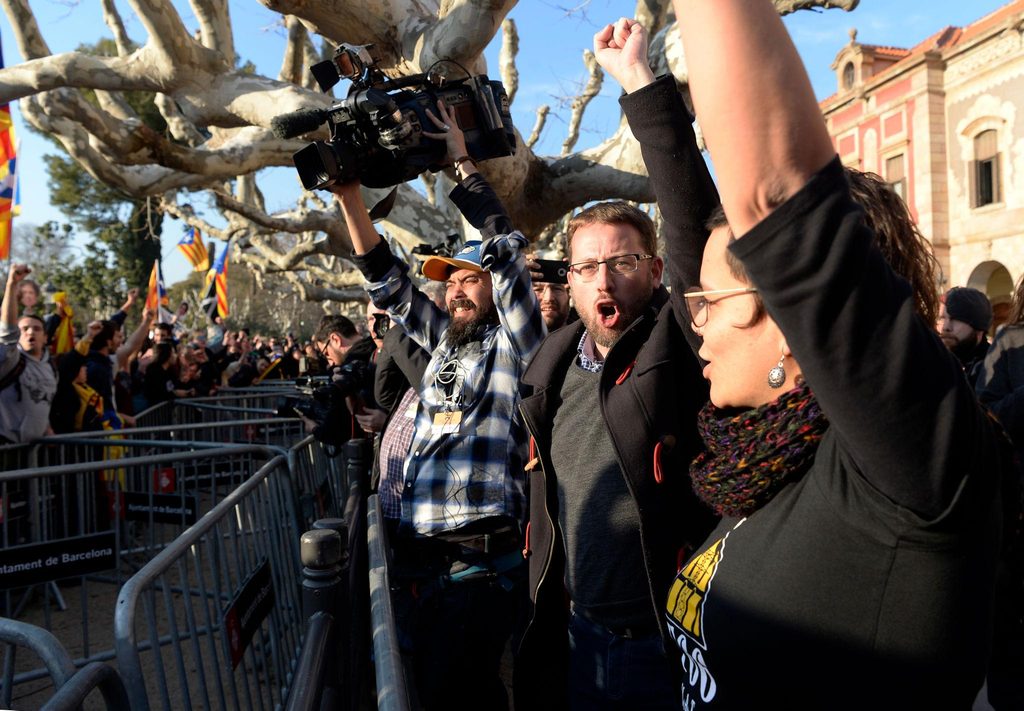
Criminalization was the foundation of neoliberalism’s ideological framework for dividing the working class. Those who receive social benefits (for unemployment, sick leave, or similar reasons) are portrayed as abusers of the system, and the aim is to create a collective image of people who take advantage of the system. This has been a rallying cry of the growing far right, which attributes this role to the immigrant working class.
What is the situation in Spain and in Catalonia?
The wave of protests that began in 2010 and reached its peak in 2012 resulted in criminal proceedings against more than 300 union members, primarily under Article 315.3 of the Penal Code (repealed in April 2021), through a combination of the police fabricating the alleged facts and twisting criminal law to increase the sentences.
At the same time, there have been ongoing police crackdowns on workers who are simply demonstrating or occupying public streets. Similarly, the judiciary—which has historically been predominantly conservative—has begun to adopt far-right positions, cloaking them in legal rhetoric.
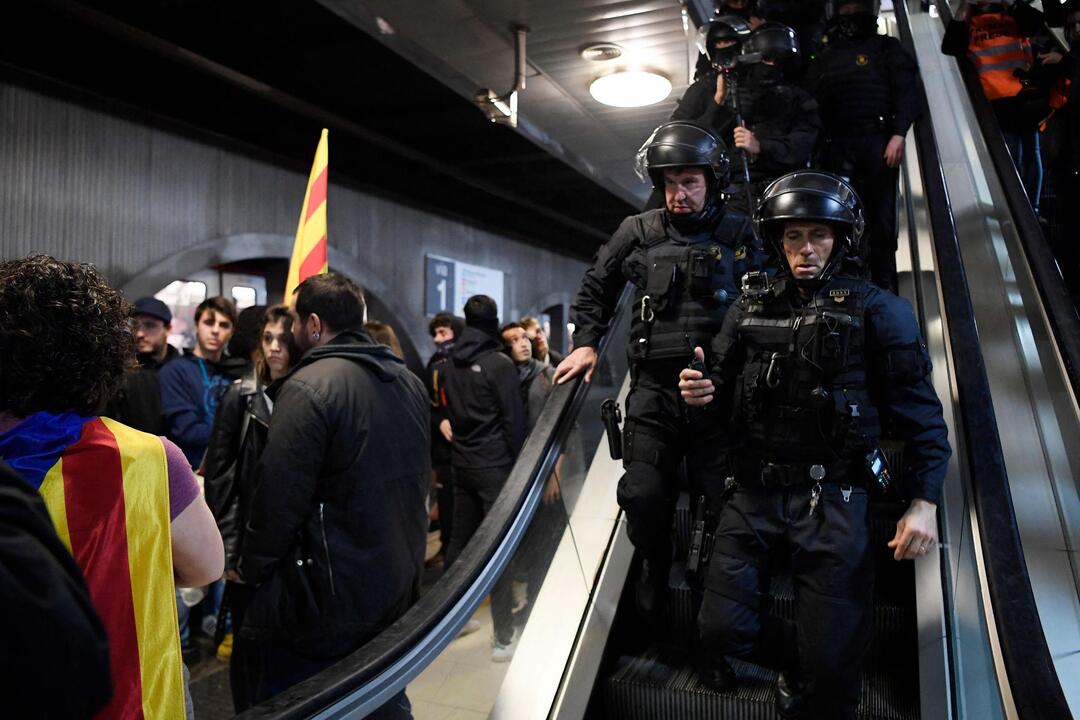
In the case of Catalonia, the struggle for national liberation led to several general strikes between 2017 and 2019, with levels of participation that varied widely—from near-total work stoppages to minimal participation—but all were marked by various forms of repression. The general strikes of 2017 were not marked by arrests during the strikes themselves but rather by subsequent fines and the initiation of legal proceedings. During the 2019 general strike in protest of the court ruling against the pro-independence leaders, 139 people were arrested. We should not forget that the Catalan political conflict resulted in some 3,300 people facing reprisals.
What did Article 315.3 entail?
Coercion committed in the context of strike actions was subject to harsher penalties. Ongoing proceedings could continue but had to be reclassified as a general offense of coercion, which carries a lesser penalty than the previously repealed provision.
What are the most notable cases?
I would highlight two cases. One in Asturias, known as the “6 de la Suiza” case, in which a labor protest and boycott over the harassment of a female worker resulted in a three-and-a-half-year prison sentence for the crime of serious coercion. The women who were convicted were sent to prison. Ultimately, the harshness of the sentence and a strong mobilization campaign led the Spanish government to grant them a pardon.
In Catalonia, “7 dels nostres” (“7 of ours”) is surely becoming another of the most emblematic cases we are campaigning for. For property damage (two damaged facades and a broken window) caused during one of the demonstrations of the 2012 General Strikes, prosecutors are seeking prison sentences ranging from 5½ to 6 years for property damage and public disorder, as well as fines totaling approximately €30,000.
What is the campaign about?
We decided to frame the campaign as an attack on the fundamental rights to assembly, demonstration, and strike. We called on all unions to make a minimum commitment, and on April 30 we held our first kickoff event. It has been truly remarkable to see both the mainstream labor movement and the most militant unions come together in a single campaign. We are now continuing to hold informational events and raise funds, and we are still awaiting a trial date.
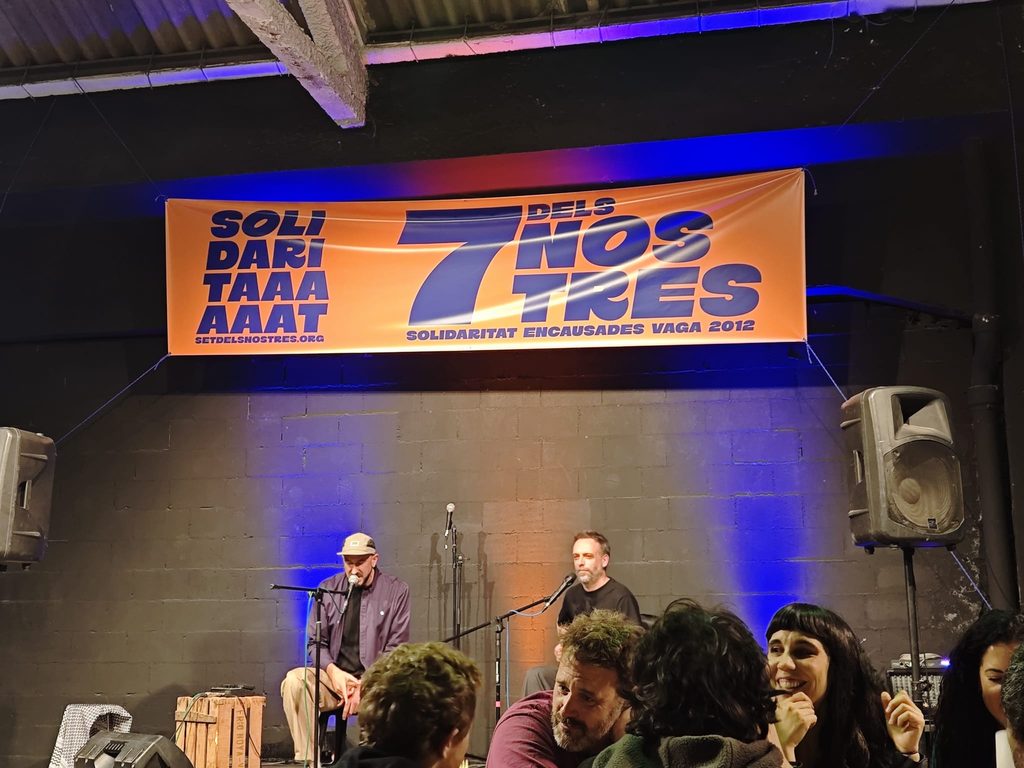
The fact that, in 2026, we still do not have a trial date for charges related to events that took place in 2012 is, in and of itself, a repressive act because of the uncertainty it brings to our comrades’ lives. In the coming months, we will intensify our acts of solidarity and support for “7 dels nostres.”
What were the consequences of the general strike on October 3, 2017?
The first consequence was for the alternative labor movement: the ability to organize a strike without the mainstream labor movement and still make it a complete success. In turn, for the mainstream labor movement operating within the Spanish context, the consequence was that it could not turn a blind eye to repressive actions such as those carried out by the police on October 1, 2017, against people who were simply exercising their right to vote. For the working class as a whole, it offered a lesson in how democratic rights must also be defended, as well as the opportunity to participate in the largest general strike in terms of turnout in the history of Catalonia.
What can you tell us about the crackdown on the 2026 teachers’ strikes?
Dozens of people have been identified at roadblocks set up during the strike days, and these incidents could result in administrative fines at any time.
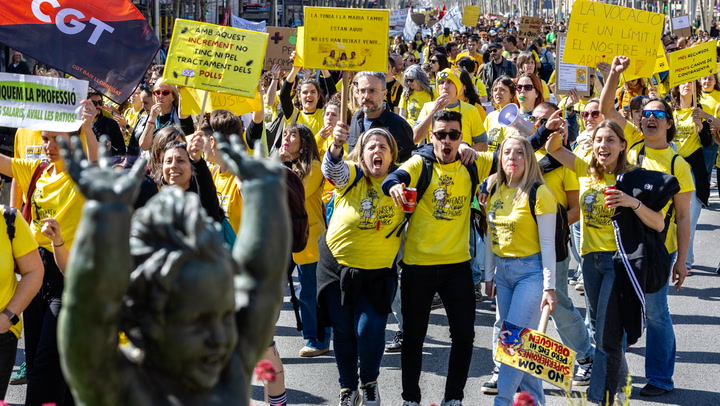
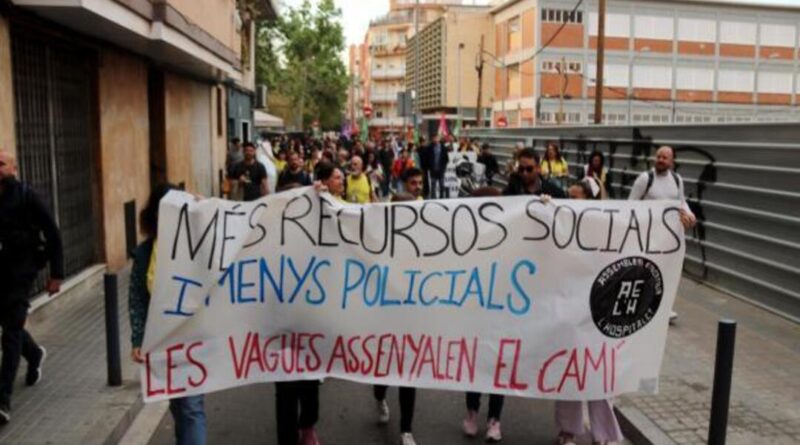
One instance of repressive tactics uncovered by the alternative labor movement was police infiltration of the strike planning meetings—a very serious matter: police officials deny that this constitutes an illegal act while acknowledging the infiltration, which is even more serious.
How are the UGT, CC.OO., and other union and political leaderships responding?
Unlike their role in collective bargaining, the two major unions are not turning their backs when asked for support; in fact, they played a key role in the repeal of the aggravated offense of coercion in union actions. Alternative unionism is also playing a leading role in highlighting the importance of the struggle against repression and offering a deeper analysis of the nature of the state. In fact, this is also the fundamental issue that distinguishes the reformist left from the revolutionary left. The former sometimes calls for “proportionality,” as if even minimal police repression were necessary and acceptable. At the same time, it suggests that these are isolated acts by individual police officers, failing to understand the repressive nature of the state. On the other hand, while the revolutionary left generally understands the role of the state well, it sometimes adopts a somewhat “movement-centric” perspective; it does not always fully grasp that, at its core, the problem is not the police or the police force itself, but rather the repressive nature of the state.
How does the far right operate?
First of all, far-right ideas are prevalent among the police and the judiciary, not so much because of organizational affiliation but because they have adopted these ideas. Since these groups play a fundamental role in repression, we must understand their role as central. Just as the far right has emerged for the first time in Spanish state institutions over the past decade and is poised to become the third-largest political force in the upcoming elections, this facilitates a discourse of criminalization. Today’s far right is a mix of neoliberalism and the criminalization of migrants, feminism, sexual minorities, and the political left.
What is the role of Alerta Solidaria?
Alerta Solidaria is the anti-repression organization of the Independentist Left of the Catalan Countries. Its main function is to provide legal, judicial, and assessment support to individuals who have been identified and charged with participating in political actions, protests, and demonstrations. In recent years, it has evolved from being an anti-repression organization that supported the activists of the Independentist Left almost exclusively to becoming a broader point of reference among social sectors representing other political perspectives.
What are the tasks of the working class and its organizations?
Increase the level of struggle and organization. Only by overwhelming the system with struggles can we reduce repression. And until we reach that point, activists must incorporate anti-repression strategies into their daily activism and the actions in which they participate. In recent years, nearly a dozen undercover police officers have been exposed; while this is bad news, it also demonstrates the movement’s maturity in identifying them. Similarly, every activist must receive anti-repression training on how to protect themselves from repression and how to defend themselves against it. In this regard, I believe that the ongoing repression we have endured has made us aware of these tasks. At the same time, already having an anti-repression organization makes the task easier.
What role should political parties play?
The revolutionary left must understand that anti-repression training is yet another task in the struggle. I believe we should revisit Victor Serge’s work,*What Every Revolutionary Should Know About Repression*.” To what is set forth in that work, we must add an analysis of the new technologies that are playing a central role in social control and repression. Having addressed the above, the revolutionary left must always remain revolutionary while situating repression within a broader framework that explains what it means and what it responds to. Taking it a step further, we must develop mechanisms for self-defense against repression. Finally, class and internationalist solidarity in the face of repression: anyone subjected to reprisals is one of us.
What do you think of the Campaign Against Criminalization?
International anti-repression campaigns serve a dual purpose. On the one hand, they allow for a real and practical exercise of internationalism. Wherever the working class and the peoples fighting for their national and democratic rights and for socialism may be, they are my own. On the other hand, for governments and the judiciary, knowing that there is mass and/or external support for those facing reprisals sometimes creates an interesting dynamic.
In closing, is there any aspect of this issue that you think is important to highlight and that we haven’t addressed?
Revolutionary organizations must strengthen their training and anti-repression solidarity in the coming phase. Likewise, they must overcome any partisan perspective on repression; all those who have suffered reprisals in the struggles for democratic and social rights and national liberation are our own.
Partial Timeline for Catalonia, 2016–2026
2016: Three strikers linked to the events of the General Strike of March 29, 2012, voluntarily turned themselves in to the Regional Ministry of the Interior after an arrest warrant was issued against them. They had appeared on the citizen identification website created by the Department of the Interior following that strike. The Mossos d’Esquadra arrested them when they presented themselves at the Department’s headquarters, and they were subsequently released.
2016: Eight activists were convicted for incidents that occurred during the general strike on November 14, 2012, in Girona. The sentences ranged from 6 to 18 months in prison for offenses including public disorder, assault on a law enforcement officer, property damage, and bodily injury.
2016: The CGT publicly denounced the criminalization of workers and attempts to restrict the right to strike during labor disputes involving the Barcelona Metro and Bus systems.
2018: Thirteen people were charged for protesting outside the High Court of Justice of Catalonia (TSJC) in February 2018. In 2020, the prosecutor’s office sought prison sentences ranging from 1 to 2.5 years.
2019: During the general strike on February 21, called in Catalonia in the context of the “Procés” trial , roadblocks and other protests took place. The Mossos d’Esquadra ultimately arrested three people that day.
2019: Protests linked to the Catalan independence movement continued to trigger police and judicial actions against participants in demonstrations and acts of civil disobedience, including those related to the February 21 strike.
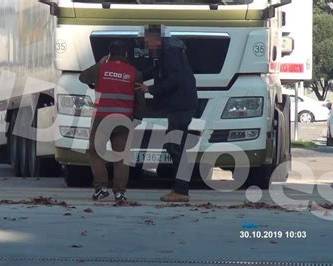
2019–2020: During the October 30, 2019, strike by the freight and logistics sector in Barcelona—which affected, among other facilities, Amazon in El Prat de Llobregat—unions filed complaints regarding the monitoring and surveillance of workers and union representatives. The case was publicly denounced and subsequently became the subject of union and legal action.
2020–2021: Housing Movement. Although this is not a labor union movement, it is relevant to the broader issue of the criminalization of social protest. According to data collected by Irídia, the housing movement has faced 364 complaints filed by the Mossos d’Esquadra since 2019, of which 351 were linked to actions aimed at preventing evictions. The complaints were primarily processed under the Public Safety Act. The typical proposed fines were 601 euros, and the total amounted to approximately 206,000 euros.
2026: Education strikes. The Ministry of the Interior informed Parliament that approximately 80 people had been identified or charged during the education strikes in February and March. Most of the incidents involved roadblocks. In Barcelona, 27 teachers were identified and 12 were charged.
2026: Teachers’ union assembly. Two Mossos d’Esquadra officers in plain clothes attended an assembly being held to organize the education strikes. The regional minister of the interior later acknowledged that it had been a “poorly planned police operation” and apologized. The Intersindical announced legal action over a possible violation of freedom of association, the right to strike, and the right to assembly.
2026: March 29, 2012, strike: seven people. More than 14 years after that strike, legal proceedings against seven people remain ongoing. The prosecutor’s office is seeking prison sentences and fines for the defendants.
A State Precedent
2010–2016 – Madrid: “The Airbus 8.” Although it did not take place in Catalonia, the case is of national significance. It began during the general strike of September 29, 2010, when eight union members from CC.OO. and UGT participated in a picket line outside the Airbus factory in Getafe. The prosecution initially sought 8 years and 3 months in prison for each of them on charges related to workers’ rights, assault, and causing bodily injury. The case became one of the symbols of the “Strike Is Not a Crime” campaign. The eight were ultimately acquitted.