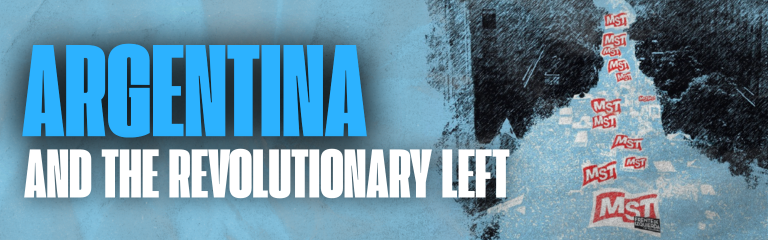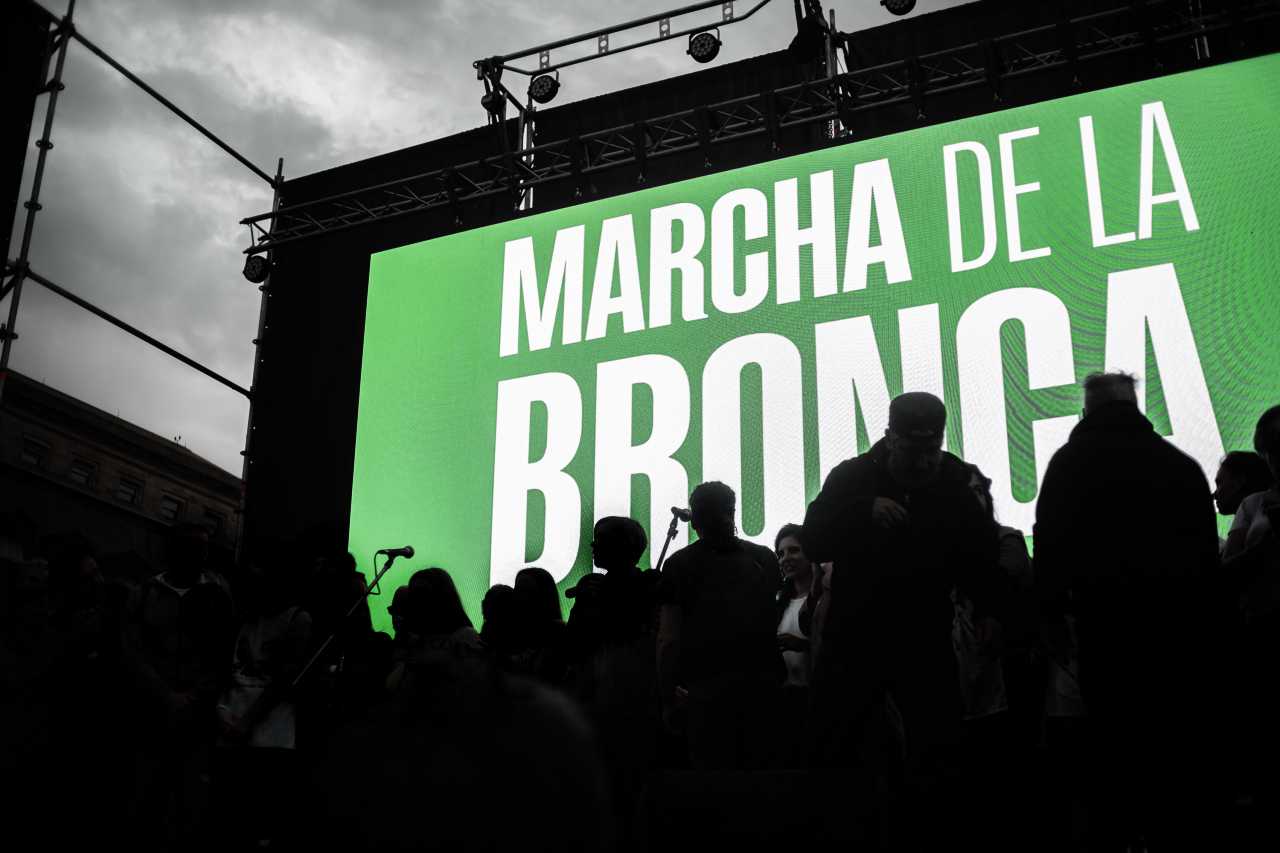
The demonstrations on Saturday, September 19, filled Plaza de Mayo to capacity and reverberated throughout major cities across the country. They brought together dozens of struggles and a great deal of pent-up anger stemming from unmet demands that needed to be voiced, and people responded to this united and diverse call to action. It was a major blow against Milei and the accomplices of the gang that governs us. It was a huge step forward in organizing all the energy that was mobilized on a national level, uniting and strengthening the various struggles and sectoral spaces, and advancing the national plan of struggle that is needed. It also served to demonstrate an alternative path from the left for working people. There is a great opportunity to move forward and make the most of it. To do so, it is essential to address all the conclusions drawn from that day.
By Guillermo Pacagnini
The March of Rage gradually became a reality as Saturday the 19th approached. Beyond the confines of the left and militant sectors, the initiative took root in everyday conversations in neighborhoods, workplaces, and schools. Thousands upon thousands embraced this initiative, and the pent-up anger against a government that has been facing increasing popular condemnation began to erupt.
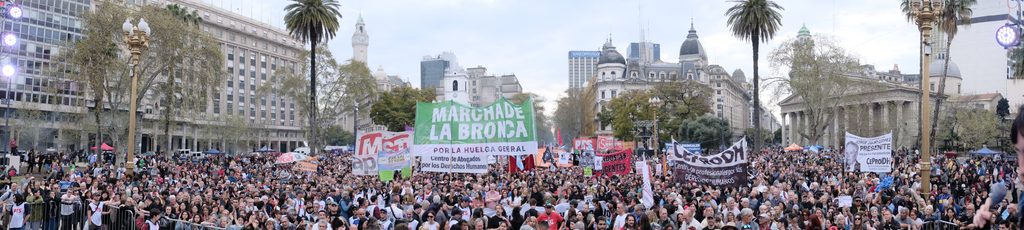
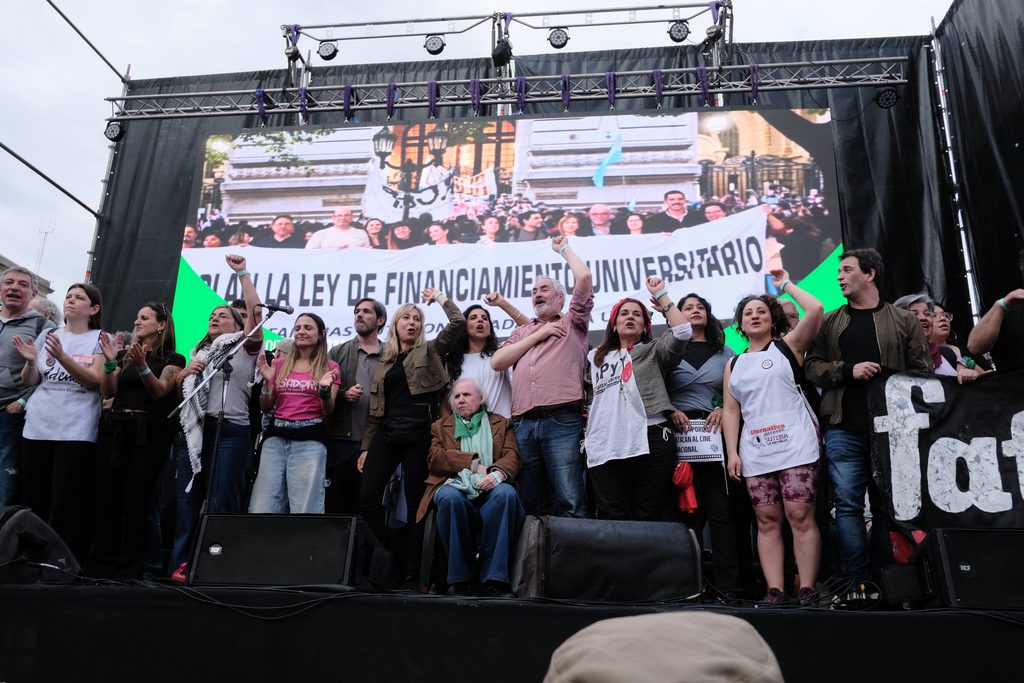
That is why Plaza de Mayo, its adjacent diagonal avenues, and the streets of the country’s political center were overflowing on Saturday. When the columns entered, the plaza was already packed with people who had marched with their families, in groups, and individually, as is typical at major political events. But the main sectors in the struggle were also present with their banners and delegations: workers, youth, environmentalists, neighborhood groups, and grassroots movements; universities and social organizations; the Garrahan Hospital and a large healthcare contingent; FATE; retirees; human rights and cultural movements, and dozens of collectives from various spheres that have been protesting against austerity, Milei’s abuses, and his plan of starvation and capitulation. More than 150 artists joined forces to dismantle the anti-cultural narrative that those in power are trying to make fashionable. The “March of Rage,” as Cantilo called it, echoed repeatedly, demonstrating the relevance of its message. There was no shortage of emotion or street power. A united cry against the neo-liberal-fascist government. For wages, jobs, pensions, social programs, healthcare, and education. For a way out for the millions in debt and to end criminalization and repression. Against the IMF, Trump, and imperialist aggression. For the unity of the struggles, for coordination, against bureaucracy, and to prepare for and demand a national strike. A broad united front centered on a powerful rallying cry: to defeat Milei and the IMF’s plan—along with its accomplices—through a general strike. The joint statement read in every public square across the country summarized these key points and raised the banner of protest and proposal, calling for an alternative solution.
The march really hurt Milei and those at the top. The government and its media spokespeople tried to downplay it, but they failed. Because the reality—and the images showing the massive turnout—spoke for themselves. The march was all over the news and took social media by storm. The main one in Plaza de Mayo and those held throughout the country.
There were 70,000 people in the plaza and thousands across the country. But the political success went even further, because it took root in many more sectors, and because it was closely followed by many people who didn’t actually march but followed it on social media, took its message to heart, had it etched in their memory, and may yet mobilize or organize alongside those of us who called for it.
A Historic March
It is important to highlight the main conclusions of the Marcha de la Bronca—not only to note its massive turnout, which stands out among the street protests that have been taking place, but also its distinctive, qualitative nature. These conclusions pave the way, presenting us with the need and responsibility to ensure its continuity.
- We launched the march from the left, but it reached far beyond. Because of the united front that organized it, because of the dissident Peronist factions that joined out of disappointment with their leaders, and because of the independent groups that marched.
- It was historic because it transcended sectoral boundaries. Because it united the different struggles and demands. The demands of those who mobilized for higher education, for healthcare, for children, and against cuts to disability benefits and pensions. It was a leap forward because it brought these demands together and amplified them to directly challenge the government. A political and social march that highlighted the need to defeat the monster in the Casa Rosada, its plan, and its accomplices.
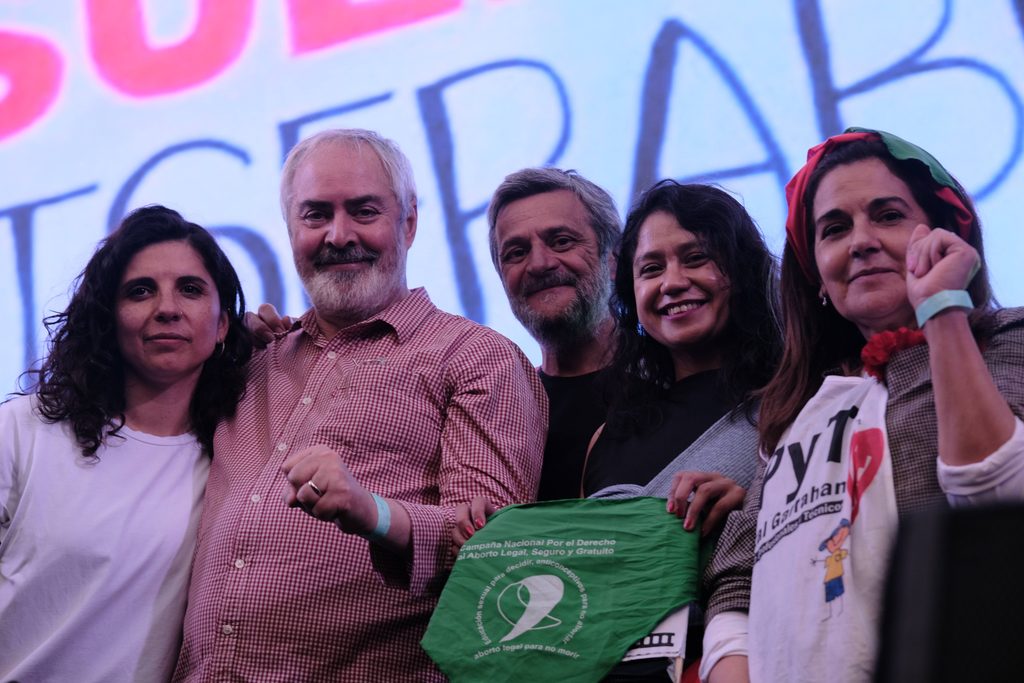
- It wasn’t just an objective need to mobilize against Milei. There was a process that unfolded over weeks—a strategy and a leadership to channel those demands. To counter the forces that always seek to demobilize and to engage those in conflict with Peronism and the traditional unions. And to achieve the greatest possible unity across the entire political and social left. It was an initiative that we launched from within the PTS and the MST to create a grassroots mobilization that was embraced by many others who became active participants in that process. That was the key to the success of this mobilization: it managed to reach segments of workers and independent youth.
The Keys to a Successful Day
Without a doubt, the pent-up anger against the government and the urgent need to put a stop to its attacks were among the driving forces behind the march’s transformation into an event of such magnitude. The sheer size of this street demonstration was clear evidence that opposition to Milei is growing. Polarization persists; the monster has retreated to Olivos and is taking refuge among his core supporters in an attempt to regain the offensive, but he is failing to do so, despite the collaboration of his accomplices. The opposition is growing. More and more people are rejecting his policies and demanding change, and much of that social discontent was expressed on the 19th.
There was a second factor that contributed to the atmosphere that allowed this march to take place successfully: the vast political and trade union vacuum left by a Peronism that no longer inspires enthusiasm, having shifted to the right in its proposals and distanced itself from the streets. And because of its union leaderships that draw condemnation—such as the CGT, which makes deals with Milei, or those that criticize but do not consistently support the struggles, render them invisible, fail to provide continuity, or leave them isolated. That is why this massive demonstration also strongly challenged the leaders of the major unions, and many of the various conflicts and demands currently taking to the streets—driven by activism and militant leadership—fueled the day’s events. The third reason behind this massive demonstration also has to do with the radicalization of a segment of workers, young people, and women… who are turning to the left. Myriam Bregman’s call to action, the growing support for the left, the FITU, and its figures such as Cele Fierro, Alejandro Bodart, and others were fundamental and became objective factors in reality that helped drive and establish this initiative, as well as give substance to and amplify the massive demonstration.
Kicillof’s event failed to overshadow the march
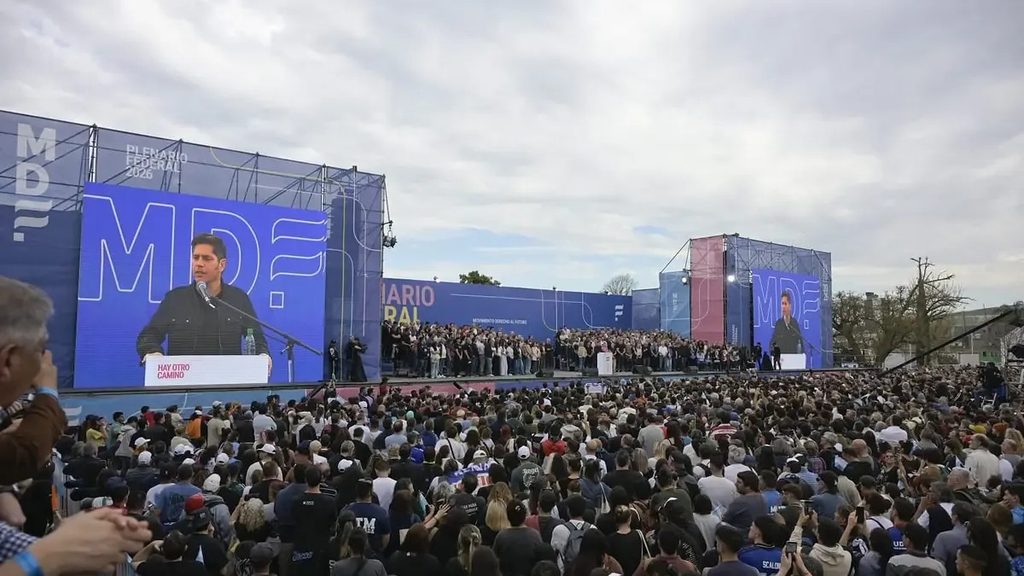
Almost simultaneously, our event was accompanied by a rival gathering that failed to overshadow it. The “Right to a Future” movement—a coalition spearheaded by governor of Buenos Aires Province Kicillof—held a national rally in Avellaneda and launched Kicillof’s presidential candidacy. The event fully reflected the crisis within Peronism. Its political focus was the fierce, cutthroat internal struggle within the PJ, rather than an alternative program to Milei’s “chainsaw” approach. And its plan was not to call for unity and mobilization in the streets, but rather to advance its electoral ambitions by urging people to wait until 2027. Despite the money spent on media coverage, they were unable to overshadow the “March of Rage,” a political event that made the front page of Saturday papers. But most importantly, they failed to prevent segments of their own base from participating in the mobilization or following it with interest and sympathy. The faction led by Máximo Kirchner, which is at odds with Kicillof, also came out to challenge the march, encouraging visits to Cristina’s home, but they too failed to make a dent in our efforts. Our call to their rank and file not to trust these factions—to defeat Milei without returning to the past—was powerfully present in the message and the document of the Marcha de la Bronca.
The Right Policy and Debates on the Left
These objective reasons do not fully explain the initiative’s success. It has to do with a policy that was promoted from the very beginning. The initiative was a political victory that we launched and resolutely advanced from our party in agreement with the PTS, successfully bringing together more than 350 organizations and key figures. It was structured around five fundamental pillars, which sparked debates but proved to be the right approach for the initiative to succeed.
- To establish that the political focus should be on calling for mobilization to defeat Milei, his entire plan, and his accomplices, by building and advocating for a plan of struggle leading toward a general strike, with a document that sets out this strategy, this method, and an alternative solution.
- Bring together the broadest possible coalition that aligns with this political agenda. Unity in diversity, plurality of identities. Calling on, urging, and/or pressuring union leaderships and social movements to mobilize, in order to bring together as many sectors as possible.
- Organize a political and social mobilization. One that is not limited to labor unions or the left alone, but calls on all sectors and groups that oppose and confront the government and its accomplices. We do not limit this call to the Left Front-Unity or to any specific social or labor group.
- Coordinate all sector-specific coordination groups to launch this event, bring together different demands, mobilize the broader community, and significantly expand the organizing base. To this end, we called on existing coordinating committees and those currently being formed, as well as groups such as the EMVJ, the coordinating body of retiree organizations, the PSC, the BFS, and others. And we called for continuity through a national coordinating body that will foster the necessary debates and actions moving forward.
- Call for a national day of action. To that end, replicate these coordination efforts throughout the country.
To that end, we first called a meeting at the School of Social Sciences to launch the initiative. Then we held a national meeting to replicate the initiative across the country, including both regional coordination efforts and the actions that followed. We concluded with a large plenary session in Lezama Park to approach the final stretch leading up to September 19 with the greatest possible momentum. We laid the groundwork for establishing a lasting coordination structure for the future and organized unified, participatory, and open committees to reach consensus on the political document that was read in the plaza by independent figures, and to define a format for a march that embodies unity in diversity.
This policy was not only contested by Peronism and the bureaucratic union leaderships; it also sparked a debate and brought to light different perspectives within the left.
There were some minority groups that, reflecting a supine marginality, simply chose to turn their backs on reality and stew in their own juices. Such is the case with the Nuevo MAS, who completely ignored the massive September 19 march and took refuge in a party event of their own. Just as they had opportunistically attended PJ events on other occasions, this time they showed their most sectarian side and disappeared entirely. Or Política Obrera, Altamira’s group, which sought to discredit the march by distorting reality, claiming that it filled only “half the plaza.” This was the same argument used by some reactionary journalists.
But there was also debate within the FITU with the PO and IS, whose political stance was a veritable obstacle course that had to be navigated in order to carry out the powerful and united march that took place on September 19. At first, they refused to participate from the very moment the initiative was conceived. Then, adopting a sectarian stance, they sought to limit its nature and scope. And although they eventually joined in, they never actively promoted it. It is important to engage in this debate in order to draw conclusions and reflect on the path forward that lies ahead.
- Both forces had a narrow vision and a very conservative policy. They offered a limited and skeptical interpretation of the current political moment, downplaying the opportunity at hand, the political and social space available, and the need for a bold strategy to promote the left and the FITU; by building a broad coalition capable of challenging the status quo and successfully mobilizing the masses, as had been proposed and as reality ultimately demonstrated. This analysis and political approach differed greatly from the one we developed alongside our comrades in the PTS, acting in unity and serving as the vanguard in coordinating a broad alliance.
- Initially, the PO opposed the call for mobilization issued by the School of Social Sciences meeting, attempting to organize an alternative meeting through the retirees’ sector—an effort that failed because the organizations in that sector joined the unified call. As a result, they sent only a small delegation to the meeting to make their position known.
- As the initiative gained momentum, both the PO and IS adapted and joined, but sought to limit the scope of the rally.
- The two parties fought to ensure that the call for action would be limited to the Left Front, and that the Front would subordinate the other actors who were joining the effort. This electioneering-style policy clashed with the will of the vast majority of the organizers who had come together, given the need to create a much broader, unified, and socio-political platform for coordination and mobilization.
- Finally, PO and IS sought to have the march organized behind their union groups and the banner of the Militant Unionism Plenary. This bureaucratic stance was rejected by an absolute majority, as it disregarded the principle of unity in diversity among all sectors and groups—many of which do not belong to those organizations but were nonetheless active participants in organizing and building the march.
How do we proceed?
We now face three very important challenges. First, we must consolidate and continue to develop the coordination structures that were established for the march. In every province, every region, every front of the struggle, and every forum for debate. And we must consolidate a broad national coordination effort to continue organizing the anger, preparing a new, large-scale call to debate and reach consensus on actions.
Second, energized as we are, let’s channel that energy and coordinated strength to support the ongoing struggles with greater vigor and to bolster the actions to come. The Plurinational Women’s Gathering in Córdoba, the upcoming University March on October 15, a strong campaign against
the criminalization of protest, and preparing a massive mobilization to surround Congress when they attempt to debate the National Budget of austerity and capitulation. In the spirit of the “March of Rage,” with greater unity in diversity, to move forward in defeating Milei.
And, in the immediate term, we must issue a new call to reject the Supreme Court’s recent reactionary ruling that overturned the decision limiting foreign ownership of land. We must organize a massive mobilization to demand the removal of this entire Supreme Court—Milei’s yes-men. They’re handing it to him on a silver platter—what the government lost in the streets during the massive mobilization on August 6—and they’re ignoring the demands of the Falklands War veterans.
Third, we must continue this necessary debate. Since coordinating these struggles is a huge step forward, we also need to move forward in politically organizing all this anger, strengthening and developing a new alternative from the left, with a substantive program—such as the one set forth in the unified document and that of the FITU—that proposes an alternative, working-class, and socialist solution for working people.
Our commitment is to deepen this path—the one that made the success of September 19 possible—by giving it our all and acting in unity, rising to the occasion and fulfilling the responsibility that falls to the revolutionary left. We invite you to join us so that we can continue organizing all this anger together and play an active role in this historic struggle to turn the page on history.