Martin Suchanek
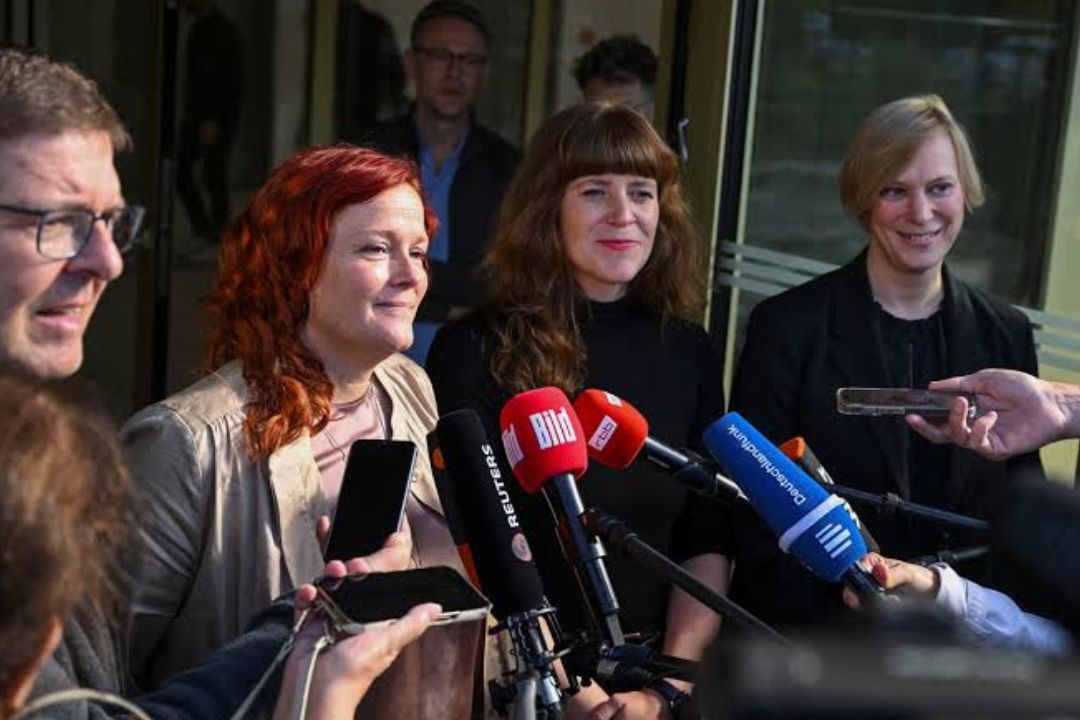
The historic election victory of Berlin’s Left Party in the state elections has caused a political earthquake in Germany. With 25.7 per cent of the vote, The Left became the largest party in the house of representatives of the Berlin state and, with 45 out of 153 MPs, forms the largest parliamentary group.
But what to do with this success? The party leadership in Berlin is determined to appoint the mayor and form the government of the city, which also has the status of a federal state in its own right. However, this is only possible if the party forms a coalition with two parties that lost ground in the election: the Greens (14.3 per cent = 25 members) and the SPD (12.1 per cent = 22 members). Such a government would have a clear majority of 95 seats, compared with 63 held by the CDU (33) and the AfD (29).
The price of forming a government
However, such a coalition is only possible for Die Linke if it distances itself from all the key pledges in its election manifesto and reduces these, ‘at best’, to non-binding declarations of intent. Even during the election campaign, the party leadership had taken care not to raise expectations too high, knowing full well that a post-election coalition would leave little of its promises intact.
Nevertheless, it was – and continues to be – associated with important social reforms. The most significant of these is undoubtedly the implementation of the 2021 (!) referendum to expropriate the large private housing developers in Berlin. 59.1 per cent of Berliners voted in favour of this. Since then, nothing has been implemented, neither by the state government comprising the SPD, the Greens and the Left Party (2021–2023) nor by the subsequent CDU–SPD coalition (2023–2026).
The SPD remains firmly resolved to support a new government only if there is no binding expropriation. Such a ‘solution’ is emerging following the preliminary exploratory talks. ‘Socialisation’ is promised – but legislation to this effect is not due to be in place until 2028. Nor are all housing corporations with more than 3,000 flats to be expropriated, but only those with more than 10,000. In addition, all flats built since 2021 are exempt. This reduces the number of flats to be expropriated by 70,000, from 220,000 to 150,000. Furthermore, the corporations now have two years to restructure their businesses and transfer flats to subcontractors. Moreover – and this is the most crucial point – the entire project is subject to funding being secured. In addition, the federal government, which also includes the SPD, is currently working on a bill intended to ban expropriation by state governments altogether!
At best, we will see a ‘light’ form of expropriation. And even that is uncertain. In the exploratory talks between Die Linke, the SPD and the Greens, socialisation is ultimately merely a declaration of intent, by no means a firm agreement. However, the leadership of Die Linke must present this pipe dream as a massive breakthrough, because hundreds of thousands of voters and thousands of new members expect the referendum result to finally be implemented.
Another hurdle will be the promise that there will be no cuts to social services. That in itself is an extremely defensive ‘demand’ – after all, billions would be needed for investment in universities, which are already having to close numerous buildings for safety reasons; billions would be needed for schools, for nurseries, for social services, for hospitals, for housing construction, for the accommodation of refugees, and for ecological renewal.
The preliminary exploratory paper, on the basis of which a coalition agreement is to be drawn up, contains not only numerous declarations of intent – couched in the subjunctive – to make the city more ecological, social and democratic, but also an agreement on spending cuts of 900 million euros in 2027 and 500 million in subsequent years. This shall be offset by potentially rising tax revenues, which in Germany come primarily from wage earners. Here, therefore, the working class is, at best, given back what is taken from it elsewhere. However, the police and the inner secret service of Berlin (Verfassungsschutz) are exempt from the cuts.
In reality, the next state government will not implement any social reforms; on the contrary, further cuts are on the cards. Berlin’s budget is heavily in debt. The so-called ‘debt brake’ prohibits the federal states from taking out further loans. Since the SPD and the Greens – as well as the leadership of The Left – are by no means prepared to do more than voice verbal protest against these requirements, they will have to implement cuts. Representatives of the right wing within The Left admitted as much long before the election, whilst the more left-wing government socialists prefer to remain silent on the matter.
Die Linke also promised that there would be no deportations. Indeed, during the election campaign, the lead candidate Elif Eralp correctly stated that ‘every deportation is one too many’. That is no longer even on the agenda. On the contrary. As state governments in Germany are obliged to implement federal laws, there will not only be deportations from BER Airport, but a new deportation centre is also due to be completed by 2029 as part of the GEAS scheme.
Finally, Die Linke promised to abolish Berlin’s secret service and to cut funding for the police, who are well known for their racism and attacks on solidarity with Palestine, school strikes, demonstrations against militarisation, environmental activists and many others. Incidentally, budget savings could also be made here. Yet Die Linke has already shelved this promise simply to be able to enter into exploratory talks for coalition negotiations at all.
All this clearly shows that a coalition government comprising Die Linke, the Greens and the SPD would be a government of mismanagement, which would, at best, bring about slightly less drastic cuts.
Palestine
But that is not all. The issue on which the dispute within the party – and also in federal politics – is coming to a head is solidarity with Palestine.
Die Linke has shifted further to the left on this issue in recent years. As recently as 12 October 2023, it voted in the German parliament in favour of a joint resolution by all parties – the SPD, CDU/CSU, the Greens, the FDP and even the AfD – in support of Israel. It affirmed its commitment to German national interests. This resolution also intensified the criminalisation of all Palestinian organisations and associations in Germany, which is still being repressively enforced by the police and the Office for the Protection of the Constitution (as the secret service is called in Germany) to this day.
Since then, Die Linke has distanced itself from this declaration, as well as from the IHRA’s definition of antisemitism. This is itself a result of the party’s growth to over 125,000 members, many of whom come from the solidarity movement with Palestine, as well as of the shift in public opinion among the German population, the majority of whom reject support for the genocide in Gaza and arms deliveries to Israel.
However, the party apparatus, particularly in Berlin (as in all East German regional associations), is heavily infiltrated by pro-Zionist forces. And the pragmatically-minded reformists, who are striving to form a government at almost any cost, are determined not to allow a coalition with the SPD and the Greens to be hindered in any way by international solidarity with Palestine or, indeed, the liberation struggle of an oppressed people.
To this end, they are prepared to sacrifice the forces within the party that show solidarity with Palestine. In doing so, the party leadership is, on the one hand, attempting to respond to the right-wing and bourgeois smear campaign against the threat of a government led by Die Linke. In Germany, the bourgeois media, the far-right AfD, the conservative CDU/CSU, and also the leaderships of the SPD and the Greens portray Die Linke Berlin as a party of runaway expropriators and ‘anti-Semites’ who want to establish either a socialist dictatorship or Islamist rule in the city. Instead of resolutely countering these absurd and ridiculous attacks, the leadership is attempting to appease the bourgeois public and is stabbing the solidarity movement with Palestine in the back.
Consequently, the Left Party’s negotiating team—which is effectively appointed and controlled by the executive board and the parliamentary group leadership in the House of Representatives— has agreed to a deal with the SPD and the Greens designed to marginalise pro-Palestinian comrades and solidarity with the resistance, and ideally to drive them out of the party.
As is customary in Germany, this reactionary, pro-imperialist policy is hypocritically presented as a ‘fight against anti-Semitism’ and as ‘protection of Jewish life’. Anti-Zionism is thus declared to be anti-Semitism, whilst Israel’s so-called ‘right to exist’ is elevated to a democratic-imperialist state doctrine. The expansion of the Office for the Protection of the Constitution and the police is thus presented as a means of protecting Jewish fellow citizens, whilst in reality it is about suppressing the solidarity movement and racially motivated surveillance of Arab and Muslim migrants. This agreement even grants the SPD and the Greens the right to demand investigations and disciplinary measures against members and party structures – such as anti-Zionist MPs or working groups like the LAG Palestine – thereby intervening in the internal affairs of Die Linke from the outside.
The leadership of Die Linke in Berlin agreed to all of this. The regional executive committee approved this agreement by a majority vote. All MPs are to be required in writing to recognise Israel’s right to exist. The left-wing MP from Neukölln, Vanessa ‘Vedi’ Emde, shall be expelled from the parliamentary group because she is (so far) the only MP to have publicly rejected this reactionary demand.
In doing so, the leadership of the Berlin Left is pursuing two objectives at once: firstly, to signal to the SPD and the Greens – and ultimately to the German bourgeoisie – that Die Linke poses no threat to the raison d’état, but rather stands firmly on the ground of bourgeois democracy, German law and German imperialism. To this end, the leadership of the Berlin party is even selling off its own reform promises. Whilst it is otherwise quite common in bourgeois politics to reiterate one’s own demands during coalition negotiations in order to secure as much as possible, Die Linke is acting like a discount retailer, selling off its own demands cheaply as if they were junk. Thus, the Greens and the SPD – who lost the election – are quite easily setting the tone for the talks, the preliminary exploratory discussions and the coalition negotiations, which are likely to begin in November. Meanwhile, the leadership of Berlin’s Die Linke is putting on a brave face.
And it is using the SPD’s and the Greens’ demands regarding Die Linke’s alleged anti-Semitism problem to crack down on its own unpopular comrades and entire district organisations. The traditional, established party apparatus, the pro-Zionist forces and the government socialists view the party’s enormous growth with mixed feelings, indeed with concern. Since 2024, Die Linke has more than doubled in size. Many of the new members – whether wage earners, students or school pupils – are young, female and supportive of the Palestinian cause. The party’s right wing, but also the centre, which is desperate to enter government, view these comrades with suspicion and fear, not without reason, that they might shift the party further to the left or become the basis of a left-wing opposition comprising thousands.
Consequently, they view the Neukölln district association – which campaigned for solidarity with Palestine during the election – and the LAG Palestine with suspicion, even open rejection. Key activists such as state parliament member Vanessa ‘Vedi’ Emde are being openly defamed and vilified, and there are calls to expel her from the parliamentary group.
The party leadership in Berlin is not only willingly acceding to demands from the SPD and the Greens to purge Die Linke; it also wants to get rid of unpopular comrades itself. In doing so, however, they face two problems. Firstly, comrades such as Vedi Emde won their constituencies by a comfortable margin (47 per cent) and are backed by strong local groups, the more left-wing section of the membership, and also many migrant and working-class voters. Secondly, not only do many grassroots members feel that the concessions made to the SPD and the Greens in Berlin go too far, but so do some members of the national leadership. Even if the Federal Executive Committee does not openly oppose the state leadership, it fears that too many concessions in Berlin – and a coalition without any tangible results – will, in the long run, do Die Linke more harm than good.
Consequently, the Berlin party executive also finds itself in a contradictory position. The majority of Die Linke’s voters (and, to some extent, those of the SPD and the Greens) want a Red-Green-Red coalition and do not want a return to a conservative-led government. This is likely also true of the majority of party members. But – unlike the party leadership – they do not want to govern at any cost, nor do they want their own comrades to be sacrificed or even expelled from the party for this purpose.
It is this contradiction that the Left within Die Linke – revolutionaries and all other opponents of a bourgeois coalition government with the SPD and the Greens – must address. They must explain why revolutionaries are fundamentally opposed to participating in a bourgeois government. But they must also convince large sections of the membership – which is itself reformist in its great majority – why it is necessary to reject this specific coalition and the sell-out to the SPD and the Greens.
In the campaign against a coalition, the left wing must explain very clearly to as large a section of the membership as possible why these compromises are flawed. To this end, clear minimum conditions must be formulated; without their fulfilment, any coalition must be rejected, as it would bring no improvements for wage earners. The network of various left-wing forces within the party – ‘Linke in der Linken’ (The Left within the Left) – in which comrades from the ‘Arbeiter:innenmacht’ group are also working, is in the process of organising such a ‘No’ campaign with as many forces from within the party as possible and in collaboration with [‘solid’], the youth organisation of Die Linke. This is particularly important because the membership of Berlin’s Die Linke must vote on any potential coalition agreement. A ‘No’ campaign must therefore make it clear that there must be no coalition without the expropriation of large corporations in the property market, without a halt to deportations, no coalition without an end to cuts to social services, education and healthcare, and without the lifting of restrictions on democratic rights – such as solidarity with Palestine – to name just a few of these ‘red lines’.
It remains to be seen whether a coalition will materialise at all, or whether it will fail during the negotiations – particularly on the part of the SPD. It is likely, however, that the party leaderships in Berlin will agree on an agreement. But in any case, the dispute over this will lead to a decisive polarisation within the party. Should a ballot be held amongst the members, this will also serve as a barometer of the balance of power within the party. Ideally, of course, there would be a majority against a coalition, but even a significant minority would provide a basis around which those on the left within Die Linke can and must organise. This means it is not enough simply to run a campaign against the coalition agreement; it is also a matter of the left-wing forces within Die Linke themselves forming an organised opposition – in Berlin and nationwide. This opposition would itself be an alliance of various forces, ranging from left-wing reformists to revolutionaries. And that means that the latter must combine the struggle to build such an opposition with the construction of a revolutionary wing within the opposition, which itself advocates a revolutionary programme and strategy as an alternative to all forms of reformism within Die Linke.