By Ali Hammoud
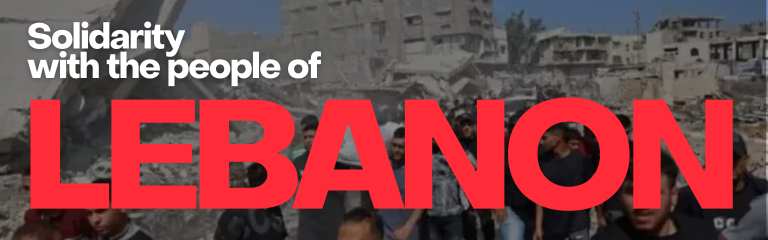
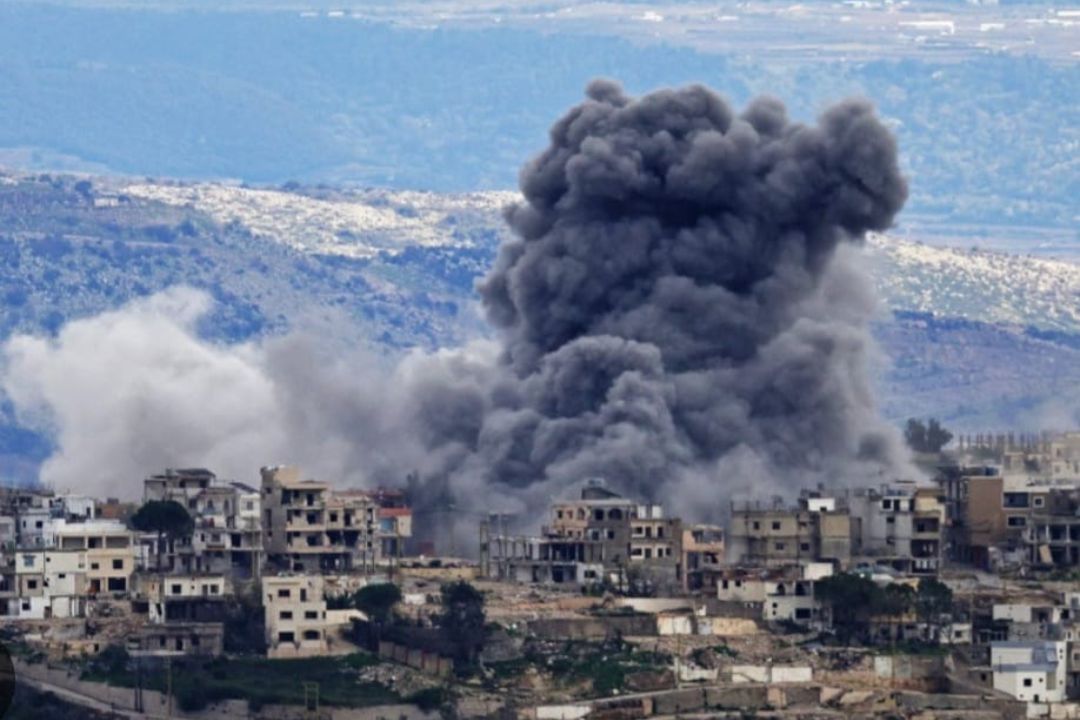
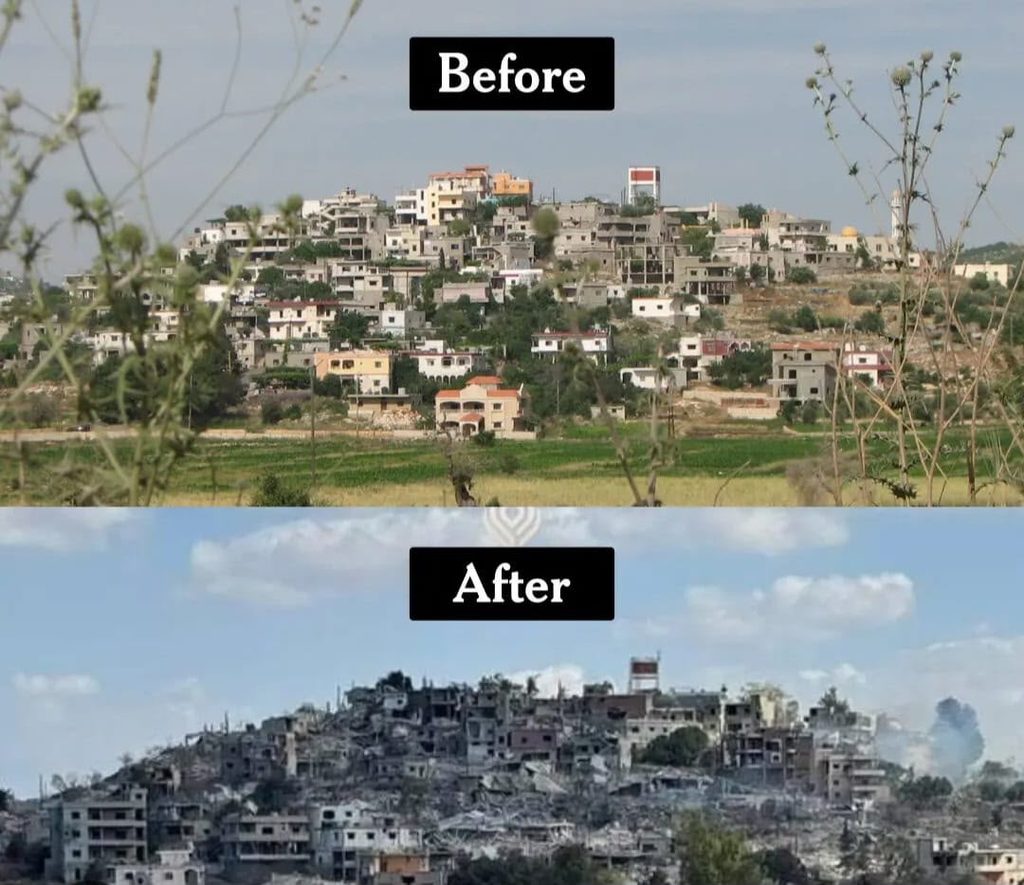
What is happening in southern Lebanon cannot be interpreted as a series of security breaches or isolated military incidents. We are facing an open conflict over the territory, sovereignty, and future of the region, against the backdrop of ongoing Israeli aggression and the continued occupation of parts of Lebanese territory, as well as an attempt to turn negotiations into a tool for reshaping the balance of power in favor of the occupation.
Nor can the South be separated from the broader context of the Arab struggle against Israeli occupation, nor from the imperialist struggle over the region, its resources, and its geopolitical position, nor from the U.S. war against Iran.
The Lebanese Ministry of Health announced on September 25, 2026, that the toll from the aggression since March 2 stood at 4,386 martyrs and 12,413 wounded, while the total toll since October 8, 2023, had reached 8,953 martyrs and 30,649 wounded. These are official figures that do not necessarily include all missing persons.
This is not simply a matter of statistics, but of the human toll of ongoing aggression: the ceasefire has not brought an end to the war, nor has it led to the end of the Israeli military presence on Lebanese territory.
One of the most dangerous developments at this stage is that the occupation itself has begun to be used as a bargaining chip. Rather than Israeli withdrawal being a direct consequence of the end of the aggression, it is now tied to political and security conditions and agreements.
The occupying force comes to the negotiations with military strength and a fait accompli on the ground that it seeks to turn into political gains, while the Lebanese authorities refuse to use the leverage at their disposal to strengthen their negotiating position—including the strength of the resistance. This raises the question: Are negotiations aimed at ending the occupation, or at agreeing on the conditions for its continued presence and the limits of its withdrawal?
In June 2026, the disastrous framework agreement was announced—the result of direct negotiations rejected by the majority of the Lebanese people—which links the ceasefire and Israeli redeployment to a series of political and security commitments and agreements.
The danger lies not only in the clauses themselves, but also in the political logic behind them: turning inalienable rights into a bargaining chip, as if the withdrawal from Lebanese territory were not an obligation of the occupying power, but rather a price through which it could demand political and security concessions.
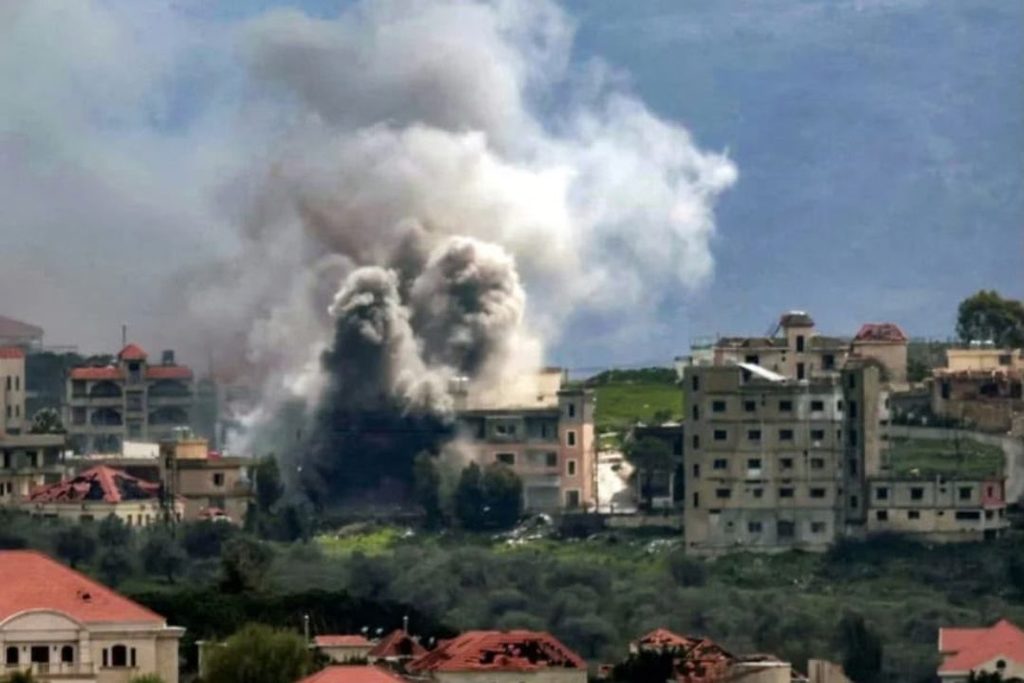
Resistance to the Logic of Occupation
In the face of the occupation, we do not limit our resistance solely to its military dimension. Resistance, in its popular and historical sense, is the refusal to accept the occupation as normal and to treat the land and the people as bargaining chips.
The conflict with the occupation is not merely a clash between armies on equal footing, but a struggle between a colonial project that has military strength and international support, and a people who cling to their right to land, freedom, and sovereignty.
Resistance to occupation is intertwined with resistance to imperialist hegemony, which forces the peoples of the region to pay the price for conflicts between the great powers and their interests.
Therefore, defending the South does not mean merely defending geographical borders, but also defending a people’s right to self-determination and rejecting efforts to turn Lebanon into a permanent arena for colonial and imperialist influence.
Israel Negotiates Under Fire
The enemy negotiates while continuing its military operations, so that negotiation becomes part of conflict management rather than an alternative to it.
The attacks and the military presence allow Israel to alter the facts on the ground and then return to the negotiating table to negotiate based on the facts it has itself created.
If it occupies a new position, its withdrawal from that position becomes a “concession.” If it destroys homes and infrastructure, reconstruction becomes part of the bargaining process. If it maintains its forces in strategic positions, its presence becomes a tool for exerting pressure. Thus, the occupation itself becomes an instrument for imposing the terms of the negotiation.
Time Management: The Silent Weapon of the Occupation
Time, in this context, is neither a technical nor a neutral factor.
Every day that the occupation continues on the ground allows new faits accomplis to take hold, and every month that direct negotiations continue without a complete withdrawal can transform a temporary occupation into a permanent political and security reality.
Keeping negotiations open, discussing a gradual withdrawal, and linking implementation to phases and security conditions are mechanisms that make it possible to prolong the occupation amid the ongoing conflicts in the region.
The history of Palestine, Lebanon, and the region has taught us how situations that are initially considered exceptional can become permanent structures when they are allowed to persist.
That is why it is not enough to ask ourselves: When will the occupation end?
We must also ask ourselves: What will happen on the ground before the withdrawal?
Israel’s continued control of positions in the south paves the way for consolidating a security zone, expanding the area under military control, and transforming strategic positions into permanent military posts.
UNIFIL and the Looming Vacuum
UNIFIL’s current mandate ends on December 31, 2026. Beginning on that date, a drawdown and withdrawal process will begin that will last for one year, until December 31, 2027.
This raises the question: Who will fill that void?
The danger lies in the fact that the international withdrawal could become an opportunity to expand Israeli control.
UNIFIL positions are not merely observation posts; some are fortified installations located in strategic locations. Therefore, any transfer of control over these positions to the occupying forces, should it occur, would amount to a continuation of the Israeli military presence under a new name.
That is why it must be made clear: the withdrawal of an international force cannot become a free reward for the occupation.
Land is not a bargaining chip
The occupied territory is not a bargaining chip that can be used to secure political concessions, and Israel’s withdrawal is not a privilege that Israel grants to Lebanon.
Resistance is a right in the face of occupation, and sovereignty is a right that is not subject to negotiation.
Lebanon cannot be protected by relying solely on international guarantees or shifting regional balances. Protecting the country requires a popular, political, and social force capable of resisting the consolidation of the occupation and confronting any attempt to normalize it.
From this perspective, resistance in its broadest sense also involves resisting policies of impoverishment and dependency that force the working classes to pay the price for wars and agreements, while major decisions are made based on the interests of the dominant powers.
No to Normalization Under Occupation
The end of the occupation cannot become a path toward normalizing relations with it.
Normalization does not begin solely with the opening of embassies or the signing of economic agreements; it can also begin when the occupying power comes to be regarded as a normal political actor or when security and economic relations with it become routine. Therefore, it is necessary to draw a clear distinction between ending the occupation and normalizing relations with it.
The South is part of the struggle of the region’s peoples against imperialism
Southern Lebanon cannot be separated from the Palestinian cause or from the broader conflict that the peoples of the region are waging against occupation and imperialist hegemony.
The defense of Lebanese territory goes hand in hand with the defense of the right of the Palestinian people and the Arab peoples to freedom and self-determination, free from occupation and foreign control.
True liberation cannot be built on the basis of political or economic dependence on imperialist powers. The independence and liberation of a territory are also linked to social emancipation and the right of the working classes to determine their own political and economic destiny.
The struggle is not solely about who controls the territory, but also about who decides its future and in whose interest its wealth and societies are managed.