By Yorick F.
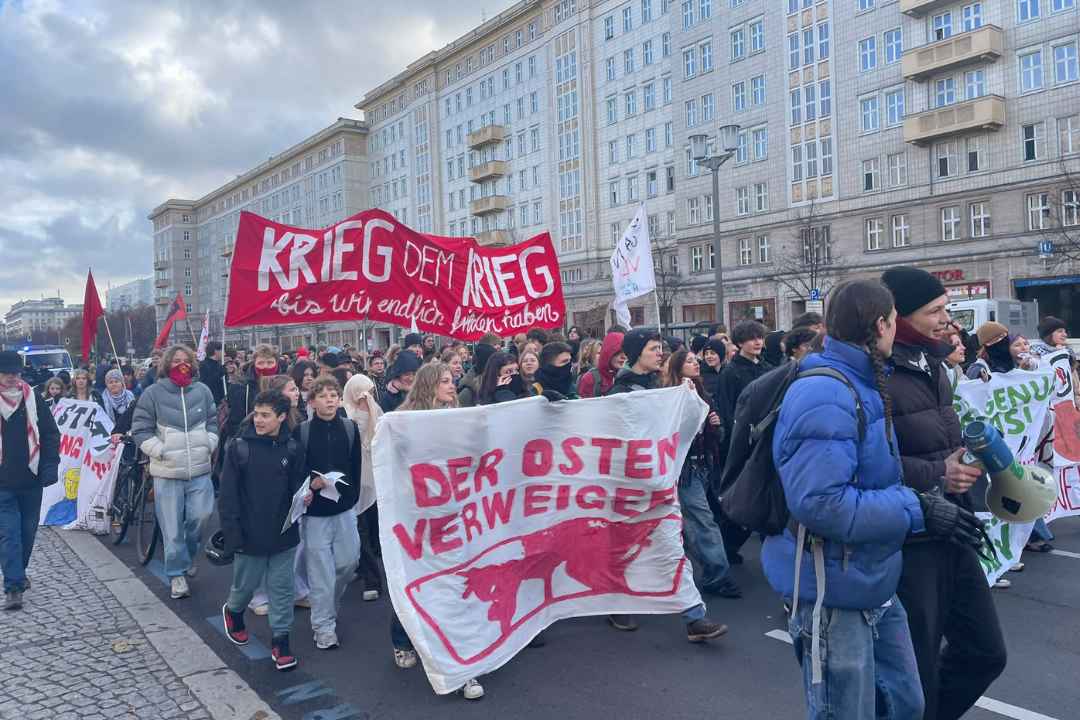
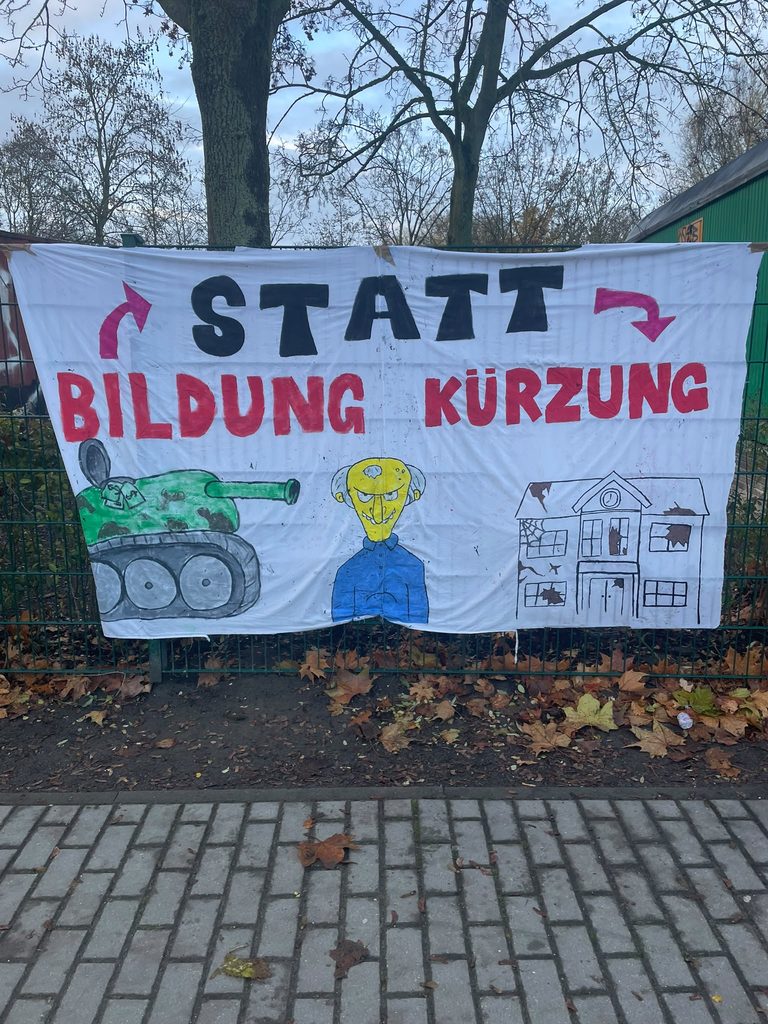
On November 20, around a million of young people across Europe and beyond took to the streets—in more than 25 countries and over 400 cities. As European sections of the ISL, we participated in the protests wherever we were on the ground, actively supported them, and put forward our perspective of a revolutionary solution as the only solution to the problems facing young people in Europe and globally.
A Step Forward?
On an international level, November 20 was undoubtedly a major step forward; no movement in recent years—not even Fridays for Future or the Palestinine Solidarity movement, upon whose foundations the current Gen Z movement was able to build—has managed to achieve this level of international coordination. We have always argued within these movements for national—and necessarily also international—structures to organize the movement and serve as a forum for important strategic debates, and it has become clear that this fundamental position is correct! The Youth Strike Alliance and the planning meeting in Paris passed their test on November 20: the breadth of support the movement was able to garner—not least thanks to the public platform provided by the Youth Strike Alliance, which is backed by various organizations—is outstanding. The fact that it succeeded in mobilizing over 25 countries in Europe and, beyond that, in sparking concrete solidarity actions in Rojava, Japan, South Africa, Argentina, and other countries is enormously important! At the international level, the movement is advancing through this structure; we, as young people of the International Socialist League in Europe and beyond, will continue to actively participate in this initiative!
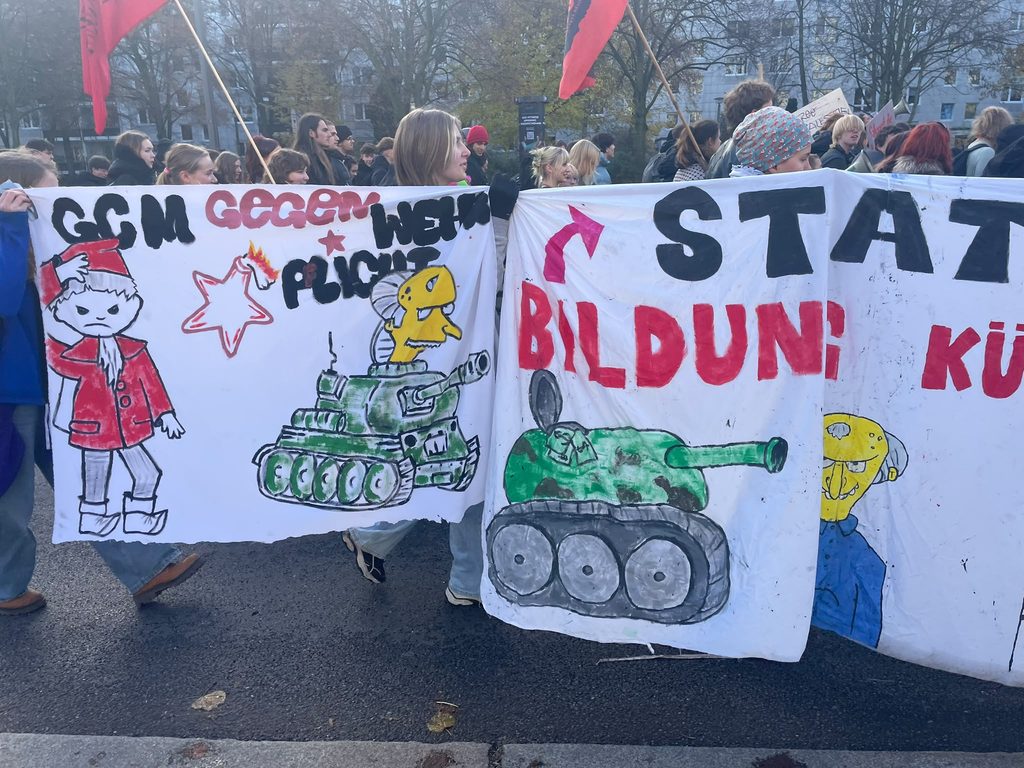
In some places, November 20 succeeded in picking up on the international momentum and carrying it forward: in countries such as Britain, the Netherlands, Croatia, the Czech Republic, and Romania—which had not yet been swept up in the wave of protests—some impressive actions took place. As already mentioned, the slogan “Fight for our Future, Not Their Wars” was also carried beyond European borders. This is extremely positive! At the same time, the November 20 protests failed to make any headway in most of the countries that had been the central battlegrounds of the struggles in recent months. In Germany, Spain, Belgium, and France, the protests in most cities were, at best, unchanged and, at worst, significantly smaller than at the end of October; in Spain, in particular, it was to be expected that the momentum of the historic general strike would not be replicated exactly. In the other countries, the Youth Strike must be viewed as an intermediate step; it was certainly observable in some places, however, that the protests—if not in their size, then at least in part in their radicalism and, through the International Manifesto of the Youth Strike, also in part in the clarity of their demands—were evolving. This was the case in Austria and at various locations in Germany; in both countries, the willingness to engage in mass militant actions against criminalization and police attacks—and in defense of the right to demonstrate—was more widespread than in the preceding weeks, albeit quite uncoordinated.
In general, it can be said that November 20 was a step in the right direction; even if, within the national context of some countries, progress amounted to little more than treading water, these were still necessary steps, since nothing harms the movement more than stagnation—so we must build on this.
What do we need to move forward?
In Italy, the CGIL, the largest Italian trade union federation, called for a general strike on November 20. Although this is a strong signal, the eve of the general strike was marked by concessions made by the leaderships of the CGIL and other trade union federations to the Meloni government. Our comrades in the PCL (Partito Comunista dei Lavoratori—Italian section of the ISL) summarize their position on the general strike in Italy and the demonstrations on November 20 in a leaflet as follows.
A fundamental change in the forms of struggle is necessary
Symbolic strikes and one-off demonstrations are not enough. We must work toward a sustained general strike, combined with the occupation of companies that lay off workers, pollute the environment, and violate union rights, and with the joint demand for their nationalization without compensation and under workers’ control.“
Not only is this a valid point, but it also raises the broader perspective for the Youth Strike Movement: In the actions surrounding November 20, we can only speak of a real strike in isolated cases. What we saw were magnificent demonstrations, some good initiatives that actually went on strike, and a call for general strikes in Italy, along with blockades and isolated occupations of schools and universities. The November 20 International Youth Strike was primarily a strike on a propagandistic level.
To translate the full breadth of the international momentum into the respective national contexts, we must not rely solely on the movement’s own momentum; we need solid structures at universities and schools that can sustain the movement, and we need structures that bring together existing local alliances and initiatives under the banner of the International Youth Strike and truly pull in the same direction.
We need strategic debates about goals and tactics at the international level; to this end, we propose an international strategy conference for the Youth Strike movement. However, these debates must also reach the streets—we must also have these discussions at the local level.
Under what demands?
In terms of content, the demands of the Youth Strike movement deserve the full support of revolutionaries. For years, it has been necessary to link demands against militarization, against budget cuts, against the dire state of education systems, and against war and genocide. What the Youth Strike alliance currently lacks—especially within Europe—is a critique of the EU as an imperialist project. While militarization and rearmament are addressed internationally, they are not practically conceived within an international framework: it is not simply a matter of acknowledging that most European countries are currently rearming, but rather of recognizing that, within the context of the EU as an imperialist project, its main actors—primarily France and Germany—are driving this process, and that rearmament is thus taking place within an intra-imperialist rivalry with Russia and China. The task for revolutionaries, therefore, is not simply to attack rearmament as such, but to challenge it as part of an imperialist project—which must also include pointing out the exploitation of semi-colonial states within the EU.
In this context, the EU’s military buildup must also be viewed within the framework of the massive fortification of the EU’s external borders and within the EU member states themselves. Both go hand in hand with a racist mobilization—not least in connection with the uprisings of recent weeks—as an attempt by the ruling class to both divide the movement and the working class around those protests and to find a racist justification to their repression. It remains essential to closely link the struggle against militarization with the struggle against racism and deportations.
After the youth strike must come the general strike!
Most importantly, this day of action must not be the last—and fortunately, that is not to be expected. However, without building a powerful, international movement with solid democratic structures, the movement risks getting bogged down and ultimately losing momentum. Such a loss of momentum would ultimately lead to defeats of catastrophic proportions and a mobilization of the far right, which is already attempting to resist the legitimate uprisings of the youth. Young people cannot ensure on their own that these attempts remain futile; this requires the organized working class. Examples of what such solidarity might look like have been shown to us, above all, by the events of November 11 in Spain, November 20 in Italy, and also by isolated instances of workers standing in solidarity with young people in France.
The question of the political strike—the general strike—is literally on the streets throughout Europe; it is up to us to raise it concretely, because it will not happen on its own! We need a concrete perspective
We need concrete links between youth protests and the organized working class—not merely as symbolic gestures but in joint struggle; not as isolated “radical” actions but as militancy that serves a purpose and is sustained by the movement; not as a misguided notion of “broad-based” unity that merely excludes the most radical forces in order to subordinate itself to the reformists but rather a genuine breadth in the form of a united front whose task is also to challenge these reformists and force them into an actual struggle for consistent demands—on a mass scale, militantly, and organized!
To achieve this, it is necessary to build a force that, in every country, is not only capable of demonstrating “international solidarity” but can also put internationalism into practice. We need—not in the future, but right now—an international organization of the working class, the youth, and all the oppressed that not only wages these struggles in parallel but views them as a single, common struggle and fights accordingly, and that is capable offering a political perspective at both the national and international levels. We are striving to build such a force: the International Socialist League. We view the building of a revolutionary international current not as a possible goal for the future, but as a necessary strategic goal in the here and now. The protests on November 20 demonstrate once again how timely and important this goal is. If you find our ideas meaningful, then join us—only together can we put an end to capitalism worldwide.
Jugend Zukunft Sozialismus! (Youth, Future, Socialism!, popular protest chant in Germany)