A new piece in the increasingly reactionary evolution of the Chinese capitalist regime
Alessio Ecoretti
Last March 12th, the Chinese government approved a controversial law, which will come into force in July and whose declared objective is to “strengthen social cohesion.”
The text itself is rather poor and betrays the reactionary nature of its ideologues: the preamble dwells on praise of the greatness and antiquity of the Chinese people, on its supposed unity (one might wonder why a law is needed to reinforce it, if it were so strong and deeply rooted), on “resistance to the invader,” and on the continuity of “Chinese civilization.” It even goes so far as to claim that all the country’s ethnic groups have aspired to this political unity (that of the imperial “greater China”? Not exactly what we would define as a model of socialism), ignoring a twentieth century marked by uprisings and independence revolts by the most significant minorities. It further ventures to assert that the Chinese Communist Party continues to combine Marxist theory on “ethnicities” with China’s specific conditions, without in the slightest addressing the substance of that theory or explaining the rationale behind a specific Chinese policy on the matter.
But the core issue is another, and it is necessary to give a brief glimpse of the 65 articles that make up this disgustingly reactionary law, coated in syrupy patriotism, anti-secession paranoia, anti-historical banalities, and a total lack of content even remotely linked to a class perspective. Citizens are required to preserve national unity (Article 10); the state must promote a common language and script, schools must do the same (but, it is said, to better “integrate youth and minorities,” certainly not to repress them [sure…]), documents written in minority languages must be accompanied by Mandarin translations, and institutions of all kinds are required to highlight the language of the majority (Article 15, which ends with a sneaky clause vaguely asserting protection of minority languages); schools must promote a strong sense of community of the Chinese people, especially through education (Article 16), and so on, in a repetition of provisions from article to article worthy of any bourgeois state.
But what is the situation of non-Han nationalities (those not belonging to the majority) within the Chinese state? Fifty-six ethnic groups (1) are officially recognized and, in many cases, enjoy different forms of autonomy. Although, from a legislative point of view, this situation is better than that of many European countries (for example, until some time ago, members of national minorities were officially exempt from the one-child policy, precisely as a protective measure), autonomous regions cannot be considered a credible substitute for what Soviet socialist republics were under the Leninist model of self-determination. Without the right to self-determination—which necessarily includes the possibility of separation and independence—we cannot speak of real autonomy for the peoples subjected to China.
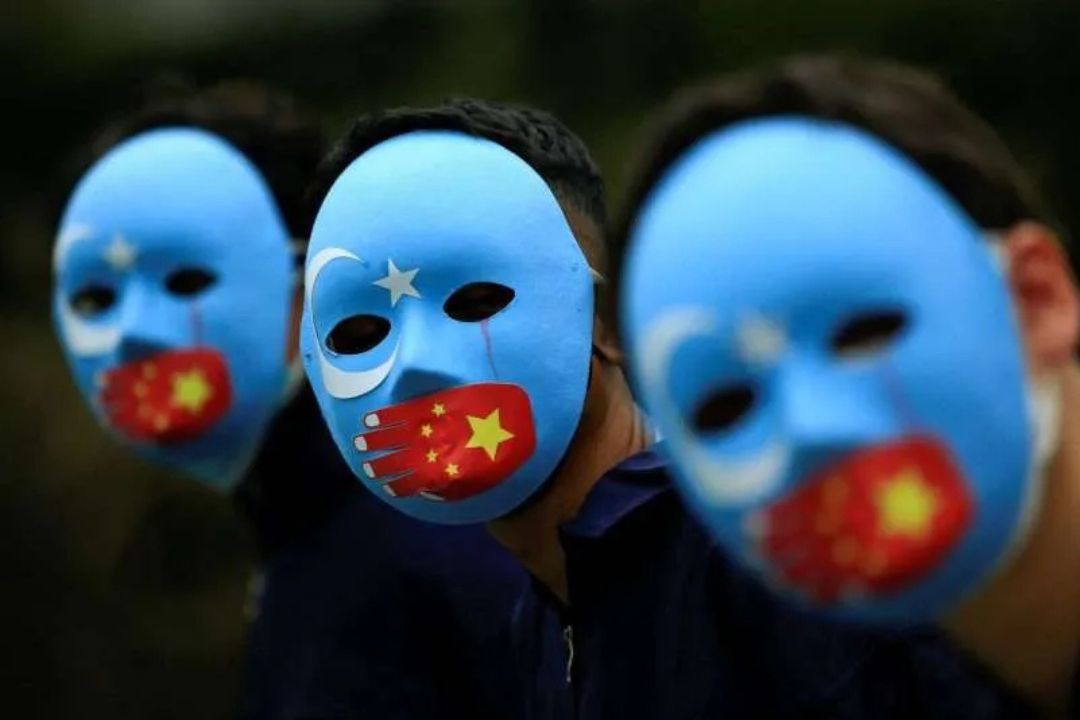
Not by chance, activists from the most politically active national groups (Uyghurs, Tibetans, Mongols) are systematically thrown into jail, and the process of sinicization of these regions is highly advanced, to the point that in the “autonomous regions” themselves there is a risk of seeing native populations reduced to a minority. This is counterbalanced by some forms of protection, generally rather weak, for these fifty-six ethnic groups, far from sufficient to offset the pressures of a politically and numerically much stronger population (to be fair, it would be appropriate also to open a debate on whether it is correct to define Mandarin, Min, Wu, Hunanese, Gan, Hakka, and Cantonese as belonging to the same nationality, as this could make the picture more fragmented than census narratives suggest).
Essentially, since its very beginnings the Chinese regime has preferred, instead of a genuine form of socialist federalism, the attribution of subordinate forms of autonomy (regions, prefectures, counties, and so on). But the two approaches are not comparable and have never placed national minorities on the same level as the Han majority, precisely because they are treated as peoples to be protected rather than as politically federated nationalities, endowed with institutions capable of representing and defending the specific interests of their proletariat. And this, regardless of the judgments on the nature of the Chinese regime, remains a deteriorating and destabilizing element until it is addressed in a way favorable to minority peoples—namely by granting them the status of states associated with the People’s Republic of China, with the aim of building an Asian Socialist Federation or achieving the full political separation.
Moreover, autonomous regions are few compared to the number of populations present within the State (Tibet, Xinjiang/Uyghur, Inner Mongolia, Guangxi, and Ningxia; it is worth noting that they do not even have their own specific flags), while smaller autonomous institutional entities are numerous. It is reasonable to suspect that the very existence of these autonomous regions is the result of intense popular struggles for self-determination, both before and after annexation by the Chinese Stalinists, who in the 1940s did not hesitate to occupy and destroy the Inner Mongolia People’s Republic and the Second East Turkestan Republic, at the time independent socialist states. How one can justify the occupation of independent states—effectively reproducing the territorial extension of imperial China—from a Marxist perspective remains a mystery. Not surprisingly, Chinese pseudo-communism has had to resort to historical reconstructions that are essentially nationalist, if not openly imperialist, to legitimize these annexations.
These choices have helped fuel anti-communism among the affected peoples, providing new arguments to reactionary parties and movements which, paradoxically, have been able to denounce Chinese colonialism (it is significant that in Tibet reforms in favor of the popular classes were implemented only after the 1956–59 rebellion and not immediately after annexation in 1949). It should also be noted that since 2020 the leadership of the National Ethnic Affairs Commission has been entrusted to a member of the Han majority, in line with the nationalist direction promoted by Xi Jinping and with the chauvinist political choices expressing the so-called “Chinese Dream.”
The absence of separate political entities also exposes minorities to the constant risk of hostility and waves of chauvinistic anger from the majority. During the much-celebrated Cultural Revolution, for example, numerous cadres in the Inner Mongolia Autonomous Region were purged, even physically, and the Mongolian population was subjected to intense and aggressive repression aimed at eradicating “anti-party” tendencies and “separatism” (1967–1969). Moreover, racism has by no means disappeared in contemporary China: minorities and migrants continue to be its main victims.
For some of these populations, assimilationist policies represent an even more serious affront in light of their decisive contribution—in terms of human resources and blood—to revolutionary movements in China (not that its absence would justify Beijing’s chauvinism and internal colonialism), and the country’s social gains have also been achieved thanks to their mass struggles. Today, however, they are labeled as “ethnic minorities” forming part of a larger “Chinese nation.” Beyond possible linguistic ambiguities, there is a clear desire to rehash the fact that China is only China, denying the true plurinational identity of the state.
The prospects of self-determination and international brotherhood once upheld by the Tibetan Communist Party, the East Turkestan Revolutionary Party, and the Inner Mongolian People’s Revolutionary Party have been largely betrayed and are once again brutally denied today (and this serves as a warning to those communists, or so-called communists, who from either the right or the left deny any importance to the national question, which according to certain theorists has an expiration date; communists who evidently have not experienced the linguistic and cultural repression affecting hundreds of non-independent nations worldwide). The leaders of these parties (such as Phuntsok Wangyal, who out of party loyalty had moderated demands concerning Tibetan self-determination), “integrated” into the Chinese party after 1949, were subjected to severe repression by Chinese Stalinism, both physically and ideologically (especially in Uyghur territory, where pro-Soviet groups operated until the late 1960s, such as the United Revolutionary Front of East Turkestan and the East Turkestan People’s Revolutionary Party).
The Chinese state should therefore be harshly criticized for its betrayal of internationalist Marxist principles, yet it is superficially celebrated by campist Left currents, which remain silent in the face of the systematic and unscrupulous repression of any tendency to the left of the faded red of the Chinese Communist Party—such as the Zhi Xian Party (or “Constitutionalist,” advocating a return to the Maoist model), the Maoist Communist Party of China (also opposed to capitalist restoration in favor of a naïve “true Maoism”), left-wing youth groups active in labor rights struggles and anti-corruption movements (notably in Shenzhen’s Jasic factory), the Marxist Society of Peking University (whose repression demonstrated how much CCP bureaucrats fear the actual application of Marxism or any concrete debate on it), and Trotskyist groups (currently mainly in Hong Kong but with notable precursors such as Chen Duxiu, Chen Qichang, and Chen Bilan). But ultimately there is little to expected from those elements of the Left who rightly get heated when when they passionately discuss about Native Americans (often as if they were extinct rather than living subjects engaged in national, ecological, and class struggles) but are somewhat distracted when it comes to recognizing that the precursors of some of their favored regimes have essentially committed similar crimes; such people should be reminded that “double standards” belong to bourgeois hypocrisy and reactionaries, and that an indigenous critique from a militant socialist perspective applies equally to the United States, China, Russia, European states, and Brazil.
This law will not bring an end to the cycle of national struggles in the People’s Republic of China, nor will it “integrate” non-Han nationalities. Despite the fiercely repressive nature of the Chinese regime, significant and recurring minority protests have erupted over the past twenty years: in Uygur in 2008, 2009, and 2013; in Tibet in 2008, 2010, and 2012; in Inner Mongolia in 2011 and 2020 (the latter sparked precisely by the curricular replacement of Mongolian with Mandarin). Protests over language policy have even occurred in Canton and Hong Kong in 2010, when the population overwhelmingly rejected proposals to increase Mandarin media presence at the expense of Cantonese.
There is an alternative to this further criminal step toward a “non-violent genocide.” Marxist theory and practice have developed very clear positions over time on oppressed nationalities. Restrictions on the use of minority languages, the imposition of dominant languages, the obligation to provide translations into the majority language, treating minorities as “branches and leaves” stemming from a single “trunk” (in Xi Jinping’s words), and the obsession with “national” unity have nothing to do with Marxism. For the proletariat, it matters little whether a territory has been subject to one empire or another for 10, 100, or 1,000 years; whether a nation has been oppressed for centuries or mere decades changes nothing—the objective remains the same: that nation must be liberated.
(1) Generally speaking, we are talking about Zhuang, Uyghurs, Tibetans, Mongols, Manchus, Hmong, Yi, Tujia, Bouyei, Dong, Yao, Bai, Hani, Koreans, Li, Kazakhs, Dai, Lisu, She, Dongxiang, Gelao, Lahu, Sui, Wa, Nakhi, Qiang, Monguor, Mulao, Kyrgyz, Sibe, Salar, Jingpo, Daur, Blang, Maonan, Tajiks (although, to be precise, they are populations belonging to different Pamiri groups), Achang, Pumi, Nu, Evenkis, Gin, Bonan, Ta’ang, Russians, Tatars, Vietnamese, Yugurs, Uzbeks, Monpa, Oroqen, Derung, Hezhen/Nanai, Lhoba, to which the Chinese government also adds the Taiwanese aborigines and the Hui. The latter, despite even having an autonomous region, have their main distinguishing feature from the dominant nationality in their religion (they are Muslims). Disputes persist over whether some groups are ethnically diverse and are not legally recognized, such as the Lingao, Waxiang, Gyalrong, Mosuo, Äynu (not to be confused with the almost homonymous population of the island of Hokkaido), Caijia, Mojia, Baima, Khmu, Utsuls, Akha, Altaians, Ryukyuans, Tuvans, Bugan, Buyang, Mishmi, Bolyu, Hu, Fuyu Kyrgyz, Manmi, Kangjia, Mảng, Qabiao, and Ili.
https://www.chinalawtranslate.com/en/ethnic-unity-and-progress-law
https://www.internazionale.it/ultime-notizie/2026/03/12/cina-approva-legge-unita-etnica