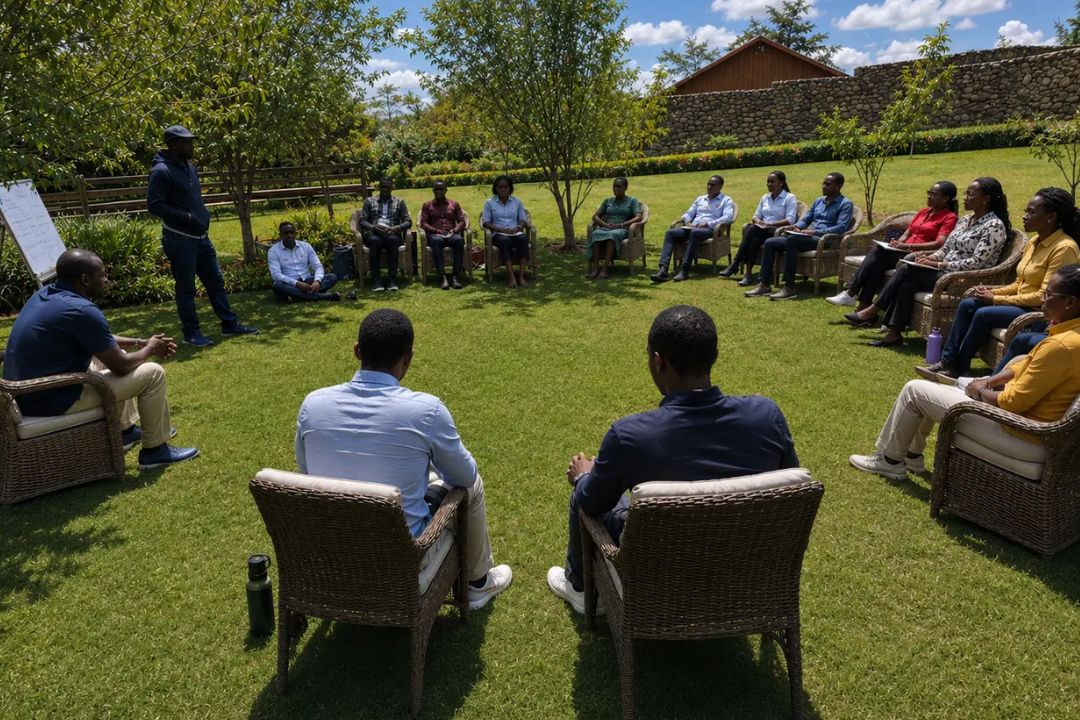
From 20 to 22 July, on the dry plains outside Kajiado town, the Permanent Revolutionary Congress held its first Marxist School of the year. Three days of study, debate and collective assessment brought together comrades recruited over the last twelve months, from Nairobi’s estates and industrial areas, from Machakos, Nakuru, Kisumu, Mombasa and Kajiado itself. At the closing session on Sunday afternoon, eighteen comrades were confirmed as full members of the PRC. They arrived as contacts and recruits of a year of struggle. They left as cadre.

Why a school, and why now
The past year has been one of accumulation for our organization. The uprisings that shook the country did not produce a finished revolutionary party; they produced a generation of fighters looking for one. Dozens of young workers, students, riders, nurses, hawkers and casual labourers came into contact with the PRC through pickets, campus meetings, tenant organizing and the work of our Women’s Commission. Recruitment, however, is only the first act. A revolutionary organization is not measured by the number of names on its lists but by the number of comrades capable of orienting themselves politically when the leadership is not in the room.
That is what the Kajiado school was built to test and to build. Our tradition has always insisted that theory is not an ornament worn by an organization for respectability. It is the condensed experience of the international working class, the memory of its victories and, more instructively, of its defeats. A cadre who has not studied those defeats will repeat them at the first turn of events.
The programme of study
The school opened on Saturday morning with a session on the world situation: the crisis of the capitalist order, inter-imperialist rivalry over African resources, the debt regime administered through the IMF, and the wave of uprisings from the Sahel to South Asia. Comrades were asked not merely to absorb an analysis but to test it against what they see in their own workplaces and neighbourhoods, the collapse of real wages, the informalization of work, the militarization of policing.
The second session took up the theory of permanent revolution, the political spine of our organization. The discussion turned on the concrete question that every Kenyan militant faces: can the tasks left unfinished by independence, the land question, genuine democracy, national sovereignty, industrialization, be completed under the leadership of the national bourgeoisie? The history of sixty years answers plainly. Every faction of the Kenyan ruling class is bound by a thousand threads to imperialism and to the colonial land settlement it inherited. The democratic tasks can be completed only by the working class taking power at the head of the poor peasantry, the youth and the urban poor, and only by carrying that revolution beyond national borders.
Saturday evening was given to the state and revolution: the police, the courts, the army and the parliamentary theatre that dresses them. Comrades who had been beaten, teargassed or abducted spoke about what they had learned about the state with their own bodies. The theoretical session gained an authority no lecture could have supplied.
Sunday morning was devoted to organization: the transitional method, how demands are formulated so that they begin from the consciousness of the masses and lead toward the question of power; the tasks of a branch; democratic centralism as a discipline of collective decision and collective action rather than a formula for silence; the role of the Women’s Commission and the fight against the sexism reproduced inside the movement itself; and the practical work of building rank-and-file committees where the trade union bureaucracy refuses to move.
Method: study as collective labour
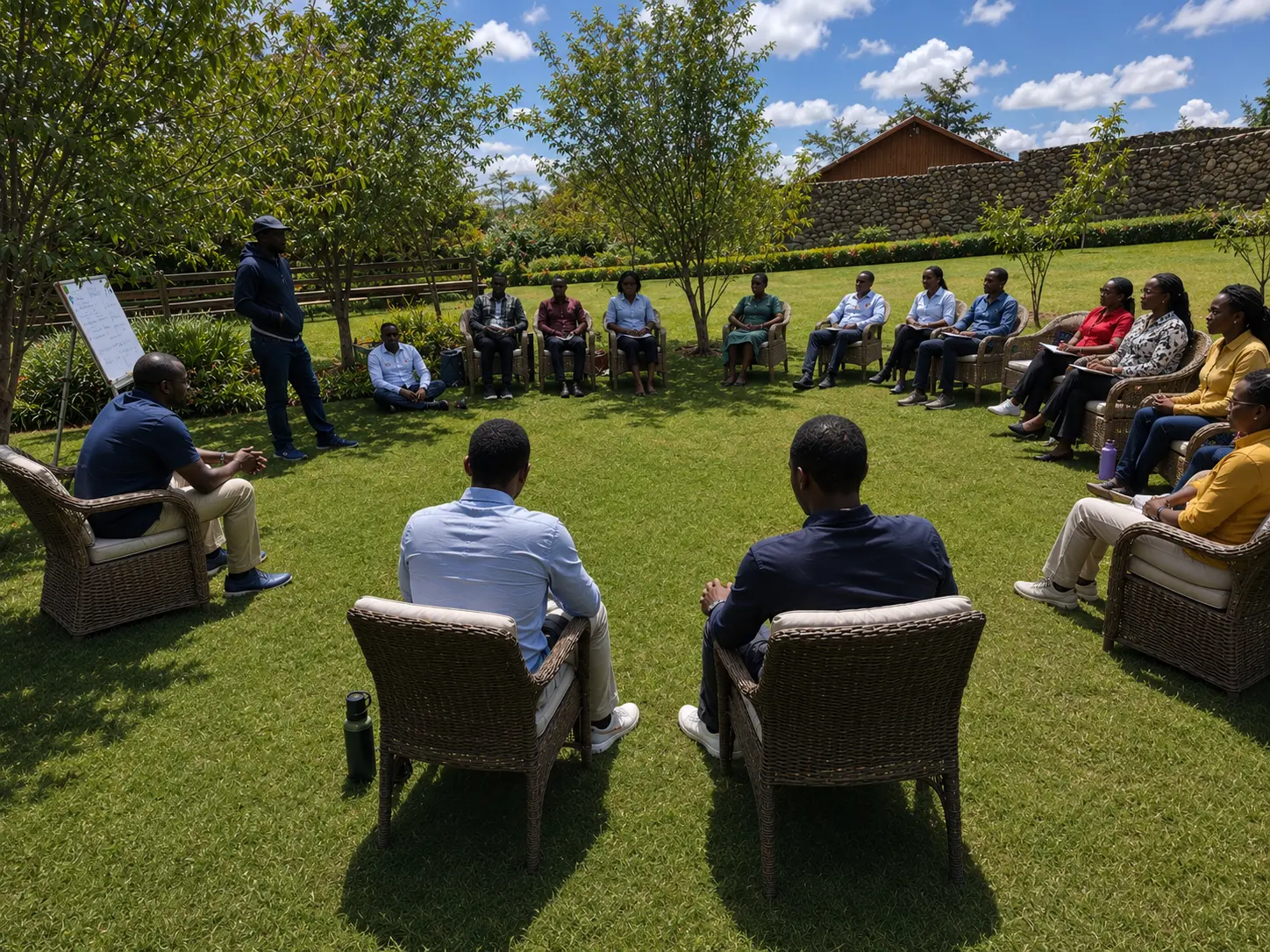
The school was not a series of lectures. Each session opened with a short introduction, then broke into commissions of five or six comrades working through a prepared reading, and closed in plenary where every commission reported. Comrades who had never spoken in a formal meeting before found themselves reporting to the whole school. That was deliberate. An organization that concentrates speech in a handful of experienced comrades produces a passive membership, and a passive membership cannot lead a revolution.
Political economy was taught through the pay slips, rent receipts and boda boda earnings that comrades brought with them. Surplus value was not an abstraction on a blackboard; it was calculated from the daily takings of a rider in Kayole and the wage bill of a warehouse in Athi River.
Eighteen full members
Membership in the PRC is not conferred by attendance. Each of the eighteen comrades had spent months in practical work, building meetings, selling and distributing our material, participating in campaigns, taking responsibility in a branch. The school was the political culmination of that period, and the confirmation of full membership was voted in plenary after the comrades presented their own assessments of the year’s work and their proposed tasks for the coming period.
Eighteen new full members means new branch responsibilities, new points of intervention, and new comrades capable of running study circles for the next layer of recruits. Several will take up work in the Women’s Commission; others will lead workplace and transport-sector committees.
The tasks ahead
The school closed with a discussion of the coming period: the cost-of-living crisis, the continuing repression, the fights already underway in the health and education sectors, and the preparation of the next national gathering of the organization. A second Marxist School is scheduled before the end of the year, and every branch was tasked with running weekly study circles in the interim.
Kajiado was a small event measured against the scale of what must be built. But revolutionary organizations are built exactly this way, comrade by comrade, argument by argument, cadre by cadre. Eighteen more comrades now stand in the ranks of the Permanent Revolutionary Congress. Come and join them.