.
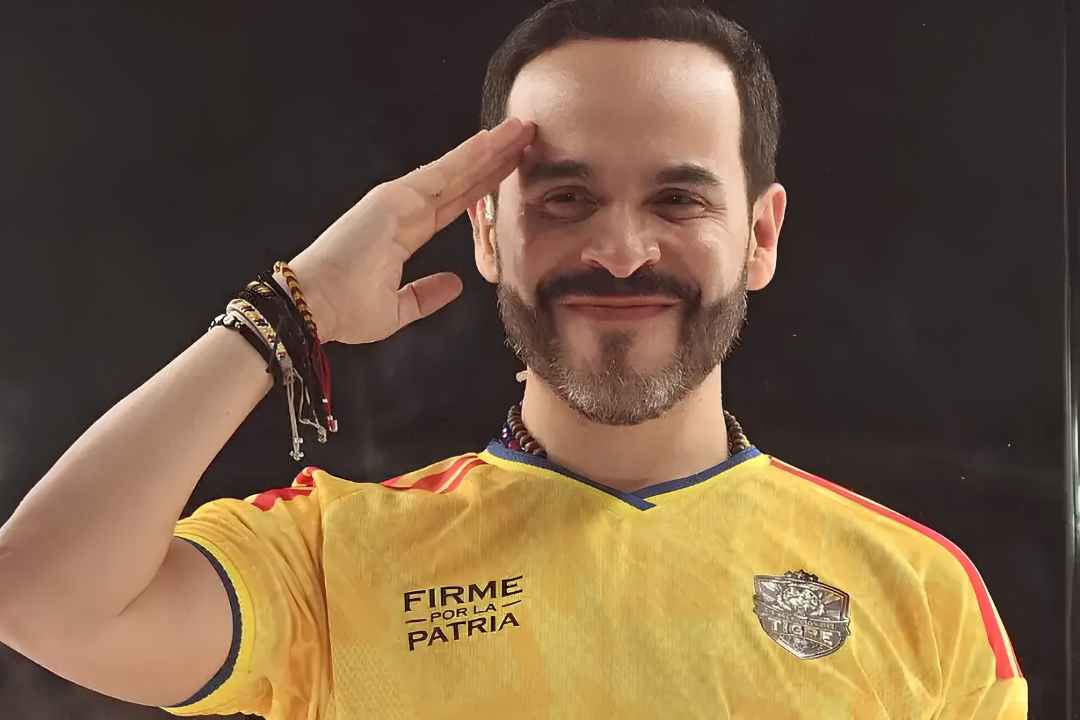
A very small percentage difference separated Abelardo de la Espriella from Iván Cepeda, according to data from the Registrar’s Office on the night of June 21. The 250,830 votes by which Cepeda lost—who received 12,708,719 (48.70%) according to the preliminary count, represent a 0.96% difference compared to De la Espriella’s 12,959,542 (49.66%).[1]This margin is smaller than the total number of blank ballots (426,848, 1.63%), unmarked ballots (29,499, 0.11%), and invalid ballots (220,763, 0.83%). The 63.60% voter turnout represents a significant increase compared to the first round (57.88%).
As had been announced earlier, both the President of the Republic and candidate Cepeda questioned these figures, stating that they would only “accept” the results determined by the judges conducting the vote count—which is the process that provides the legal basis for determining the winner of an election in Colombia.
A massive fraud?
Allegations of fraud spread as fast as social media. In some cases, they took the form of small demonstrations and youth protests. Former candidate Cepeda announced that he would file challenges (following legal procedures) at 33,000 polling stations (approximately 28% of the total). In a subsequent speech, he stated that there would be more than 55,000 challenges due to various irregularities.
According to the Registrar’s Office, the vote-counting process at the municipal level has been completed. The departmental and national vote counts will consolidate the results in just a few days. The irregularities identified so far, according to information from a wide variety of sources, are minor and have virtually no impact on the preliminary count data; most of them have already been resolved.
Nowhere is there any conclusive evidence of fraud on such a scale as to support the claim that Cepeda was robbed of his victory. This is a very different situation from that of 1970, when the administration of Carlos Lleras Restrepo manipulated the results to declare Misael Pastrana Borrero the winner, disregarding the will of the people, who had elected former General Gustavo Rojas Pinilla.
At this point, regardless of whether one campaign or the other continues to push a narrative of irregularities or anomalies of various kinds, it is a fact that Abelardo de la Espriella will be declared president-elect by the electoral authority. And that this proclamation will be recognized by all institutions of the political system (Supreme Court, Constitutional Court, Congress, Council of State, etc.). In fact, he has already been recognized as such (which is not surprising, given the political nature of his campaign) by several governments, including that of the United States, whose president openly and brazenly intervened in the campaign in favor of De la Espriella.
It is almost certain that the Historic Pact, the now-elected Senator Cepeda (who was defeated in the runoff), and especially President Gustavo Petro will continue to promote a narrative of irregularities, anomalies, and complaints, but they will eventually—albeit reluctantly—recognize the new president. Several of their allies have already done so, and they tacitly indicate this in their posts on X.
The narrative of fraud and irregularities—which generally has some basis in truth given the undemocratic nature of the Colombian electoral system, though in this case it was not the decisive factor—seeks, fundamentally, to cushion the political blow suffered, which, while not devastating, does profoundly affect the strategy of so-called progressivism. That strategy was to retain executive power for another four years. The entire government apparatus controlled by Petro—with Petro himself serving as the de facto head of Cepeda’s campaign and several key officials—was mobilized in support of this strategy, a move that has been heavily criticized. Now a profound change is set to take place. One of the regime’s greatest powers—the government—is now passing into the hands of opposing political forces, whose policies differ substantially from those that held sway during the previous four years. We are witnessing a profound political shift.
What’s coming up next?
Right now, we are in the midst of a flood of analyses, interpretations, and explanations regarding the reasons for victory and defeat, the mistakes and successes of each campaign, negotiations on how the new government will be formed, the overall results and those in each municipality and city, and so on. This phase will pass quickly.
Next will come the transition from one government to another. It won’t be easy. There will be storms, struggles, and threats. But the process will almost certainly culminate with Petro leaving the Casa de Nariño without handing over the keys to the new occupant. Cepeda, meanwhile, will take his seat in the Senate on July 20—a seat he has held for many years thanks to his uncompromising denunciations of the most reactionary and repressive aspects of the political regime, while fighting for its peaceful and negotiated transformation and reform. A vain illusion?
The Historic Pact, all of its top leaders, and hundreds of activists who have served as government officials over the past four years will begin to readjust to the new reality. A “new broom” is coming, one that will sweep away every bureaucratic position where it can make changes to install its own supporters.
The New Reality
And so we will arrive at August 7, when—in a ceremony very different from the one held four years ago—Abelardo De la Espriella will be sworn in as the country’s president. There will be no sword of Bolívar, no hat of Carlos Pizarro, and no M-19 flags.
A period of decrees, resolutions, and legislative proposals will begin, the vast majority of which will involve cuts or the outright elimination of the gains and rights of broad segments of the working class, as well as the popular sectors, peasants, and indigenous peoples. The new government will change the course of a great many public policies. It will set a course toward the unconditional defense of the interests of the big bourgeoisie and imperialism, especially U.S. imperialism.
It is true that, as a result of the popular struggle of years past that led to the political crisis of the traditional bourgeoisie and its parties, the Petro administration had, in our view, slightly altered that course and had attempted to “balance” the burdens. It was a government of timid reforms, since its strategy—which defended the fundamental aspects of the country’s capitalist structure—did not allow for more; just as it has not allowed for more in any of the so-called progressive governments in Latin America.
But this change of course will lead to profound, significant clashes. No one willingly accepts having what they consider theirs forcibly taken away. And Abelardo won’t have it easy. The“outsider”isactuallyan“insider,”since he represents the same economic, political, and social interests as the old political establishment from which he is trying to distinguish himself. Just as he was backed by that establishment during his election, he will negotiate with it in Congress to achieve so-called “governability.”
And the Historic Pact, which on the institutional front will be leading the fight and opposition against that government, cannot sit idly by. To do so would be political suicide. Many are already beginning to look ahead to the 2027 mayoral and gubernatorial elections and toward 2030—for “the rematch.”
The next four years will be marked by intense political activity and confrontation, possibly accompanied by widespread direct mobilization against the new government’s policies and actions.
What should I do?
From a revolutionary standpoint—without endorsing Iván Cepeda’s platform—we support him by calling on people to vote for him against Abelardo. However, the revolutionary strategy does not aim to exploit the social struggle to channel it into the electoral arena; that is, in fact, the strategy of the leadership of the Pacto Histórico.
We must chart a radical and different course. While we will fight in a united front against all measures of the new government that are harmful to workers, we will make it clear that our goal is not the mayoral and gubernatorial elections or “regaining power” in 2030. Our goal is for the organized, mass struggle and mobilization of thousands to bring down the new government’s measures—and the government itself.
Our perspective is to take advantage of the intense social and political confrontation that will arise to advance the construction of an instrument necessary for confronting and defeating any bourgeois state government and the bourgeois state itself: a revolutionary party that, armed with a program not of reform but of social revolution, positions itself as the leadership of the struggles of millions—not by directing them to become part of the institutions of that bourgeois state, which guarantees the continuity of capitalist exploitation, but toward its destruction. In service of this task, we propose to advance the building and development of¡Unidad obrera y socialista – UNÍOS!
Luis García R.
Medellín
June 23, 2026
[1](Data taken from:2026 Presidential Elections of the Republic | Votes for Political Parties).