By: Gustavo Martínez Rubio, Marea Socialista-Venezuela
The character of a government is never defined by the flamboyance of its speeches, the stridency of its rhetoric, or the style of its attire; it is defined, strictly speaking, by its specific policies and by the social class it chooses to serve.
In Colombia, the political debate has been hijacked for years by the specter of “Castro-Chavism.” Ever since the campaign that brought Gustavo Petro to the presidency, traditional sectors of Colombian politics have resorted to systematic scare tactics, claiming that the country would be headed toward a disaster identical to Venezuela’s, on the grounds that the Pacto Histórico candidate was a socialist or communist aligned with Nicolás Maduro. At this point in history, one would have to be extremely naive to continue believing that narrative. Petro has proven himself to be a capable leader within the capitalist framework, while Maduro, for his part, has come to embody one of the worst and most predatory faces of that same system in the region.
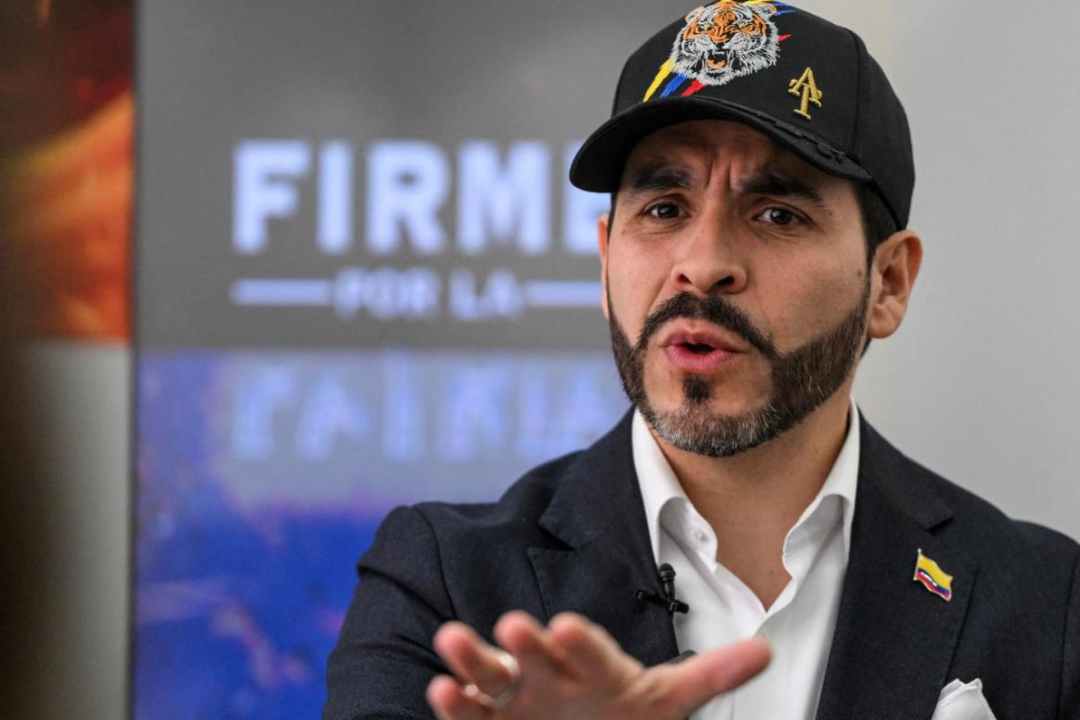
Today, on the eve of a crucial presidential runoff in Colombia, a segment of the electorate continues to believe that, in order to “save the country” from a Venezuelan-style fate, Abelardo de La Espriella is the only viable option. This narrative, constructed with millions spent on political marketing by deeply reactionary and anti-democratic sectors, is sustained by a lack of genuine debate. The dominance of the mainstream media and the lack of genuine democratic spaces prevent people from seeing the contradiction: it is precisely De La Espriella—and the agenda he represents—who most closely resembles the harsh reality currently endured by the Venezuelan people.
Under the guise of an outsider or a successful businessman who “doesn’t get involved in politics,” De La Espriella promotes the most aggressive expansion of a far-right model designed to benefit exclusively the owners of big capital, further destabilizing the working class. When examining his proposals, the parallels with today’s Venezuela become clear.
1. Governing Like a Business and the Myth of Economic “Trickle-Down”
Candidate De La Espriella’s platform is to manage the government using the logic of a private business, subjecting fundamental social rights (health care, education, pensions) to the criterion of financial profitability.
In Venezuela, this is already established doctrine. Behind the PSUV’s official rhetoric about the “economic blockade” and other such ploys, thing is that the Venezuelan government has for years been implementing a “prosperity” program that is nothing more than brutal fiscal austerity. Just as De La Espriella’s proposal to cut corporate taxes is based on the old and failed “trickle-down” theory (the notion that tax breaks for the wealthy create jobs), the Miraflores Palace has granted massive tax exemptions to business owners and foreign capital without this translating into decent jobs. Meanwhile, the Maduro leadership justifies the wage freeze by cynically arguing that “there’s nowhere to get the money from.” The fiscal deficit in Venezuela is paid for by workers, who prop up the state with starvation wages and bonuses that have no legal standing.
2. Structural Austerity and Covert Privatization
De La Espriella has proudly announced a fiscal cut of around 70 billion pesos, which includes the elimination of agencies and the merger of ministries. In practice, this means mass layoffs in the public sector, the dismantling of labor oversight, and leaving workers defenseless against employer abuse.
Although the pro-U.S. government now headed by Delcy Rodríguez formally denies this to save face, here in Venezuela an identical restructuring plan is underway (currently led by figures such as Héctor Rodríguez as part of the state restructuring) that calls for the elimination of ministries and public entities. In Venezuela, labor rights were effectively swept away by Memorandum 2792 and the ONAPRE directive, leaving workers at the mercy of employer abuse. The covert privatization proposed by De La Espriella is already in effect in Venezuelan hospitals: formal medical care may be free, but patients must pay for everything—from cotton swabs to surgeons—out of their own pockets.
3. “Democratic Security 2.0”: Militarization Against Social Conflict
The “heavy-handed” approach and the construction of mega-prisons promoted by candidate De La Espriella are nothing more than the criminalization of protest and poverty. Colombia’s history shows that these hyper-militarized models end up being used to crush workers’ strikes, peasant protests, and popular movements. Furthermore, the human cost always falls on the impoverished youth of the outlying neighborhoods, while leaving the “white-collar” mafias and the financial structures that profit from violence untouched.
In Venezuela, the implementation of this punitive policy has been one of the most painful chapters for the population. Under the pretext of security and stability, the state apparatus carries out neighborhood raids, has imprisoned countless union members and workers in recent years for protesting, and has committed countless human rights violations under the protection of a justice system that is entirely complicit.
4. Education and Health as Commodities
In the face of the persistent crisis in social systems, De La Espriella’s proposal relies on market-based approaches: reviewing the flow of resources to private health insurance providers (EPS) and proposing stopgap measures such as “virtual homeschooling.” This perpetuates a segregated model: quality health care and education for those who can afford it, and precarious care for the working class.
The result of this logic is already evident in the collapse of Venezuela’s public education system. Schools are barely surviving with crumbling infrastructure, and teachers have been forced to emigrate or turn to the informal economy to avoid starving. Anyone seeking even a minimally decent education or healthcare in Venezuela today has no choice but to turn to the private sector, turning human rights into a prohibitively expensive luxury.
5. Submissive alignment with imperialism and big business
On the geopolitical level, De La Espriella proposes withdrawing Colombia from international organizations such as the UN and the IACHR—which he describes as “leftist bodies”—in order to strengthen ties of total subordination to U.S. agencies and transnational capital. This entails surrendering sovereignty and facilitating the plundering of resources under the rules of international free trade.
On this point, there is complete alignment with the current course set by Delcy Rodríguez and her inner circle. The Venezuelan government—or “Rodrigato,” as various analysts now call it due to the influence of Delcy and Jorge Rodríguez—is deeply aligned with and accommodating of the demands of U.S. capital and the Donald Trump administration. To attract these investments, the Venezuelan government (which is aligned with business interests—a fact about which María Corina Machado says nothing) has reformulated hydrocarbon and mining laws, handing over oil production, and is currently pushing forward with a reform of the Organic Labor Law aimed at legalizing the dismantling of labor benefits and rights. International capital needs a semi-slave labor force, and the Venezuelan government is guaranteeing it.
With just a few days left before the runoff election, it is up to each Colombian worker, student, and citizen to decide for themselves why and for whom they will actually be voting. We are not impartial; as a worker, I believe that what is best for the Colombian people—both tactically and in terms of political resistance—is to vote for Iván Cepeda and continue organizing from the grassroots with class independence and autonomy.
In light of statements by certain artists and public figures who are threatening that “if Cepeda wins, they will leave Colombia,” it is worth taking a look back at history. In the 1970s, 1980s, and 1990s, millions of Colombians were not asked if they wanted to leave: they were “driven out” of the country, forced to scatter across the globe to escape the poverty and violence imposed by the traditional bourgeoisie and its governments. It is from those very same traditional, exclusionary, and anti-popular roots that Abelardo de La Espriella hails. His project represents neither something new nor any salvation; it is an exact replica of the model of exploitation that is currently destroying the living conditions of the working class on both sides of the border. They could also take a serious and sober look at the conditions of the people in Argentina and El Salvador, under governments like those of Milei and Bukele, whom De La Espriella so admires.